Area guide · Lisbon
Bairro Alto
Bairro Alto is a compact grid of historic streets immediately uphill from Chiado. During the day, its residents, cafés and independent shops are easier to notice because the streets are quieter. As evening begins, the small bars fill and people gather outside. This is one of Lisbon's most convenient bases for travellers who intend to go out at night, but the same concentration of nightlife can make sleep difficult. There is no metro station inside the neighbourhood, cars cannot reach every street and the approaches from Baixa, Restauradores and Cais do Sodré involve a climb. Before booking, check the exact street, the building access and where the room sits within the building.
At a glance
What to know before staying in Bairro Alto
- Atmosphere
- Bairro Alto is a lived-in historic neighbourhood that becomes one of Lisbon's busiest nightlife districts after dark.
- Best for
- Bairro Alto is best suited to adults who expect to spend several evenings in bars, restaurants or live-music venues and value being able to walk back to their room.
- Practical point
- Before booking, ask direct questions about the room rather than relying on a general claim that the windows are soundproof.
- After dark
- The main practical concern after dark is the combination of crowded streets and late-night drinking.
Character
What Bairro Alto is like.
Bairro Alto is a lived-in historic neighbourhood that becomes one of Lisbon's busiest nightlife districts after dark. It began taking shape in the early sixteenth century as one of the city's first planned expansions beyond the medieval centre. Its regular street grid is still easy to recognise. Houses, small shops, restaurants and bars occupy buildings from many periods. On the eastern edge, the Church of São Roque was inaugurated in 1573 and remains one of Portugal's oldest surviving Jesuit churches. Its restrained exterior gives little warning of the richly decorated chapels inside.
The neighbourhood changes noticeably over the course of a day. Record shops, galleries, hairdressers and traditional businesses open onto streets that can feel almost subdued in the morning. In the evening, Bairro Alto becomes a meeting place for Lisbon residents as well as visitors. Many bars are small, so customers spend much of the evening outside. That street life is central to the area's appeal, but it is also a daily pressure for people who live here. The city now limits late-night sales of drinks for street consumption, an acknowledgement of that pressure on residents.
Who it suits
Is Bairro Alto right for you?
Bairro Alto is best suited to adults who expect to spend several evenings in bars, restaurants or live-music venues and value being able to walk back to their room. It can also work for a short first visit if nightlife matters more than a quiet hotel environment. Chiado, Príncipe Real, Baixa and Cais do Sodré are all close, although some of those walks involve a steep return uphill.
Light sleepers, families with young children and travellers who need a predictable early night should choose with particular care. A listing described simply as being in Bairro Alto tells you very little about likely noise. A room over a bar is a different proposition from one facing an internal courtyard, and a street that is calm in the afternoon may be crowded after midnight. Príncipe Real is often a better fit if you want restaurants and evening activity nearby without sleeping inside the main bar district. Travellers with reduced mobility should also be cautious: the approaches are sloping, the calçada is uneven and many older buildings have steps or limited lifts.
Practical details
Practicalities in Bairro Alto.
Before booking, ask direct questions about the room rather than relying on a general claim that the windows are soundproof. Does it face the street, a courtyard or the rear of the building? Is there a bar below or opposite? Does the room have air conditioning, so the windows can remain closed on a warm night? If quiet is important, these answers matter more than how central the map pin looks.
For arrival, Baixa-Chiado is usually the most practical metro station. Use the Largo do Chiado exit for Bairro Alto; the Rua do Crucifixo exit opens much lower down in Baixa and leaves a substantial uphill walk. Ask the property for the recommended taxi drop-off point, because access restrictions and narrow streets may mean walking the final section. In an older building, confirm the number of steps before reception, the lift size and whether the lift serves the room floor. A short route on a map can still be awkward with a large suitcase because of slopes and cobbled paving.
Returning after dark
Bairro Alto after dark.
The main practical concern after dark is the combination of crowded streets and late-night drinking. Keep phones and wallets secure, do not leave a drink unattended and avoid accepting one from a stranger. If you are returning late, stay with the people you went out with and save the accommodation pin and door instructions before leaving. The streets become much quieter after venues close, and the grid can look repetitive to a first-time visitor. Take care on wet calçada and on the steeper routes down towards Bica and Cais do Sodré.
Transport
Connections from Bairro Alto.
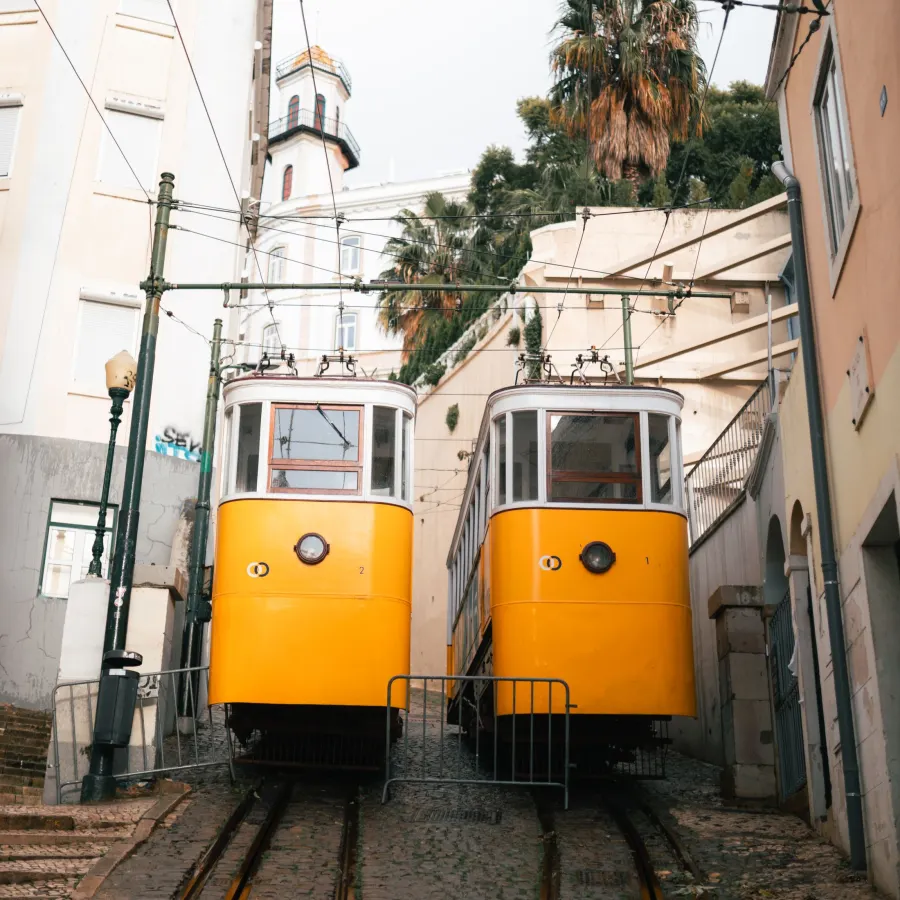
There is no metro station inside Bairro Alto. Baixa-Chiado, where the Blue and Green lines meet, is the key station for the southern and eastern side; follow signs for the Largo do Chiado exit. Tram 24E stops at Praça Luís de Camões and Largo Trindade Coelho before continuing towards Príncipe Real and Rato. The Glória funicular, which normally links Restauradores with the upper part of the hill, is currently out of service while Carris tests the equipment. Carris lists bus 51E as the alternative service around Restauradores, Largo do Carmo and Trindade. This arrangement may change, so check Carris, Lisbon's bus and tram operator, shortly before travelling.
Keep comparing
Nearby areas.
How we work
Facts checked, context included.
Visitar.com checks this area guide against tourism and transport sources, local studies and official travel advice. We list only properties with current, publicly available information.
- Area guide reviewed
- Page updated
Sources checked (13)
- Official tourism source · visitlisboa.com
- Official tourism source · visitlisboa.com
- Municipal research · museudelisboa.pt
- Municipal research · geo.lisboa.pt
- Official cultural source · museusaoroque.scml.pt
- Source checked · informacao.lisboa.pt
- Municipal research · informacao.lisboa.pt
- Source checked · informacao.lisboa.pt
- Official transport source · metrolisboa.pt
- Official transport source · carris.pt
- Official transport source · carris.pt
- Official transport source · carris.pt
- Official travel advice · gov.uk
For independent properties
Do you manage a place to stay in Bairro Alto?
If you run an independent property in Bairro Alto and keep its public information current, introduce it to our editorial team.
Tell us about your propertyPhotography credits
Café terraces and pedestrians on a narrow Bairro Alto street at dusk Photograph by Jorge Franganillo on Wikimedia Commons · CC BY 2.0
.jpg)