The church & birthplace shrine
20–35 min
A quiet visit to the decorated church and the small crypt associated with St Anthony’s birthplace. The neighbouring museum is separate.
Church & pilgrimage shrine · Sé & Alfama
Igreja de Santo António de Lisboa
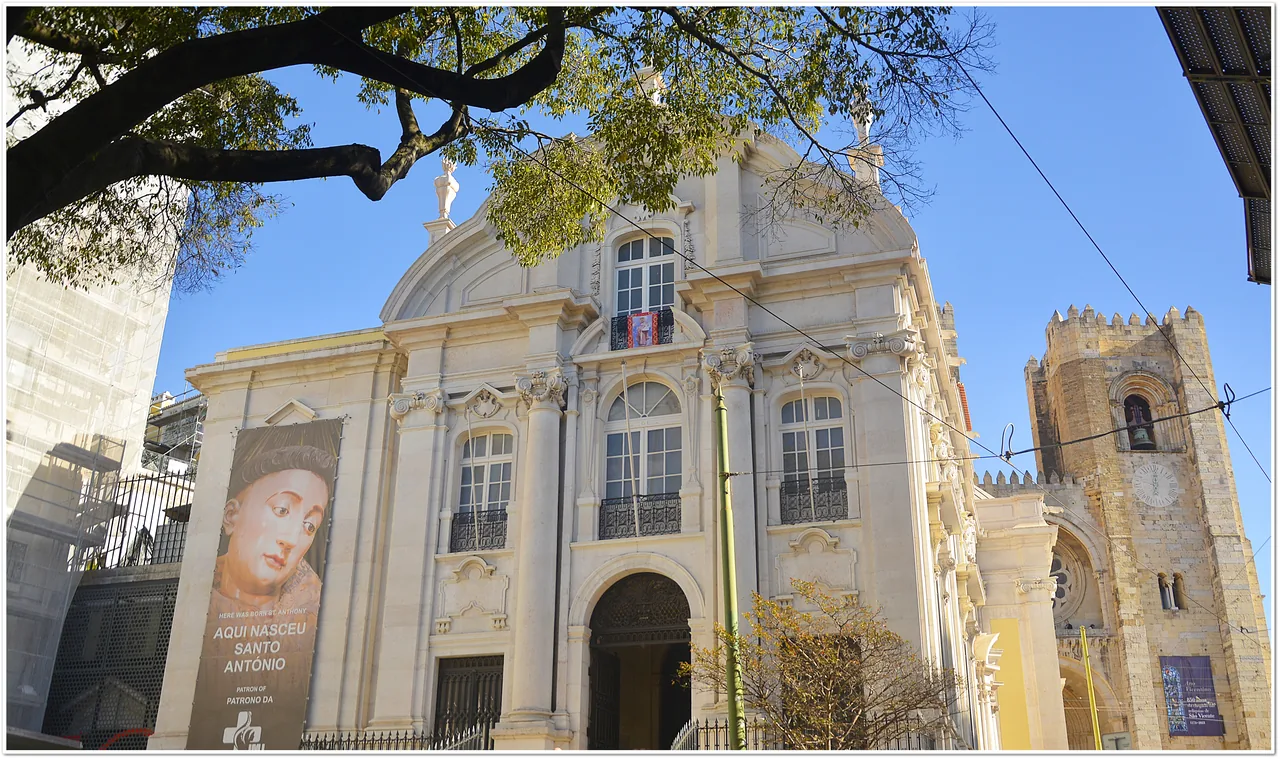
Beside the cathedral, a small church marks the place where Lisbon’s best-loved saint is traditionally believed to have been born.
At a glance
20–35 min
A quiet visit to the decorated church and the small crypt associated with St Anthony’s birthplace. The neighbouring museum is separate.
Photographs


What to see
It is easy to walk straight past Igreja de Santo António on the way to the cathedral. That would mean missing a church whose importance has little to do with its size. Pilgrims come here because tradition places St Anthony’s birthplace beneath it, and the small crypt remains the most personal part of the visit.
Upstairs, painted decoration, coloured marble and carefully framed altars make an attractive eighteenth-century interior. Below, the emphasis changes from architecture to devotion. Seeing both helps explain why this modest church matters so much: the decoration honours a figure who still has a very immediate place in the city’s life.
The church will mean most to visitors with an interest in St Anthony, but it also makes a worthwhile short stop for anyone exploring the streets around the Sé. You do not need to share the faith to appreciate the setting. Give people who have come to pray the quiet and space they need.
Look closer
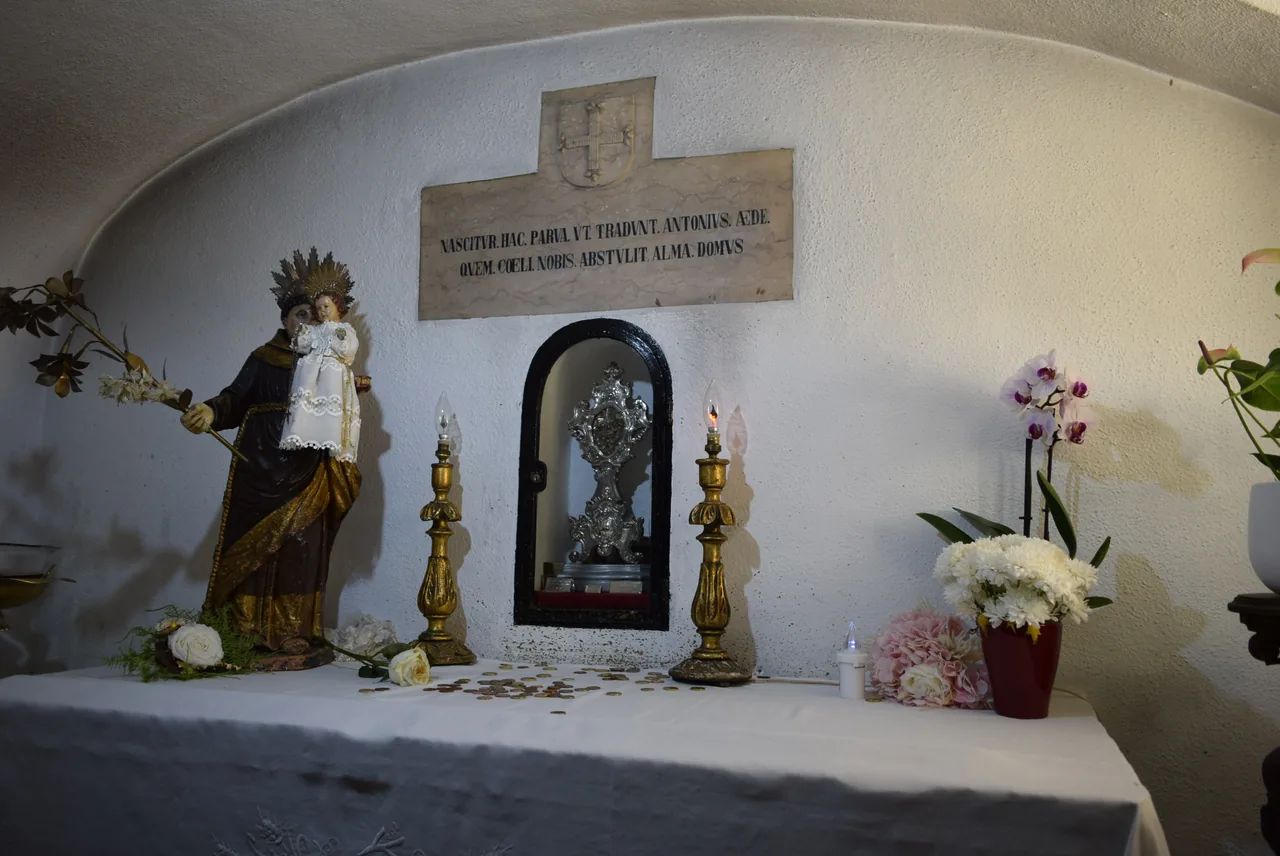
The small shrine below the church marks the traditional site of Anthony’s birth. Approach it as a devotional place rather than an excavated medieval house. Its meaning lies in the long association with the saint. A few quiet minutes here can be more affecting than a much longer circuit of the decorated church above.
Look towards the carved image of St Anthony above the altar, then consider the framing around it. Painted surfaces, gilding and marble draw attention to the figure without the scale of a cathedral. The church’s own history records that this image survived the earthquake of 1755, giving it a particular connection to the earlier building.
The main shrine naturally draws the eye, but leave time for the side paintings, patterned floor and ceiling. Looking upwards and then back down towards the marble changes the impression of the room. It is a compact interior, and its details are more rewarding than a quick photograph taken from the doorway.
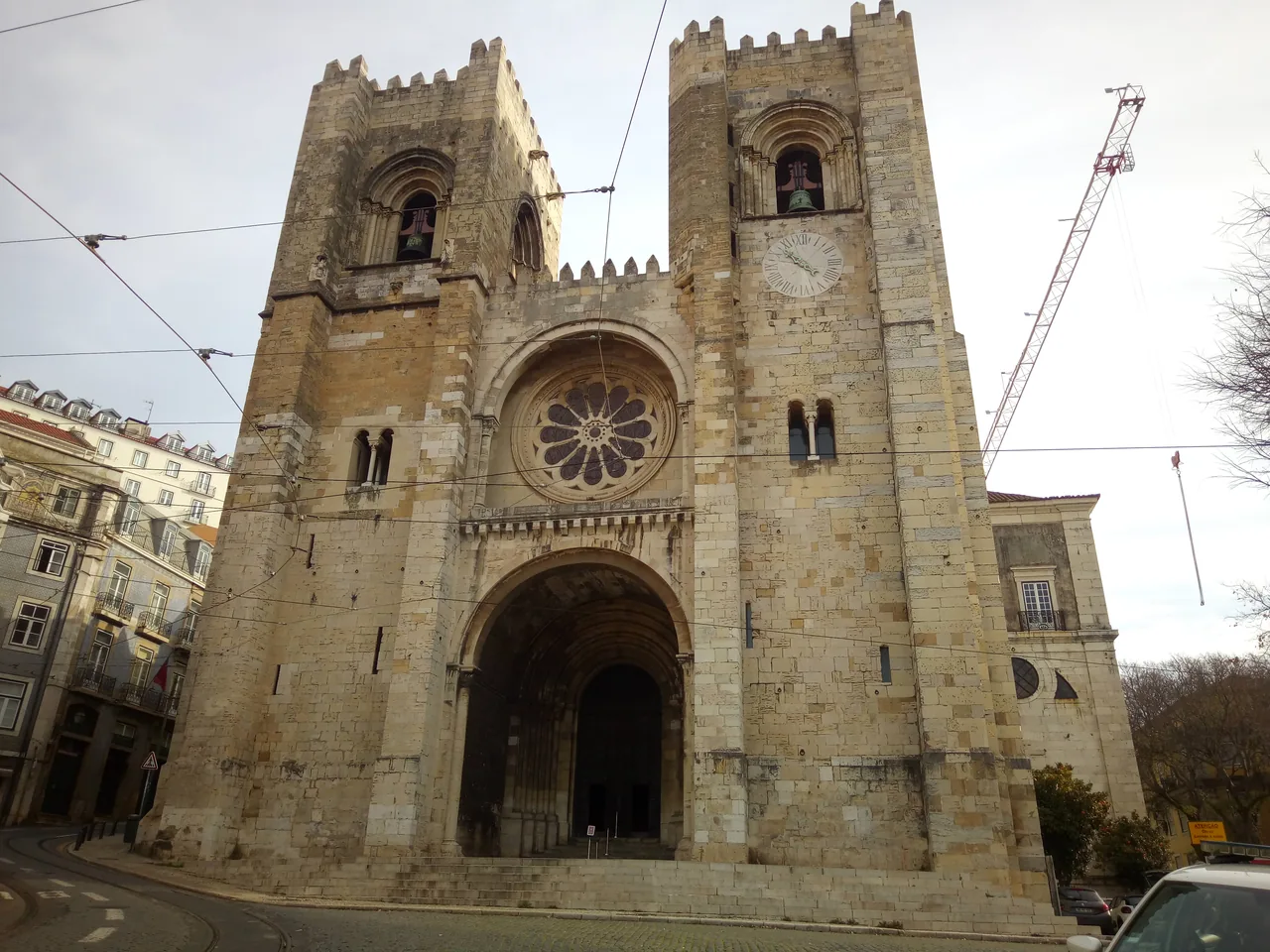
The curving steps and restrained façade give the church a distinct presence beside the heavier cathedral. Look at the two buildings together before going inside. Their proximity is part of the interest of this corner: a major ecclesiastical monument and a much smaller shrine devoted to one person’s life.
The visitor perspective
The church means a great deal to visitors with a personal devotion to St Anthony. In the accounts we read, the crypt and the connection with his birthplace matter more than the scale of the building. Other visitors describe the surprise of finding an attractive, peaceful church beside the much more conspicuous cathedral.
These reactions reflect different reasons for coming. A pilgrim may want time to sit and pray; someone walking through the neighbourhood may be satisfied with a short look at the interior. The experience is intimate, and its appeal does not depend on a long list of rooms or objects.
Read a little about Anthony before entering and allow time for the crypt. That small amount of context makes the visit easier to understand. If religious history is not a particular interest, it still fits naturally into a walk around the Sé, without requiring a large part of the day.
Visitor feedback reviewed:
The story
Anthony was born in Lisbon and was originally named Fernando. His religious life took him through Coimbra and eventually to Italy, where he became an influential Franciscan preacher. His association with Padua explains the name by which many visitors know him, but Lisbon has never lost its attachment to his beginnings here.
A place of worship developed on the traditional site of his birth. The building changed over successive centuries and was largely destroyed in the earthquake of 1755. Reconstruction began in 1767 under the architect Mateus Vicente de Oliveira, producing the church that frames the older devotion today.
The relationship with the city extends beyond pilgrimage. The church’s history recalls children collecting coins to help fund its rebuilding, a practice connected with the small street altars made in the saint’s honour. The neighbouring museum offers further context for those popular traditions, which reach well beyond the church walls.
Planning your visit
For current opening hours and ticket details, visit the official website.
Official visitor information ↗The area
The church faces Largo de Santo António da Sé, immediately beside the cathedral. It fits naturally into a walk from Baixa towards Alfama: visit the two churches separately, then continue uphill towards Santa Luzia or down into the lanes. The adjoining Museu de Lisboa - Santo António explores the saint’s place in local life and is a distinct museum visit.
Alfama area guideWhat to see, how to get around and where to stay. Open map
Questions about this place
Yes. He was born in Lisbon and later became closely associated with Padua in Italy, where his tomb is located. The Lisbon church commemorates the traditional site of his birthplace.
It is a shrine marking the place traditionally associated with his birth. It should not be understood as a preserved medieval house or archaeological proof of the exact room.
No. It is a separate church beside the cathedral, with its own history and devotional role. Their proximity makes it easy to visit both during the same walk.
About 20–35 minutes allows a considered look at the church and crypt. Pilgrims may want longer for prayer. Allow extra time if you also want to visit the adjoining museum.
More of Lisbon
Visitar editorial team
Based on official visitor information, historical and collection records, and a sample of individual traveller reviews.
Visit times are estimates. The guide is based on published sources; it does not include an on-site inspection. Photographs come from credited sources and may show earlier displays or arrangements.
Content reviewed: · Visitar.com
Image resized for display; full source and licence linked.