Terrace, garden & tile panels
20–35 min
Time for the panorama and a closer look at the garden and historical tiles. A longer Alfama walk needs its own allowance.
Viewpoint & garden · Alfama
Miradouro de Santa Luzia
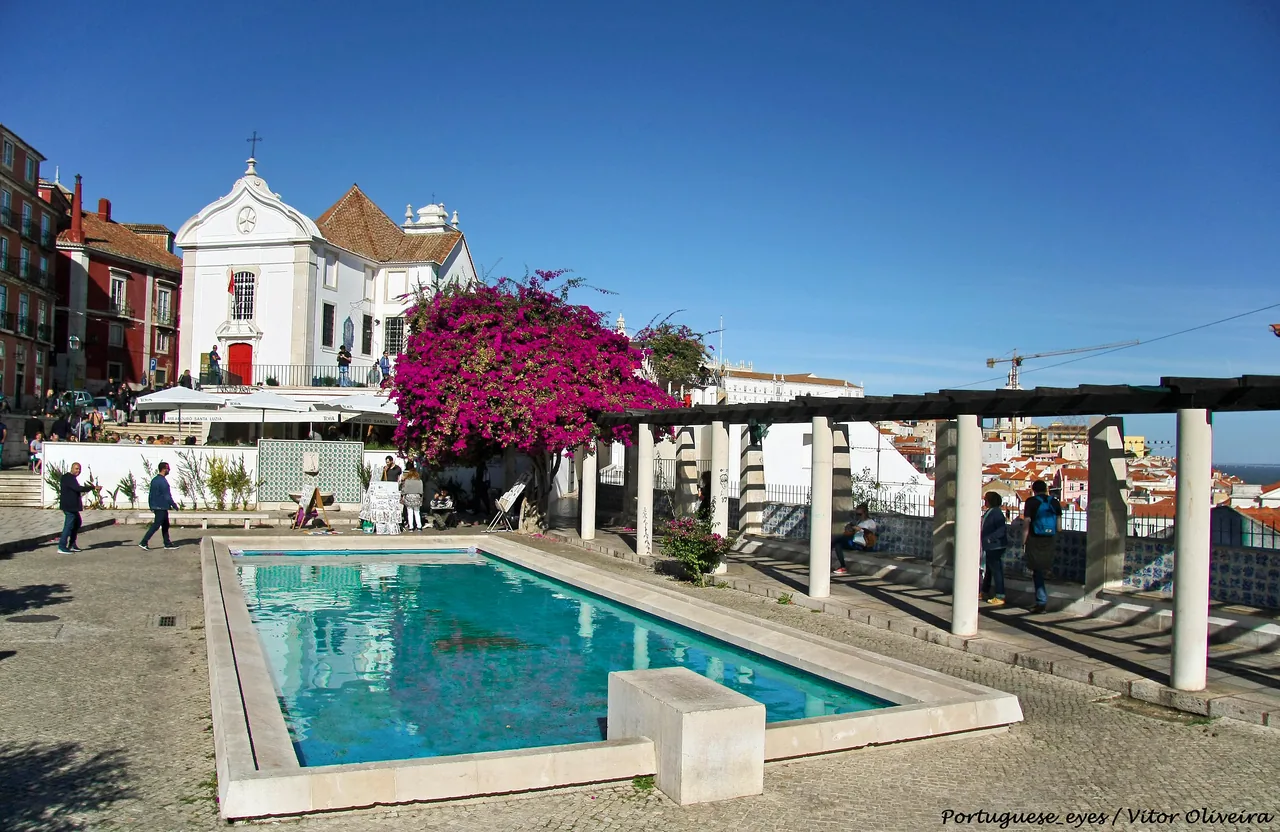
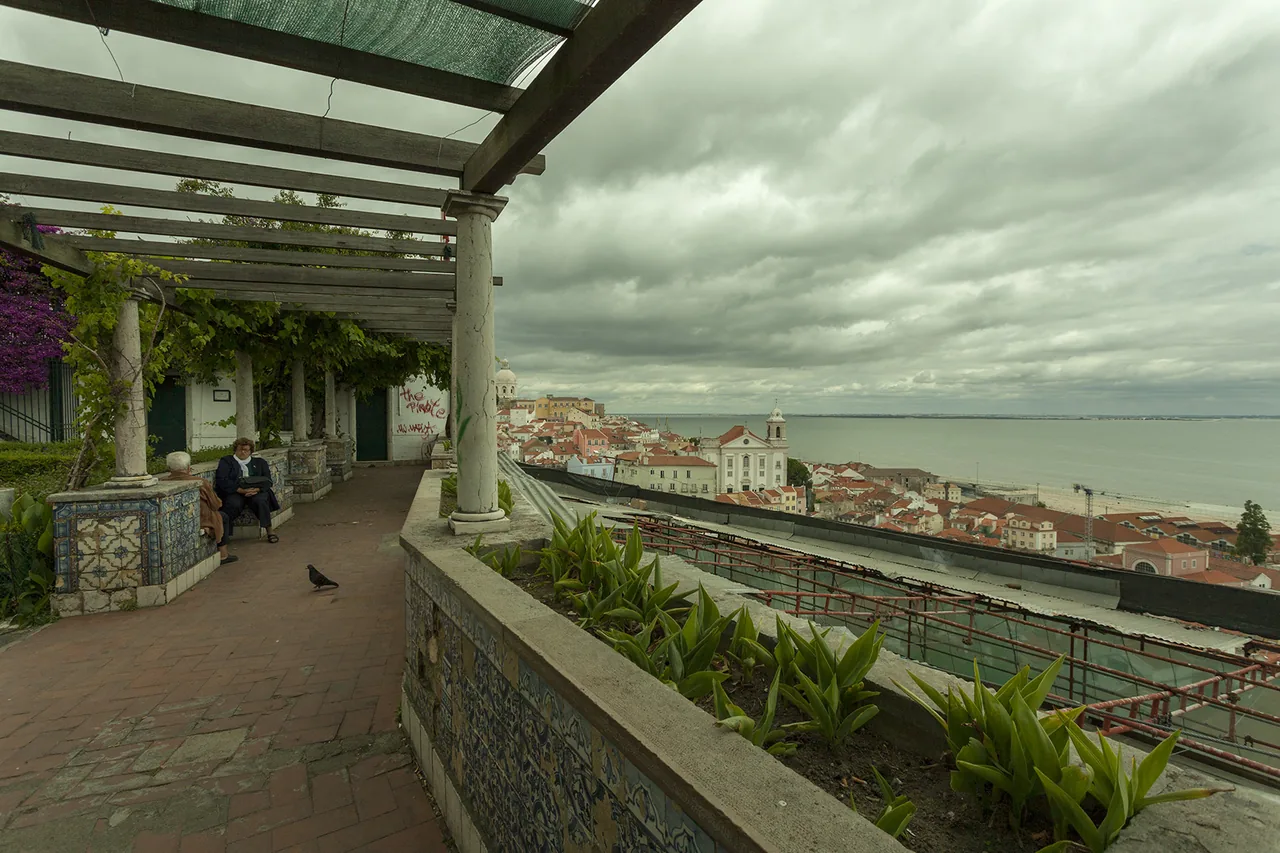
Red roofs fall towards the Tagus beyond a terrace of blue and white tiles. Santa Luzia’s small garden is as much a part of the pleasure as the view.
At a glance
20–35 min
Time for the panorama and a closer look at the garden and historical tiles. A longer Alfama walk needs its own allowance.
Photographs


What to see
Miradouro de Santa Luzia sits above Alfama, beside a small church and a garden shaded by a pergola. It is an intimate viewpoint: the roofs are close enough to pick out individual terraces, while the river opens up beyond them. Tiles, climbing plants and the low walls give the foreground almost as much interest as the panorama.
The best reason to stop is the combination of garden and view. Spend a few minutes beside the parapet, then turn around. The church wall carries tiled scenes from Lisbon’s history, and the surrounding tilework gives a distinctive setting to the people sitting or strolling through the garden. A quick photograph over the roofs captures only half of what makes the place attractive.
Santa Luzia suits a walk through Alfama, particularly if you enjoy photography or decorative tiles. It is a small public terrace, so expect to share it. Visitors hoping to settle somewhere secluded may prefer to keep walking until they find a quieter corner of the neighbourhood.
Look closer
Rather than looking straight towards the horizon, begin with the roofs nearest the wall. Chimneys, small terraces and irregular lanes make the neighbourhood readable at a much smaller scale. The river provides the backdrop, but the pleasure of this viewpoint is how close the old residential fabric feels.
The garden offers places to pause within a frame of columns, climbing plants and blue and white tiles. Its appearance changes with the season, so flowering bougainvillea should be treated as a bonus rather than a promise. Look along the terrace as well as out from it; the repeated columns and tile panels make a particularly satisfying view.
One tiled panel depicts the waterfront square before the earthquake of 1755; another shows the taking of the castle in 1147. These are later illustrations of earlier events, not medieval tiles. Their value is in the comparison they invite: the riverfront before reconstruction, and the hilltop fortress at the centre of a very different city.
The panorama includes the churches of São Miguel and Santo Estêvão, with the dome of Santa Engrácia farther away. Pick out their different forms rather than trying to memorise every landmark. A few recognisable buildings give the tangle of roofs a structure that makes your later walk through the streets more interesting.
The visitor perspective
Visitors repeatedly mention the combination of Alfama’s roofs, the river and the tiled garden. The accounts we read suggest that the foreground matters as much as the distant view: the pergola, flowers when in season, and blue and white decoration make this a memorable stop on foot through the older streets.
The main reservation is crowding. Some visitors find the terrace too busy for the peaceful pause they imagined, while others are happy with a short stop before continuing their walk. Experiences vary considerably with the moment of arrival, so an empty terrace is not a sensible expectation.
Make room for the garden and the historical panels as well as the panorama. If the main viewing edge is full, another corner may be more enjoyable. A little flexibility suits this small space better than waiting for a single photograph with nobody else in it.
Visitor feedback reviewed:
The story
The church beside the viewpoint has medieval origins, but the garden and tiled terrace are much later additions to the city. This distinction is easy to miss in a place where so many different periods seem to sit naturally together. The present setting reflects deliberate landscaping as well as the survival of older buildings.
The garden is named after Júlio de Castilho, a writer closely associated with the study of Lisbon’s history. Twentieth-century changes helped create the open viewpoint visitors enjoy today. The blue and white decoration belongs to that more recent history, although several panels depict events many centuries earlier.
The tilework draws on different makers and designs. The historical church-wall scenes are associated with António Quaresma, while a panorama panel was designed by Jaime Martins Barata and painted by José Vitória Pereira in 1939. Seen in that light, Santa Luzia becomes a place where the city has chosen how to picture and remember itself.
Planning your visit
For current opening hours and ticket details, visit the official website.
Official visitor information ↗The area
The terrace lies beside Largo de Santa Luzia, close to Portas do Sol. From this stretch of the hill, lanes and steps descend into Alfama while the main street continues towards the cathedral. Visit both viewpoints if you are passing: Santa Luzia offers the tiled garden setting, while Portas do Sol gives you a broader open terrace.
Alfama area guideWhat to see, how to get around and where to stay. Open map
Questions about this place
No. They are close neighbours. Santa Luzia is the smaller garden terrace with a pergola and extensive tilework; Portas do Sol is a broader open space farther along the street.
The large historical scenes include the waterfront before the 1755 earthquake and the conquest of the castle in 1147. The panels themselves are much later works.
About 20–35 minutes allows time for the view, garden and tile panels. A quick photograph takes less, but it is worth turning away from the river to look at the rest of the setting.
Yes. The viewpoint and garden are public outdoor spaces beside the church. Looking around the terrace does not depend on visiting the church interior.
More of Lisbon
Visitar editorial team
Based on official visitor information, historical and collection records, and a sample of individual traveller reviews.
Visit times are estimates. The guide is based on published sources; it does not include an on-site inspection. Photograph dates appear in the gallery captions.
Content reviewed: · Visitar.com
Image resized for display; full source and licence linked.