The viewpoint & both terraces
20–40 min
A walk around the gardens, time to identify the skyline and a short pause on the upper terrace.
Viewpoint & garden · Bairro Alto
Miradouro de São Pedro de Alcântara
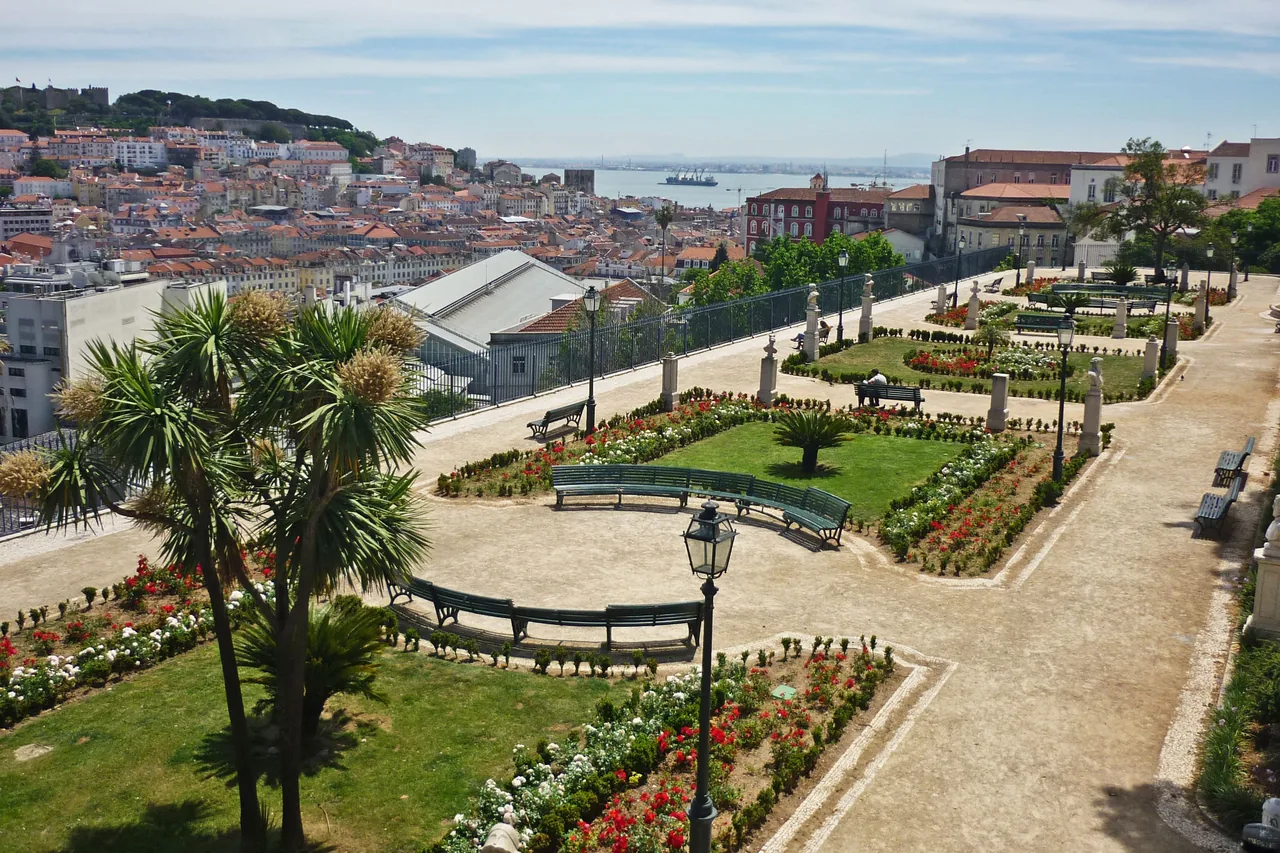
Look across to the castle from a garden terrace on the edge of Bairro Alto. Trees, benches and a lower garden make this a place to sit for a while, not just stop for a photograph.
At a glance
20–40 min
A walk around the gardens, time to identify the skyline and a short pause on the upper terrace.
Photographs


What to see
São Pedro de Alcântara is both a viewpoint and a small public garden. Its two terraces overlook the lower city towards the castle and Graça. The upper level has trees and places to pause; below, formal beds and stone busts give the garden a quieter, more ordered character.
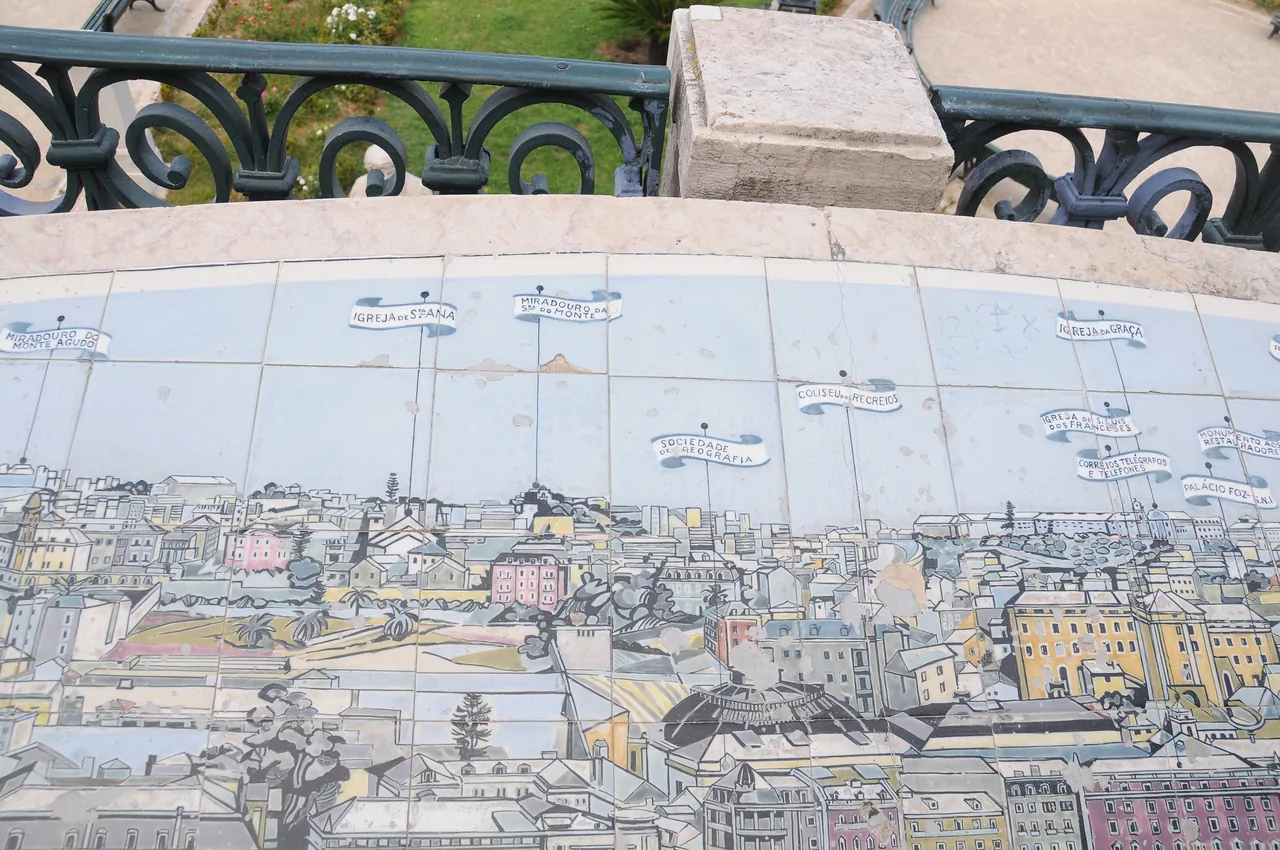
The view is broad, but the setting is what makes a longer stop appealing. You can look out over Baixa, turn back into the shade, then walk down to see the garden from another level. Small details are easy to overlook: a tiled panorama, a newsboy beneath a monument and classical faces among the planting. Together, they give the terrace more interest than the skyline alone.
This is an easy place to enjoy without an elaborate plan. It suits photographers, walkers and anyone who wants a break between Chiado, Bairro Alto and Príncipe Real. The gardens provide something to look at even when the distant view is hazy.
Look closer
The castle is the easiest landmark to find across the valley. Look below it at the layers of streets and roofs, then towards the lower avenues and squares. From here, the differences between the hills and the planned streets of the centre become clearer. It is a particularly useful place to revisit after a day of walking, when more of the buildings in the view are familiar.
Take the steps down to the lower terrace to appreciate its formal layout. Geometric beds and stone busts give it a different feel from the broad promenade above. Look back towards the retaining wall as well as out across the city. The garden’s height, planting and built edges all contribute to the view, so it is worth seeing the two levels rather than staying beside the first railing you reach.
The azulejo panorama helps you match the buildings in front of you with their names. It is useful for more than finding the castle: pick a smaller landmark and try to locate it in the real view. The panel is also an example of how decorative tiles can serve an everyday purpose, bringing a familiar Portuguese material into the practical business of finding your bearings.
Look for the monument to Eduardo Coelho, co-founder of Diário de Notícias. The figure of a barefoot boy selling newspapers gives the memorial an engaging detail at eye level. It belongs to the history of a neighbourhood long associated with publishing and newspapers. A brief look makes the monument more memorable than another unidentified bust passed on the way to the view.
The visitor perspective
The view towards the castle is the main draw in the accounts we read, but visitors also appreciate having space to sit and enjoy it. Several describe returning during their stay, or finding the garden a welcome break on a walk. The combination of a recognisable skyline and a pleasant place to pause is what gives the stop its appeal.
Accounts describe different moods, from a relatively peaceful daytime visit to a lively evening with people gathering around the terraces. Some visitors particularly enjoy the trees and seating; others spend most of their time taking photographs. It is a public garden with a changing atmosphere, rather than a viewpoint with one consistent experience.
Walk around before settling on a spot. The lower terrace and small monuments add interest once you have taken in the skyline. If your day already includes several viewpoints, this is a good one to use for a longer rest, rather than another quick photograph before moving on.
Visitor feedback reviewed:
The story
The garden occupies terraces supported by a substantial wall whose history goes back to the reign of João V in the eighteenth century. Its formal name is Jardim António Nobre, although most visitors know it by the viewpoint’s name. The two levels allow the slope to become a usable public space rather than simply an edge above the lower city.
Eduardo Coelho and Tomás Quintino Antunes founded Diário de Notícias in 1864. The newspaper had close connections with Bairro Alto, where its name survives in Rua do Diário de Notícias. Coelho’s monument and the small newspaper seller bring that publishing history into the garden.
The tiled panorama was designed by Fred Kradolfer in 1962. It belongs to a group of city viewpoint panels that help visitors identify the skyline. The planting and sculpture give the garden plenty of interest beyond the view. Even a short walk between its two levels reveals details that are easy to overlook from the main railing.
Planning your visit
For current opening hours and ticket details, visit the official website.
Official visitor information ↗The area
The garden runs beside Rua de São Pedro de Alcântara, above the upper end of the Glória funicular route. Chiado lies to the south and Príncipe Real further uphill to the north. Approaching through those neighbourhoods makes it a natural stop on a walk, with the steeper streets towards Restauradores dropping away below.
Bairro Alto area guideWhat to see, how to get around and where to stay. Open map
Questions about this place
The upper level is a broad, tree-lined promenade with the main viewpoint. The lower level has a more formal garden layout, with planted beds and stone busts. Seeing both gives a better sense of the place.
Yes. São Jorge Castle is one of the clearest landmarks across the valley. The view also takes in the lower city and the hills around Graça, with visibility depending on the weather.
This is a public garden and viewpoint, rather than a ticketed attraction. You can enjoy the terraces without buying admission.
No. You can approach on foot through Bairro Alto, Chiado or Príncipe Real. The garden is close to the upper end of the funicular route, but a visit does not depend on using it.
About 20–40 minutes is enough to see both terraces and enjoy the view. Stay longer if you want a proper break in the garden or are waiting for the evening light.
More of Lisbon
Visitar editorial team
Based on official visitor information, historical and collection records, and a sample of individual traveller reviews.
Visit times are estimates. The guide is based on published sources; it does not include an on-site inspection. Photograph dates appear in the gallery captions.
Content reviewed: · Visitar.com
Image resized for display; full source and licence linked.