The square & nearby façades
20–40 min
A walk around the fountains and paving, with a short detour to the railway station exterior. Add time if you stop at a café.
Historic square · Baixa
Praça Dom Pedro IV (Rossio)
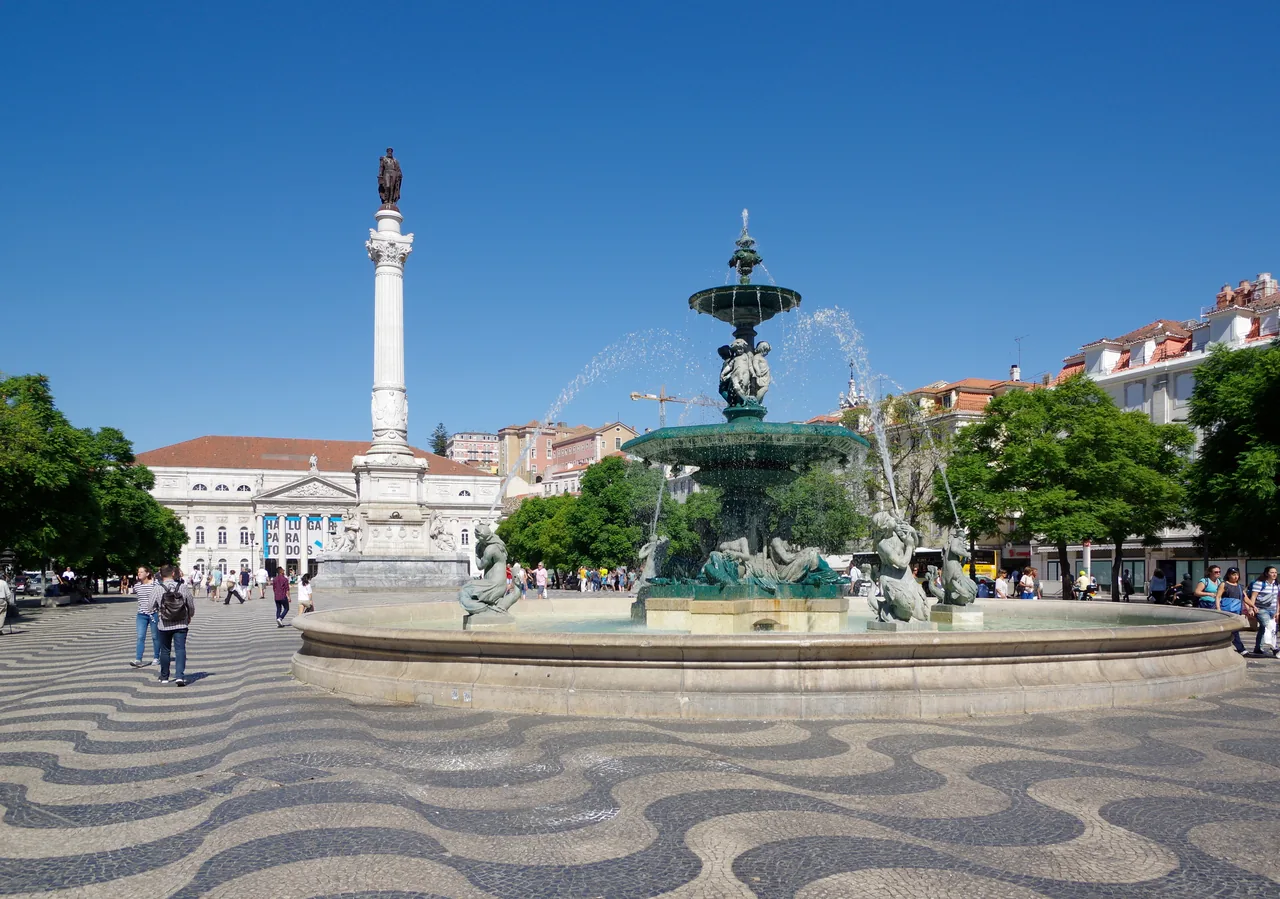
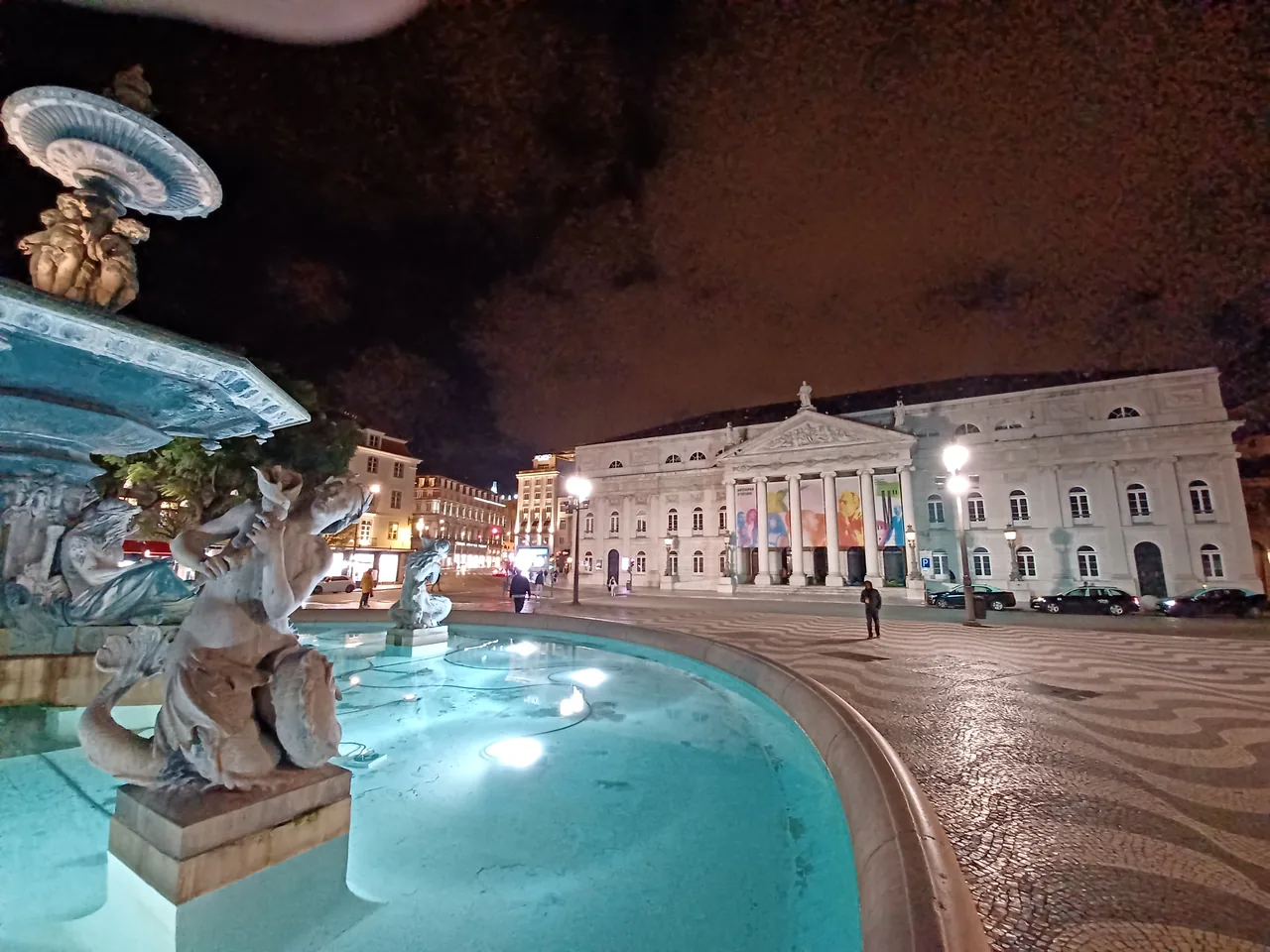
Follow the black and white waves across Rossio, pause beside the fountains and look up at the façades. This is a place to spend a little time between walks, not simply cross on the way elsewhere.
At a glance
20–40 min
A walk around the fountains and paving, with a short detour to the railway station exterior. Add time if you stop at a café.
Photographs


What to see
Rossio is the familiar name for Praça Dom Pedro IV, the broad square at the northern end of Baixa. Its bronze fountains and wave-patterned paving make it immediately recognisable, but the life around the edges is just as much part of the scene. People cross on their way to work, wait for friends and settle at café tables beneath the surrounding buildings.
The square gives you room to look at details that are easy to miss in narrower streets. Walk far enough from a fountain to see how its figures sit against the central column, then turn towards the national theatre. Underfoot, small pieces of pale and dark stone produce a pattern that seems almost to move. Rossio works best as a pause within a day in the centre, with time to notice these small changes of perspective.
This is an easy addition to a first walk through Baixa, especially if you enjoy urban architecture or street photography. It does not require a long visit. Travellers looking for quiet gardens should choose somewhere else; Rossio is an active central square with traffic and people around it.
Look closer
The calçada portuguesa forms broad black and white waves across the open square. Look along the pattern from a low angle, then back towards the centre: the apparent movement changes with your position. The surface is made from individual stones laid by hand, a craft that appears throughout the city in designs ranging from simple borders to elaborate pictures.
A fountain stands at either end of the central area. The sculpted figures, water and shallow basins give the open paving a focal point at a more human scale than the tall column. They are worth walking around. A photograph taken from the first convenient spot will rarely show the relationship between the fountain, square and buildings particularly well.
The column carries a statue of the king whose name the square officially bears. At ground level, look at the sculpted base before trying to make out the figure high above. The monument, fountains and paving were not all installed at once; the square acquired its familiar appearance through successive nineteenth-century changes.
The columned façade of the Teatro Nacional D. Maria II closes the northern end of the square. Nearby, Rossio station offers a very different face: its carved stonework and paired horseshoe-shaped entrance arches draw on Portuguese Manueline architecture. The station is outside the square itself, so make the short detour rather than expecting to see everything from beside a fountain.
The visitor perspective
The paving and fountains are the details visitors most often single out in the accounts we read. Many enjoy the square as a place for photographs and a pause among the surrounding cafés. Its appeal is immediate: an open space where the buildings, monuments and movement of people can all be taken in together.
Some visitors find a brief stop quite sufficient. The central location brings traffic and crowds, and the square does not feel removed from the working city. If you arrive expecting a peaceful garden or a large attraction with a route to follow, its interest may seem limited.
Allow enough time to walk the edges and look closely at a fountain, then continue through Baixa or towards the station façade. Rossio earns its place in a day through the way it connects those streets and provides somewhere to pause.
Visitor feedback reviewed:
The story
Rossio has served as a meeting place since the Middle Ages. The ordered façades around it belong to the story of Baixa’s reconstruction after the earthquake of 1755. Its long civic life helps explain why the everyday name has remained so firmly attached to a square officially named after a king.
The national theatre opened in 1846 on the site of the earlier Estaus palace, which had burnt down a decade before. Pedro IV’s monument followed in 1870, and the two monumental fountains were installed in 1889. These additions gave the rebuilt square much of the ceremonial appearance it retains today.
Rossio’s wave paving also became an influential example of Portuguese decorative stonework. The pattern travelled beyond Portugal, contributing to a tradition seen in cities such as Manaus and Rio de Janeiro. Nearby, José Luís Monteiro’s railway station added an exuberant late-nineteenth-century interpretation of older Portuguese architectural forms.
Planning your visit
For current opening hours and ticket details, visit the official website.
Official visitor information ↗The area
Rua Augusta leads south from Rossio through the grid of Baixa towards Praça do Comércio. Praça da Figueira lies just to the east, while the ornate Rossio railway station is a short walk to the north-west. These are distinct places, though their names and entrances can be confusing when you are arranging a meeting or following a map.
Baixa area guideWhat to see, how to get around and where to stay. Open map
Questions about this place
Yes. Praça Dom Pedro IV is the official name; Rossio is the everyday name used by residents and visitors.
Start with the wave-patterned paving, the two bronze fountains and the central monument. Then look towards the national theatre and take the short walk to Rossio station’s carved façade.
Allow around 20–40 minutes to look around and see the nearby station exterior. It is better treated as part of a walk through Baixa than as a separate half-day attraction.
It is just to the north-west, a short walk away. The Metro entrances around the square serve a different transport system. Check which station you need before following signs.
More of Lisbon
Visitar editorial team
Based on official visitor information, historical and collection records, and a sample of individual traveller reviews.
Visit times are estimates. The guide is based on published sources; it does not include an on-site inspection. Photograph dates appear in the gallery captions.
Content reviewed: · Visitar.com
Image resized for display; full source and licence linked.