The royal treasury galleries
60–120 min
Time for the collection’s historical introductions, jewellery, regalia and silverwork. Ajuda Palace’s furnished rooms require a separate allowance.
Royal treasury museum · Ajuda
Museu do Tesouro Real
A royal crown, remarkable jewellery and silver made for grand occasions, displayed in a modern museum within Ajuda’s west wing.
At a glance
60–120 min
Time for the collection’s historical introductions, jewellery, regalia and silverwork. Ajuda Palace’s furnished rooms require a separate allowance.
Photographs


What to see
The Royal Treasure Museum offers a concentrated view of the Portuguese court through the objects it valued most. Gold, gemstones and elaborate silverwork are displayed in dark galleries within a modern wing of Ajuda Palace. This is a separate experience from walking through the palace’s furnished rooms, and the distinction is worth understanding before you arrive.
The first impression may be of precious materials, but the workmanship soon becomes just as interesting. A clasp, a sculpted handle or the lid of a serving dish can deserve as much attention as a crown. The collection also reveals how objects were used: to express royal authority, furnish ceremonial occasions, mark diplomatic relationships and serve food on a scale few people could imagine.
Jewellery lovers and anyone interested in decorative arts will find obvious reasons to come. The museum also suits visitors curious about monarchy and court life. You need not know the names of successive kings to enjoy it, although reading the short historical introductions helps turn an impressive display into a more revealing visit.
Look closer
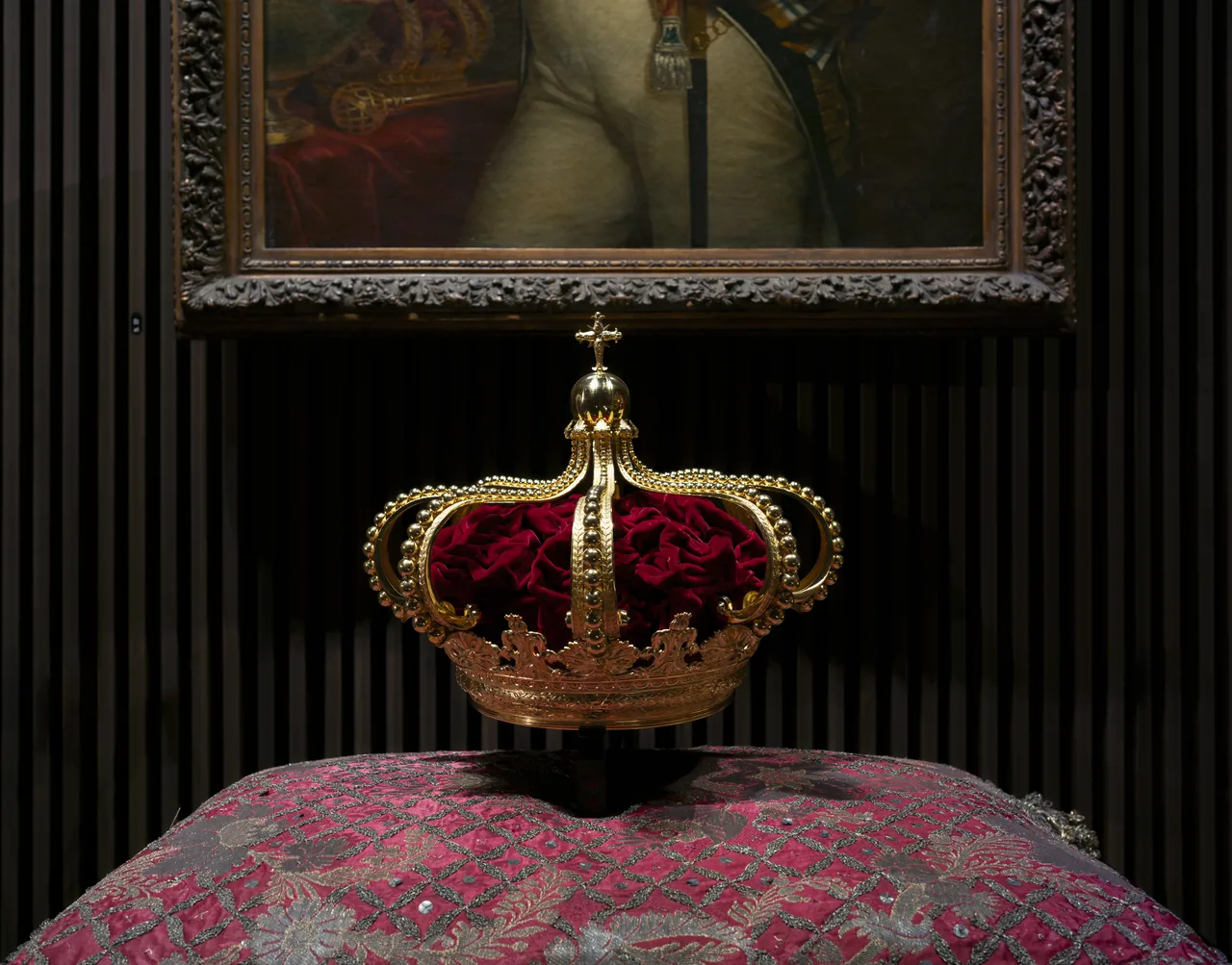
The crown made in Rio de Janeiro in 1817 sits within a wider group of objects associated with royal authority. Portugal’s accession ceremony was an acclamation rather than a coronation, an important distinction when looking at the crown, sceptre and ceremonial clothing. These were instruments of public symbolism as well as costly possessions.
The section devoted to Brazil’s gold and diamonds includes material in a much less finished state. Compare the irregular form of a gold nugget with the precision of the jewellery elsewhere. It brings the collection back to its raw materials and to the colonial sources of wealth that made such royal commissions possible.
François-Thomas Germain’s silver service is one of the museum’s most absorbing groups. Look at the modelling on lids, handles and feet, then step back to appreciate the scale of the ensemble. These objects were made for a carefully staged form of royal dining, with successive courses presented and removed according to an elaborate order.
The royal chapel pieces, decorations and diplomatic gifts broaden the story beyond personal jewellery. A hanging lamp or a richly worked ceremonial object can reveal the same concern for status and craftsmanship as a jewel. Choose a few pieces to study closely, paying attention to the work that is easy to overlook when everything shines.
The visitor perspective
The quality of the objects and the way they are displayed receive strong praise in the accounts we read. Visitors pick out the jewellery, crown and extensive silver service, often appreciating the chance to linger. The dark galleries and focused lighting make the pieces especially striking, although some people find the overall lighting subdued.
Several reviewers say that explanations or a good guide add considerably to the experience. Others are satisfied with a much quicker circuit. There are also reservations about security checks and arrival arrangements, which can feel more involved than at a conventional museum.
Leave enough time to connect the objects with their uses and owners. The collection becomes more interesting when you can distinguish a ceremonial symbol from something made for dining or personal wear. If you are also visiting Ajuda Palace, treat the two as complementary parts of the outing.
Visitor feedback reviewed:
The story
The treasury brings together property of the Crown and objects associated with the personal collections of the royal family. These categories overlap in appearance but served different purposes. A jewel worn privately and an object used at a state ceremony tell different stories, even when both contain remarkable workmanship.
The collection’s history crosses the Atlantic. When the royal family and court left for Brazil in 1807 during the French invasions, treasure travelled with them. João VI returned in 1821 with much of it, while other objects followed more complicated journeys. The crown made in Rio de Janeiro is a particularly clear reminder of that movement.
The Germain service belongs to an earlier period of royal display. José I commissioned it in 1756, after the earthquake, from the Parisian goldsmith François-Thomas Germain. Seeing the surviving pieces together makes the ambition of that commission tangible, from the overall arrangement to the small sculpted details on individual vessels.
Planning your visit
For current opening hours and ticket details, visit the official website.
Official visitor information ↗The area
The museum occupies the modern west wing of Palácio Nacional da Ajuda, on the hill above Belém. Follow signs for Museu do Tesouro Real rather than assuming the palace entrance leads through both visits. Combining the treasury with the furnished palace rooms makes a fuller outing and helps connect the objects with the life of the court.
 Open map
Questions about this place
No. The treasury is a museum in the palace’s modern west wing. The furnished royal rooms are a separate attraction, with their own entrance arrangements and time requirement.
No. The collection also includes royal regalia, silver, ceremonial and chapel objects, diplomatic gifts and material relating to the treasury’s history.
The crown dates from 1817, when the Portuguese court was based in Brazil following its departure from Lisbon during the French invasions. Its place of manufacture is part of that wider royal history.
Around 60–120 minutes is a useful allowance for the treasury alone. Choose the longer end if you enjoy decorative arts or want to read the historical explanations carefully.
More of Lisbon
Visitar editorial team
Based on official visitor information, historical and collection records, and a sample of individual traveller reviews.
Visit times are estimates. The guide is based on published sources; it does not include an on-site inspection. Photographs come from credited sources and may show earlier displays or arrangements.
Content reviewed: · Visitar.com
Image resized for display; full source and licence linked.