The main coach collection
60–90 min
Time to explore the modern museum, with a closer look at the early royal coaches and the more elaborate ceremonial vehicles.
Royal carriages & decorative arts · Belém
Museu Nacional dos Coches
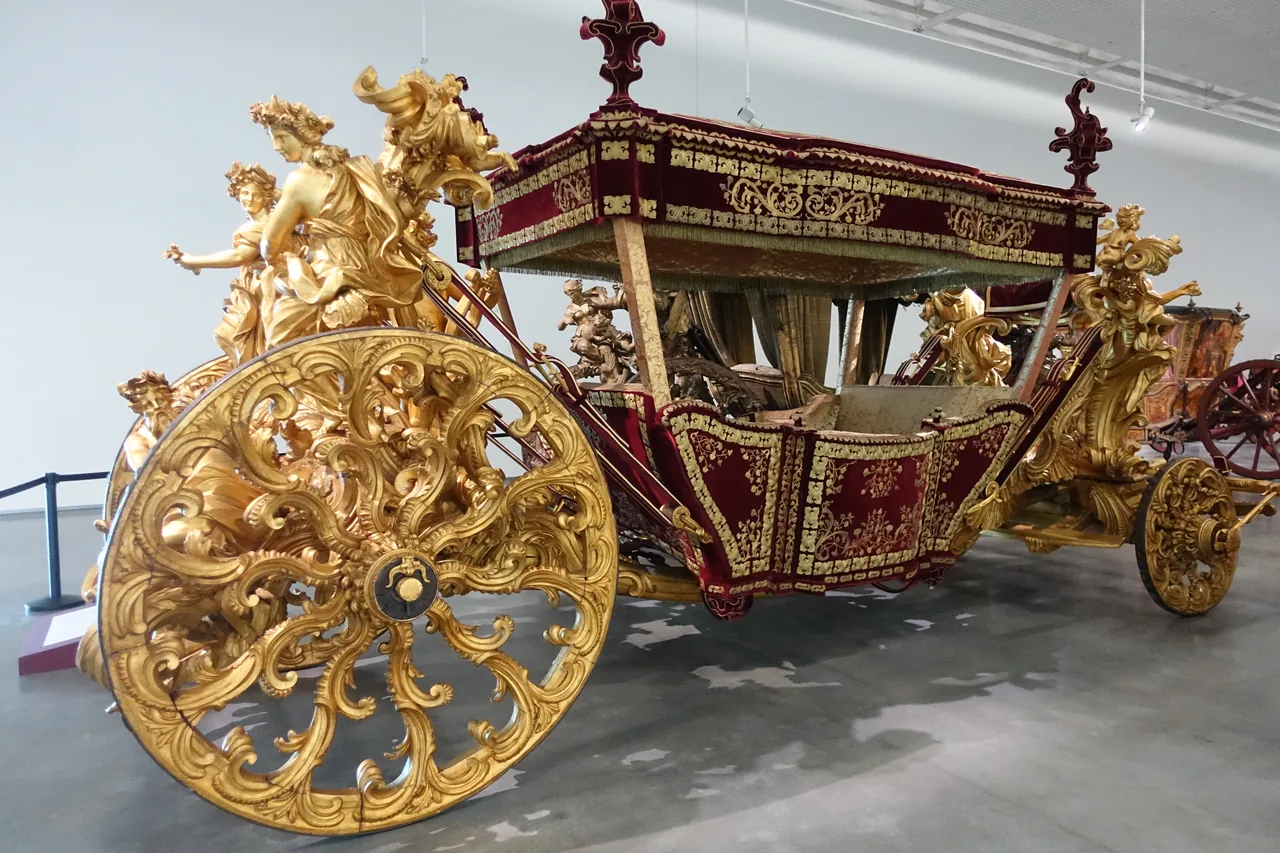
Gilded figures, painted panels and enormous wheels turn royal transport into an extraordinary display of craftsmanship. Look beyond the gold and the coaches begin to tell you who wanted to impress whom.
At a glance
60–90 min
Time to explore the modern museum, with a closer look at the early royal coaches and the more elaborate ceremonial vehicles.
Photographs


What to see
The National Coach Museum in Belém houses horse-drawn vehicles made for royalty, ceremony and public display. Its grandest coaches carry sculpture on a scale that seems almost incompatible with travel. Others are much simpler, making it possible to follow changes in design as well as changes in taste.
You do not need an interest in transport to enjoy the collection. These vehicles bring together woodcarving, painting, upholstery and metalwork, often in remarkably elaborate combinations. Walking around them is essential: the back may be more dramatic than the front, and a detail near a wheel can explain as much as the decoration around a window. Leave time to compare the vehicles: their differences are often as interesting as their individual decoration.
The museum is especially rewarding for people interested in decorative arts, royal history or design. Families can enjoy the scale and theatrical carving without following every historical connection. It also makes a useful indoor visit within a day spent around Belém.
Look closer
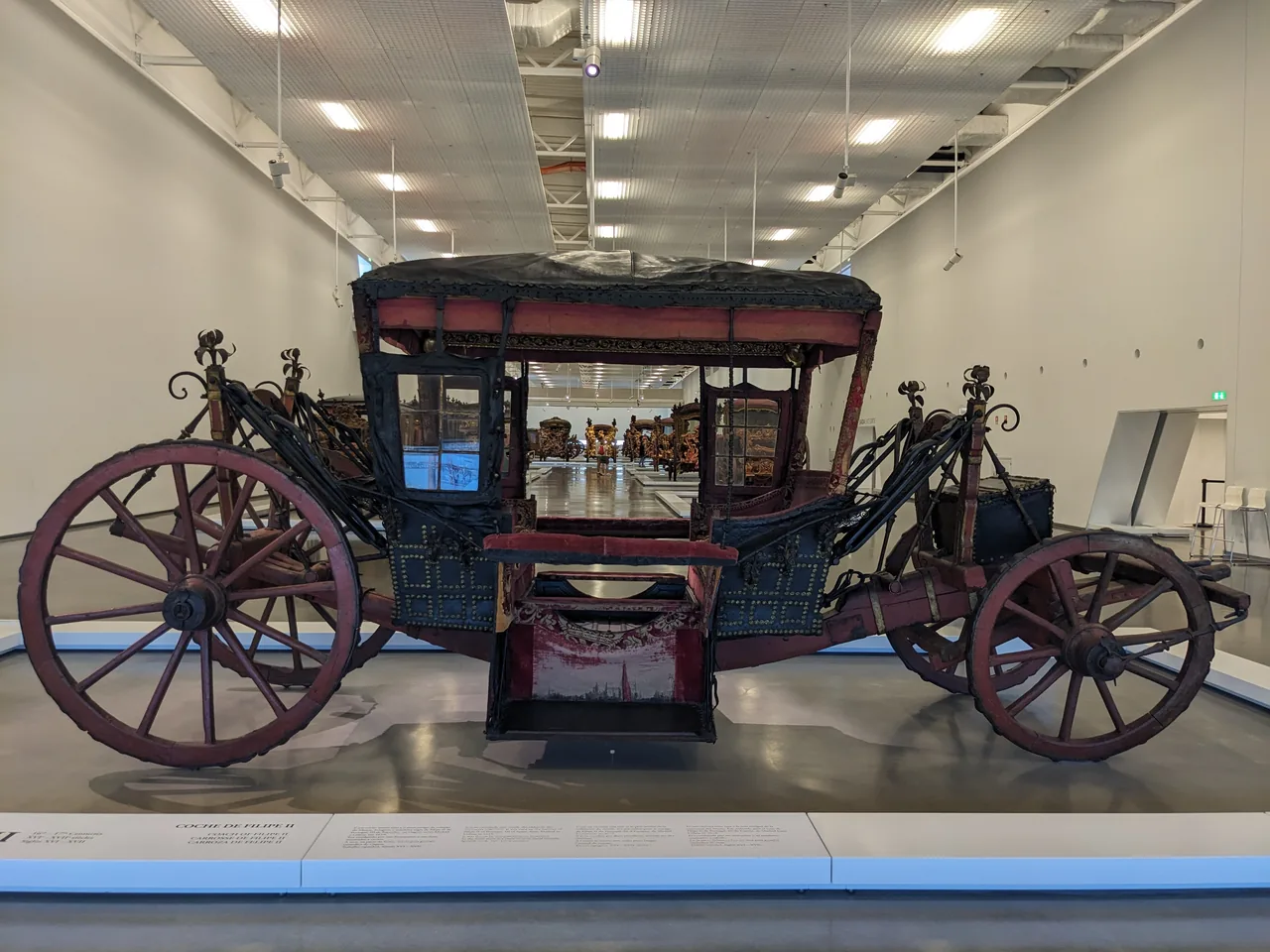
The dark coach associated with Philip II of Portugal, also Philip III of Spain, makes a striking contrast with the gilded vehicles nearby. Its box-like body, leather covering and large wheels belong to an earlier form of royal transport. Look at how the passenger compartment is supported, then compare its relatively contained decoration with the coaches made for later ceremonies.
The vehicles made for João V’s embassy to Pope Clement XI in 1716 were designed to make an impression in the streets of Rome. They carried a political message as well as passengers. Look at the sculpted figures, crests and sheer quantity of ornament. Their scale begins to make sense when you imagine them as part of a public procession watched by a crowd.
One of the great diplomatic coaches turns the rear of the vehicle into a mass of carved figures. Walk around it rather than settling for a side view. The wheels and passenger body still have a practical purpose, but the sculpture demands equal attention. Seen at this scale, the coach is as much a moving work of ceremonial art as a means of getting from one place to another.
Compare painted panels, door shapes, upholstery and the way the bodies sit above the wheels. A quieter vehicle can be just as revealing as a spectacular one. Look for what might have made a journey more comfortable, what was intended to be seen by onlookers and what was reserved for the people inside. These small comparisons keep a long line of carriages from becoming repetitive.
The visitor perspective
Several visitors describe being more impressed than they expected by a museum of carriages. In the accounts we read, the carving, decoration and variety receive as much attention as the vehicles’ royal associations. The larger ceremonial coaches are frequent favourites, particularly for people who arrive without a special interest in transport.
The experience rewards close looking. Some visitors enjoy tracing changes in design, while others focus on a few spectacular examples. The large halls give the collection room, but the real interest lies in individual details rather than simply the number of vehicles on display.
Walk around the coaches and compare their scale, painted panels and sculpted figures. Give a plainer early vehicle some attention before moving to the most ornate ones. That contrast makes the craftsmanship more apparent and helps explain why this specialised collection can appeal to a much wider audience than its name suggests.
Visitor feedback reviewed:
The story
Queen Amélia founded the museum in 1905 in the former royal riding hall at Belém. Collecting the vehicles in one place preserved objects that had served the court and ceremonial life over several centuries. Their survival allows unusually close comparisons between different periods of carriage design.
The collection’s most elaborate vehicles include those linked to João V’s embassy to Rome in 1716. The procession was intended to demonstrate the prestige of the Portuguese crown. Understanding that purpose helps explain why so much labour went into surfaces that had little to do with the practical business of travelling.
A modern museum building opened in 2015, designed by Paulo Mendes da Rocha with Ricardo Bak Gordon. Its large, relatively spare halls put the coaches’ decoration into sharp relief. The historic riding hall remains an important part of the institution’s story, but it should not be confused with the modern building that houses the principal collection.
Planning your visit
For current opening hours and ticket details, visit the official website.
Official visitor information ↗The area
The main museum occupies the modern building on Avenida da Índia, close to Belém station. Its historic home, the royal riding hall, stands nearby on Praça Afonso de Albuquerque beside the palace. This guide’s visit allowance is for the main collection in the modern museum. From here, the gardens and monuments of central Belém are easy to include in the same outing.
 Open map
Questions about this place
They are historic horse-drawn vehicles, including royal and ceremonial coaches. The word “coach” here refers to a carriage, not a modern bus.
The main collection is in the modern museum on Avenida da Índia. The historic royal riding hall nearby is the museum’s original home. Do not assume that a visit to one building automatically means access to every part of the other.
No. The collection is equally interesting for its carving, painting, textiles and ceremonial design. Thinking of the coaches as works of decorative art can be more rewarding than concentrating only on how they moved.
Around 60–90 minutes is a comfortable allowance for the main collection. Visitors with a particular interest in decorative arts or transport history may want closer to two hours.
The enormous wheels and sculpted figures give children plenty to notice. A simple challenge, such as finding an animal, a crown or the most elaborate rear panel, can work better than trying to follow every label.
More of Lisbon
Visitar editorial team
Based on official visitor information, historical and collection records, and a sample of individual traveller reviews.
Visit times are estimates. The guide is based on published sources; it does not include an on-site inspection. Photograph dates appear in the gallery captions.
Content reviewed: · Visitar.com
Image resized for display; full source and licence linked.