Guided palace visit & gardens
90–120 min
A house tour followed by an unhurried look at the terraces, tile panels and formal garden.
Historic palace & gardens · São Domingos de Benfica
Palácio Fronteira
Follow tiled terraces and garden pools around a seventeenth-century palace that remains a family home.
At a glance
90–120 min
A house tour followed by an unhurried look at the terraces, tile panels and formal garden.
45–90 min
A separate garden visit with time for the pool, sculpture and decorative details. The palace interior is not included.
Photographs


What to see
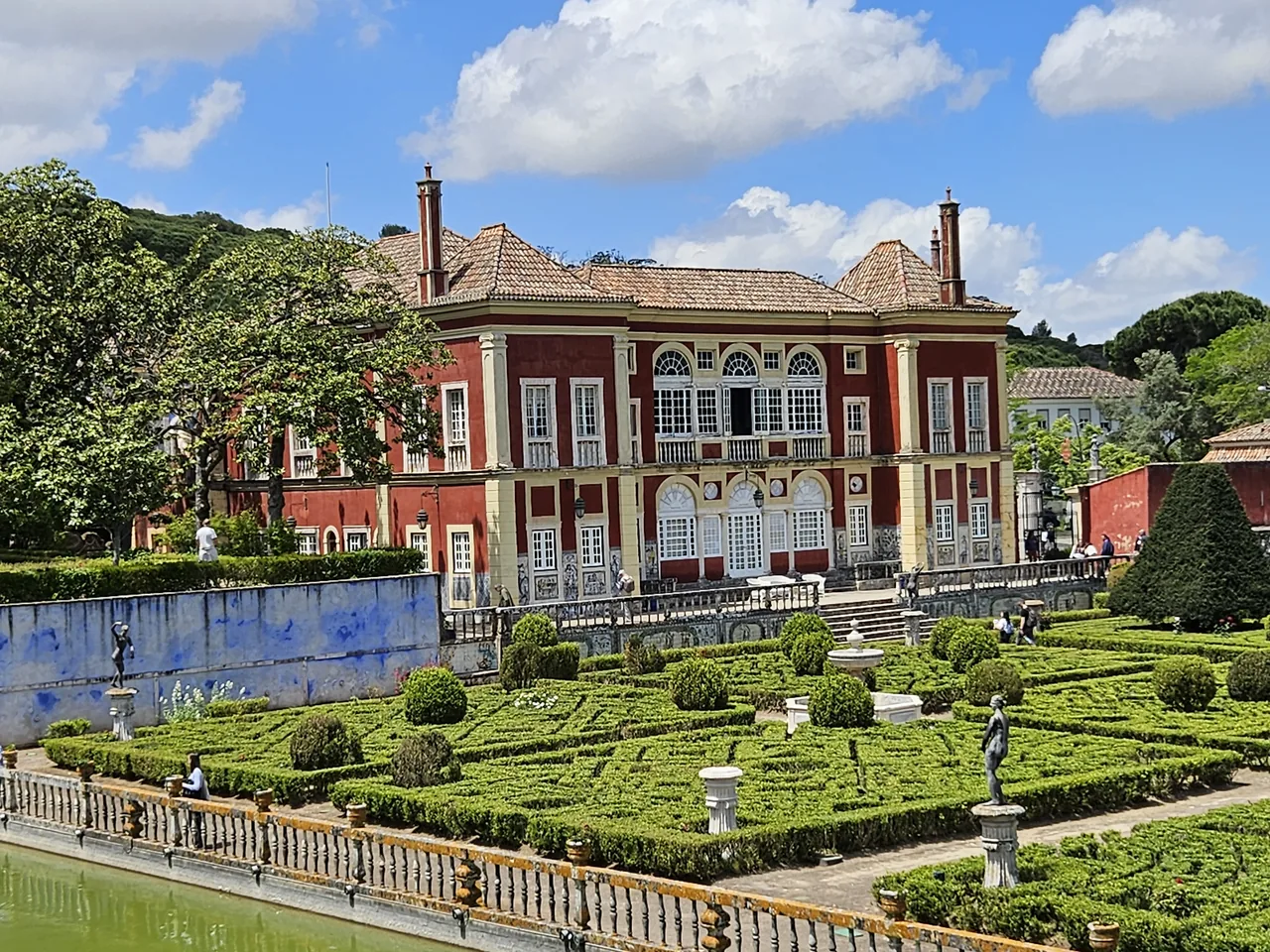
Fronteira Palace rewards a close look. At first you notice the red façade, clipped hedges and long pool. Then the tiles draw you in: riders, animals and elaborate scenes spread across walls that belong to the garden as much as to the house. The decoration has stayed in its architectural setting, which makes it particularly satisfying to explore.
The palace is far enough from the central sightseeing circuit to need a deliberate journey. Make that journey for the combination of decorative art, garden design and family history. The guided interior visit adds the explanation that a beautiful photograph cannot provide, while the grounds give you time to examine details at your own pace.
This is a particularly rewarding choice for people interested in tiles, historic houses or gardens. You do not need specialist knowledge, although a willingness to look closely helps. Visitors who mainly want a quick city panorama will find easier options nearer the centre. Fronteira deserves a little more time and attention.
Look closer
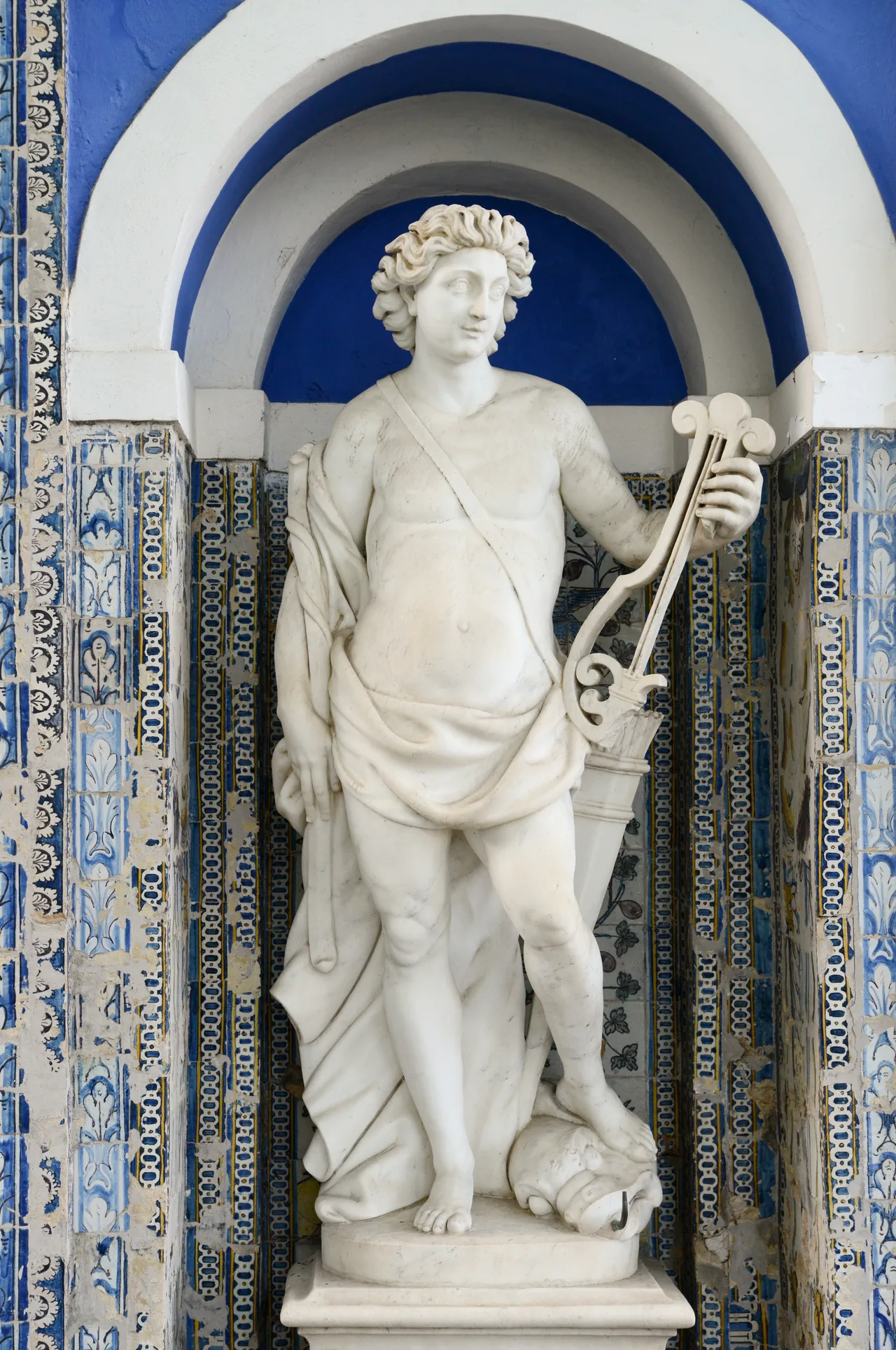
Walk beside the decorated walls and notice how the panels relate to doorways, niches and terraces. Their effect depends on placement as well as individual images. Step back to appreciate an entire wall, then move closer to pick out a figure or an unexpected detail. This is a chance to see tiles functioning as architecture.
The long pool and the gallery above it form one of the garden’s most striking compositions. Water, tiled surfaces and sculpture are arranged to be seen together. Try more than one viewpoint along the permitted paths: a frontal view gives you symmetry, while looking along the pool brings out the depth of the setting.
The house tour introduces the rooms and the family stories behind them. The Battle Room is a particular reason to include the interior, with its tile scenes requiring more explanation than a quick glance can supply. Ask about the connections between decoration, family status and Portuguese history. This is still an inhabited house, so follow the guide’s route.
Leave time beyond the main formal view. The Liberal Arts Terrace and the garden’s smaller architectural features invite slower inspection. Look for changes in materials and texture as well as the blue-and-white panels. A visit spent only photographing the façade misses much of the craftsmanship that makes Fronteira distinctive.
The visitor perspective
The tiles and the house guides are the strongest recurring themes in the accounts we read. Visitors describe explanations that turn attractive rooms into a much richer experience, and many value seeing a historic property that remains a family home. The gardens provide a quieter second part to the visit, with plenty of detail to discover.
Expect an old estate rather than immaculate new surfaces everywhere. Some reviewers mention areas needing care or restoration, while others find the overall setting beautiful despite its wear. Rain can also limit how much time people want to spend outside. These reservations sit alongside considerable enthusiasm for the guided interior.
The most satisfied accounts often combine both parts. Take the house tour, then leave enough time for the garden instead of rushing back towards the centre. If you choose only the grounds, do so for their tiles and layout, knowing that you will miss the rooms and their stories.
Visitor feedback reviewed:
The story
João de Mascarenhas, the first Marquis of Fronteira, commissioned the palace as a retreat outside the city. The main building and its decorated terraces took shape in the later seventeenth century. It was conceived as a country estate, and the generous grounds still give it that character despite the city’s expansion around it.
After the earthquake of 1755 destroyed the family’s central residence, Fronteira became their principal home and was enlarged. It remained in family use, preserving a continuity that is unusual among houses open to visitors. The public route therefore passes through part of a living property, not an entirely vacated palace.
Fernando Mascarenhas later established the Foundation of the Houses of Fronteira and Alorna to give the inherited estate a lasting cultural purpose. The foundation’s work connects preservation with research and public access. That helps explain the character of a visit: careful interpretation of the house, with more freedom to linger in the gardens.
Planning your visit
For current opening hours and ticket details, visit the official website.
Official visitor information ↗The area
Fronteira stands beside São Domingos de Benfica, near the edge of Monsanto Forest Park. Sete Rios and Jardim Zoológico provide useful transport connections, but the palace is still a walk from the stations. Use the entrance on Largo São Domingos de Benfica. Build the journey into your plans rather than treating it as a short detour from Baixa.
 Open map
Questions about this place
Interior visits are guided because the palace remains an inhabited private home. Choose the palace-and-gardens visit if you want to see the rooms.
Yes, particularly for the tilework, pool and formal layout. You will miss the interior and its interpretation, but the grounds offer a substantial decorative and architectural experience of their own.
Allow roughly 90 minutes to two hours for a palace tour and the gardens. Around an hour works for a garden visit, although tile enthusiasts and photographers may stay longer.
It is an aristocratic family palace associated with the Marquesses of Fronteira. Its appeal includes that continuing family connection, as well as the building and gardens.
More of Lisbon
Visitar editorial team
Based on official visitor information, historical and collection records, and a sample of individual traveller reviews.
Visit times are estimates. The guide is based on published sources; it does not include an on-site inspection. Photographs come from credited sources and may show earlier displays or arrangements.
Content reviewed: · Visitar.com
Image resized for display; full source and licence linked.