Memorials, galleries & terrace
60–90 min
A complete visit through the main interior and memorial rooms, with time for the upper views and roof terrace.
National monument & memorial · Santa Clara & Alfama
Panteão Nacional
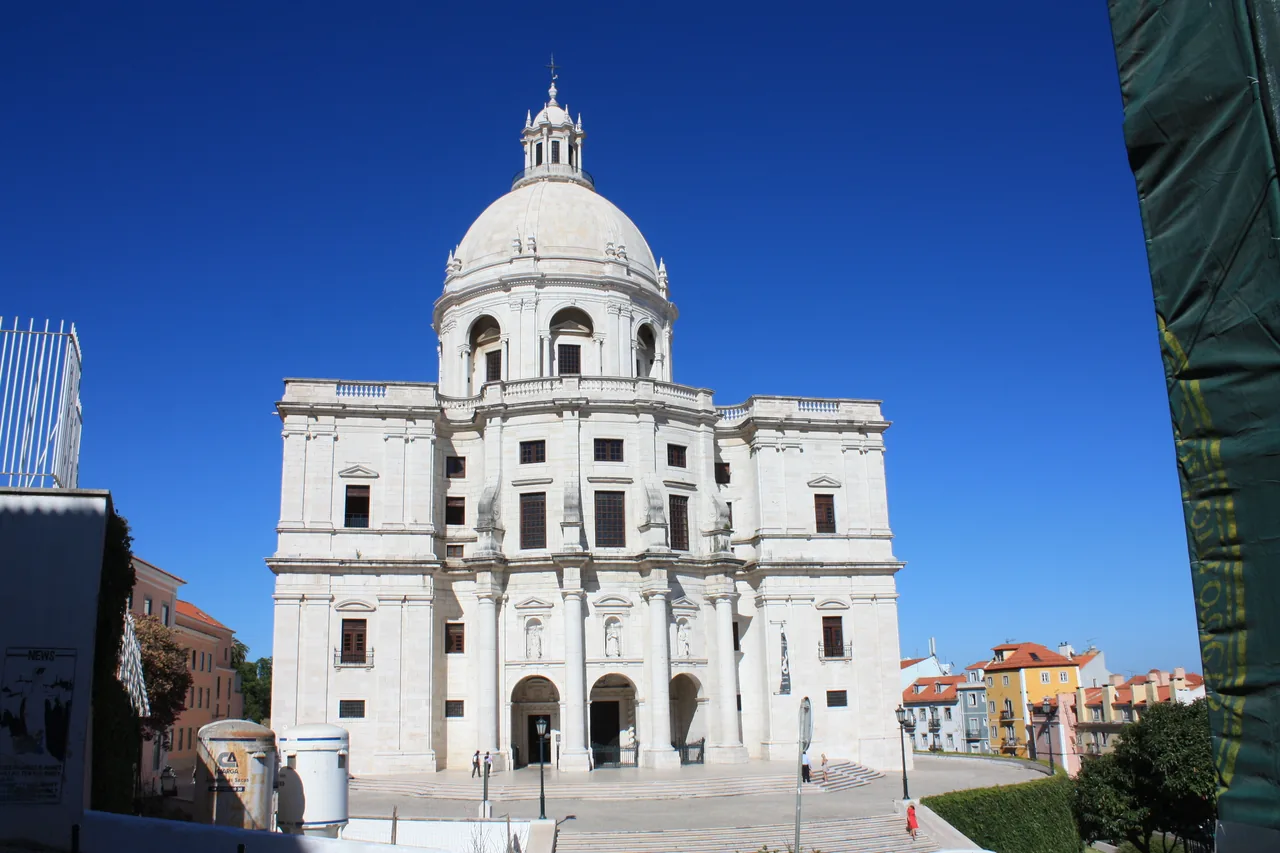
Beneath Santa Engrácia’s great dome, coloured marble surrounds the memorials of poets, singers and public figures. The upper galleries and roof terrace reveal the building from very different angles.
At a glance
60–90 min
A complete visit through the main interior and memorial rooms, with time for the upper views and roof terrace.
Photographs


What to see
The National Pantheon occupies the former church of Santa Engrácia, whose white dome rises above the eastern side of Alfama. It is both a remarkable building and a place of national remembrance. A visit moves between the vast central space, quieter memorial rooms and upper levels overlooking the interior and the Tagus.
The architecture makes an immediate impression even if the names commemorated here are unfamiliar. Curved walls, patterned marble and the height of the dome give the interior a ceremonial scale. Upstairs, you can see how the floor and surrounding spaces fit together before stepping out to a much wider view. The shift from enclosed stone to open sky is a substantial part of the visit.
The Pantheon suits an interest in architecture, Portuguese culture or viewpoints. It becomes more rewarding when you recognise a few of the people remembered here, but it need not turn into a lesson in every political career. Choose two or three names to follow and leave time to appreciate the building itself.
Look closer
Stand back from the memorials and look at the whole central space. The floor pattern, curved walls and coloured stone give it a unity that close-up photographs can miss. Then examine the changes of colour and shape. The effect comes from architecture and materials working together, rather than from rows of paintings or crowded display cases.
Among those buried in the Pantheon are the singer Amália Rodrigues, footballer Eusébio and poet Sophia de Mello Breyner Andresen. Their presence broadens the story beyond rulers and politicians. Read a little about a name you recognise, then another you do not. A short personal connection makes the memorial rooms more meaningful than a rapid circuit of inscriptions.
The upper gallery changes your understanding of the interior. Patterns that were underfoot become visible as a composition, and the relationship between the dome, arches and central floor is clearer. Take time here before continuing outside. It is a different kind of viewpoint, with the architecture itself as the subject.
Outside, the river and eastern rooftops replace the enclosed marble interior. Look back at the dome as well as out across the city; seeing it from close by explains why it is such a conspicuous landmark from below. The terrace is an architectural setting in its own right, not simply a platform for a distant photograph.
The visitor perspective
Visitors frequently praise the scale of the interior and the reward of the upper views. The accounts we read suggest that the combination matters: the marble spaces impress at ground level, while the gallery and terrace give the visit a second dimension. Some people find the building itself more memorable than the individual memorials.
For visitors unfamiliar with Portuguese public figures, the names alone do not always explain why this is an important place. A little background helps. The quieter atmosphere described in some reviews is also part of its appeal, though it remains a public monument rather than a guarantee of solitude.
Allow enough time to see the interior from above and look out from the terrace. Those changes of viewpoint help the visit feel complete. Anyone uncomfortable with heights can still appreciate the main spaces without making the highest view the sole reason for coming.
Visitor feedback reviewed:
The story
Construction of the present church began in 1682 after an earlier building had collapsed. João Antunes designed an ambitious Baroque church whose curved walls and Greek-cross plan departed from a conventional long nave. Work continued only unevenly after his death, and the unfinished building became a byword for a project that would never end.
The phrase obras de Santa Engrácia still refers to work that drags on indefinitely. The building survived the earthquake of 1755 but later served military purposes, including storage. It was designated the National Pantheon in 1916, long before the structure was finally completed in 1966.
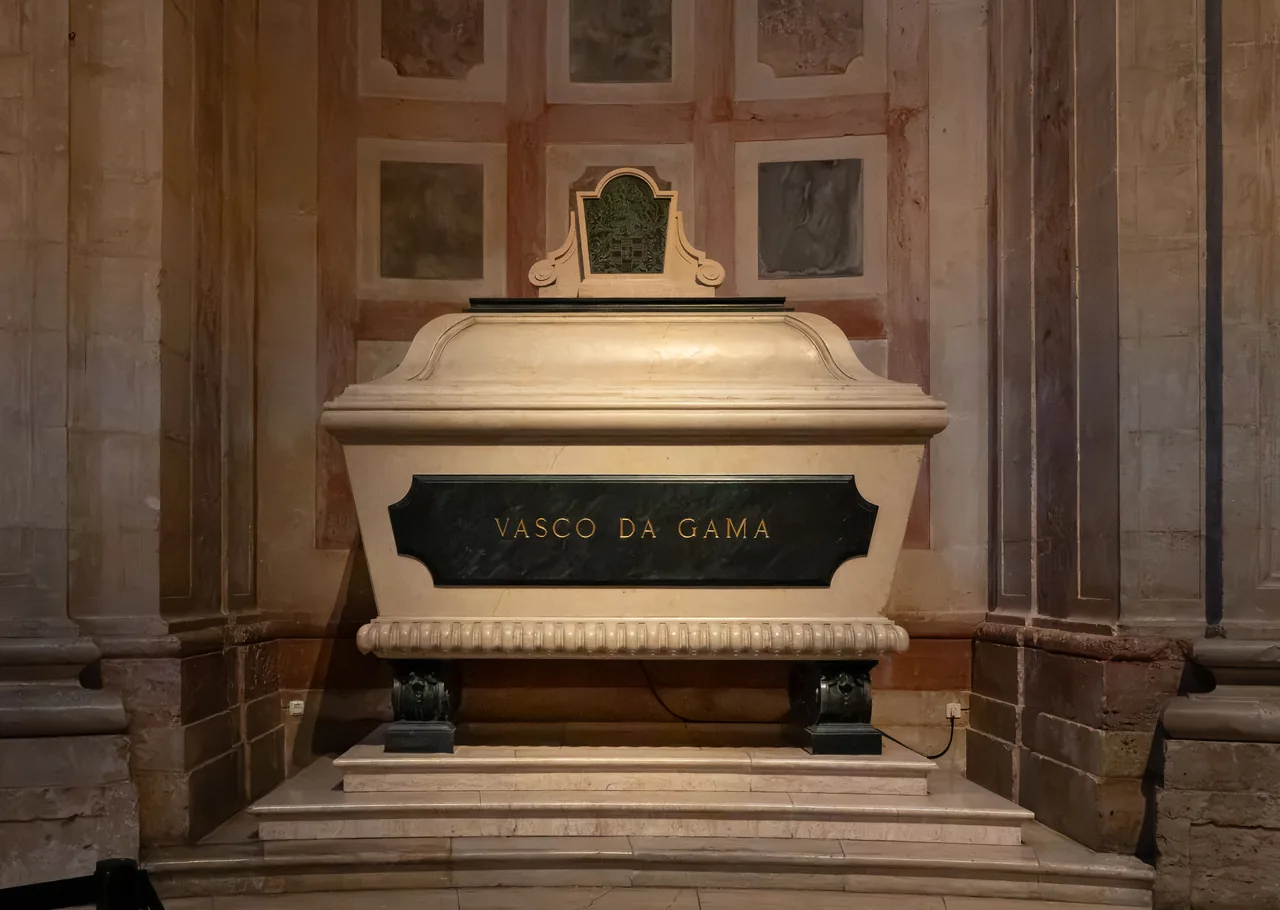
The Pantheon honours people in different ways. Some are buried here, while others are represented by cenotaphs, which are memorial tombs without their remains. Vasco da Gama and Luís de Camões belong to that second group. Remembering the distinction avoids treating every named monument as an actual burial place.
Planning your visit
For current opening hours and ticket details, visit the official website.
Official visitor information ↗The area
The Pantheon stands beside Campo de Santa Clara, close to São Vicente de Fora and the eastern streets of Alfama. Its dome is visible from several viewpoints, making it a useful landmark before you arrive. Combining the two monuments gives you contrasting interiors: the Pantheon’s broad marble spaces and São Vicente’s tiled rooms and cloisters.
Alfama area guideWhat to see, how to get around and where to stay. Open map
Questions about this place
Yes. The National Pantheon occupies the former church of Santa Engrácia. The two names refer to the same monument.
No. His monument in the Pantheon is a cenotaph, an empty memorial tomb. His remains are at Jerónimos Monastery. Other people commemorated in the Pantheon are actually buried here, so the distinction matters.
The figures include Amália Rodrigues, Eusébio and Sophia de Mello Breyner Andresen, alongside presidents, writers and other notable Portuguese people. The memorials represent several different areas of national life.
Around 60–90 minutes gives you time for the interior, memorial rooms and upper views. Leave part of that allowance for the terrace rather than treating it as an afterthought.
More of Lisbon
Visitar editorial team
Based on official visitor information, historical and collection records, and a sample of individual traveller reviews.
Visit times are estimates. The guide is based on published sources; it does not include an on-site inspection. Photograph dates appear in the gallery captions.
Content reviewed: · Visitar.com
Image resized for display; full source and licence linked.