Cloisters, collections & rooftop
90–120 min
A full visit through the monastery’s varied spaces, with time to study several tile panels and enjoy the roof view.
Monastery & historic collection · São Vicente & Alfama
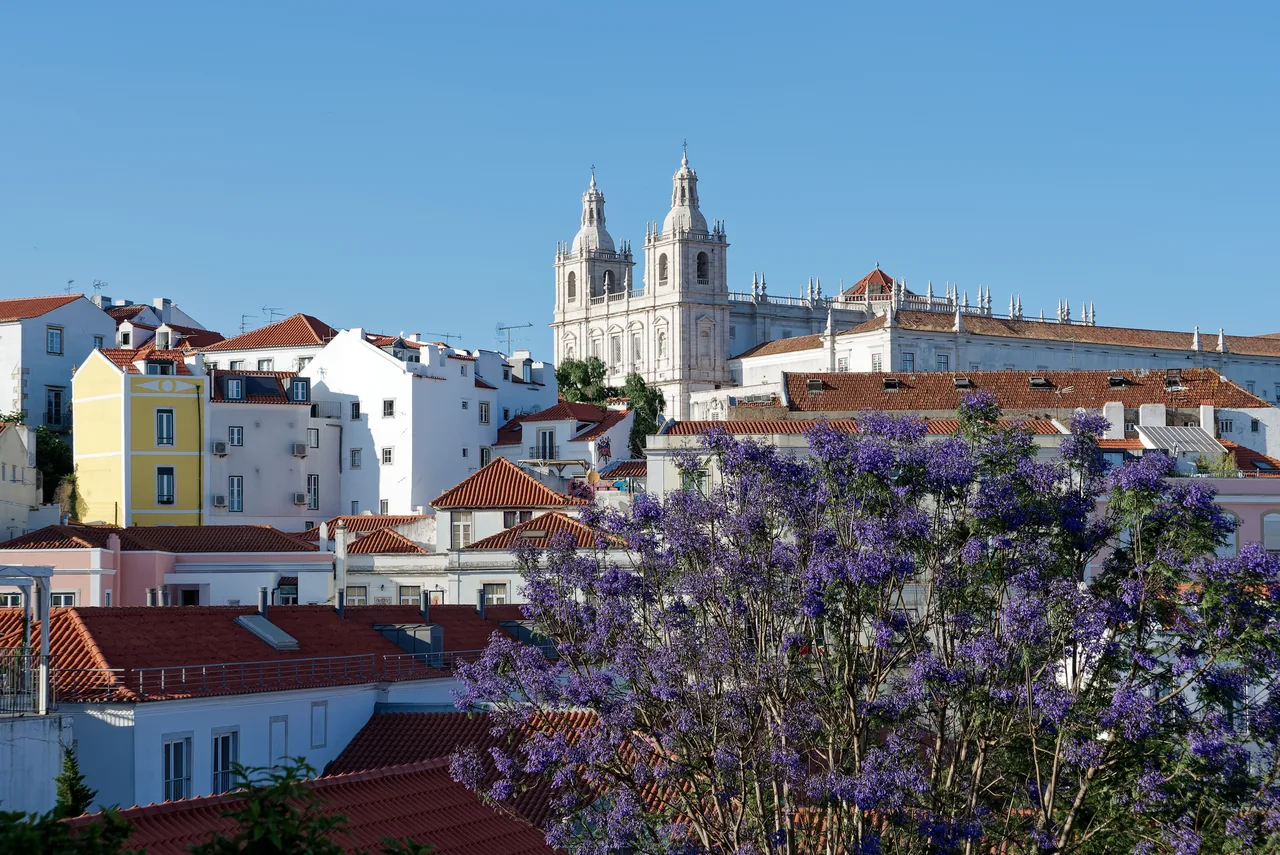
Mosteiro de São Vicente de Fora
Tiled staircases lead through cloisters and richly decorated rooms before the route reaches the roof. São Vicente de Fora has far more to show you than its twin-towered façade suggests.
At a glance
90–120 min
A full visit through the monastery’s varied spaces, with time to study several tile panels and enjoy the roof view.
Photographs


What to see
The monastery of São Vicente de Fora stands above Alfama, a large pale building whose towers are easy to recognise from across the neighbourhood. Behind the façade, the visitor route unfolds through courtyards, staircases and rooms lined with blue and white tiles. There is enough variety here to reward a proper visit rather than a glance into the church.
The tiles are the thread that holds much of the visit together. They turn passages and stairs into picture galleries, with landscapes, ceremonies and fables appearing as you move through the building. Elsewhere, coloured marble gives the sacristy an entirely different character, while the royal pantheon introduces the history of the Bragança dynasty. The roof provides a final change of scene, opening out over the city and river.
São Vicente is an especially good choice for visitors interested in azulejos, architecture or the quieter details of a large historic building. It also offers enough changes of setting to hold the attention of someone less absorbed by religious history. Allow time to explore; the interior is considerably more extensive than a brief view of the façade implies.
Look closer
The tilework belongs to the architecture around it. Look at how panels follow a stair, frame an entrance or fill the walls of a cloister. These are not isolated objects moved into a gallery: their placement helps give each space its character. Comparing a small scene with the scale of the whole wall is part of the enjoyment.
A series of panels illustrates fables associated with Jean de La Fontaine. Animals act out familiar human weaknesses and ambitions, bringing a surprisingly playful subject into the monastery. Choose one scene and work out what is happening before reading its explanation. The pictures become much more memorable once you have followed the small drama within them.
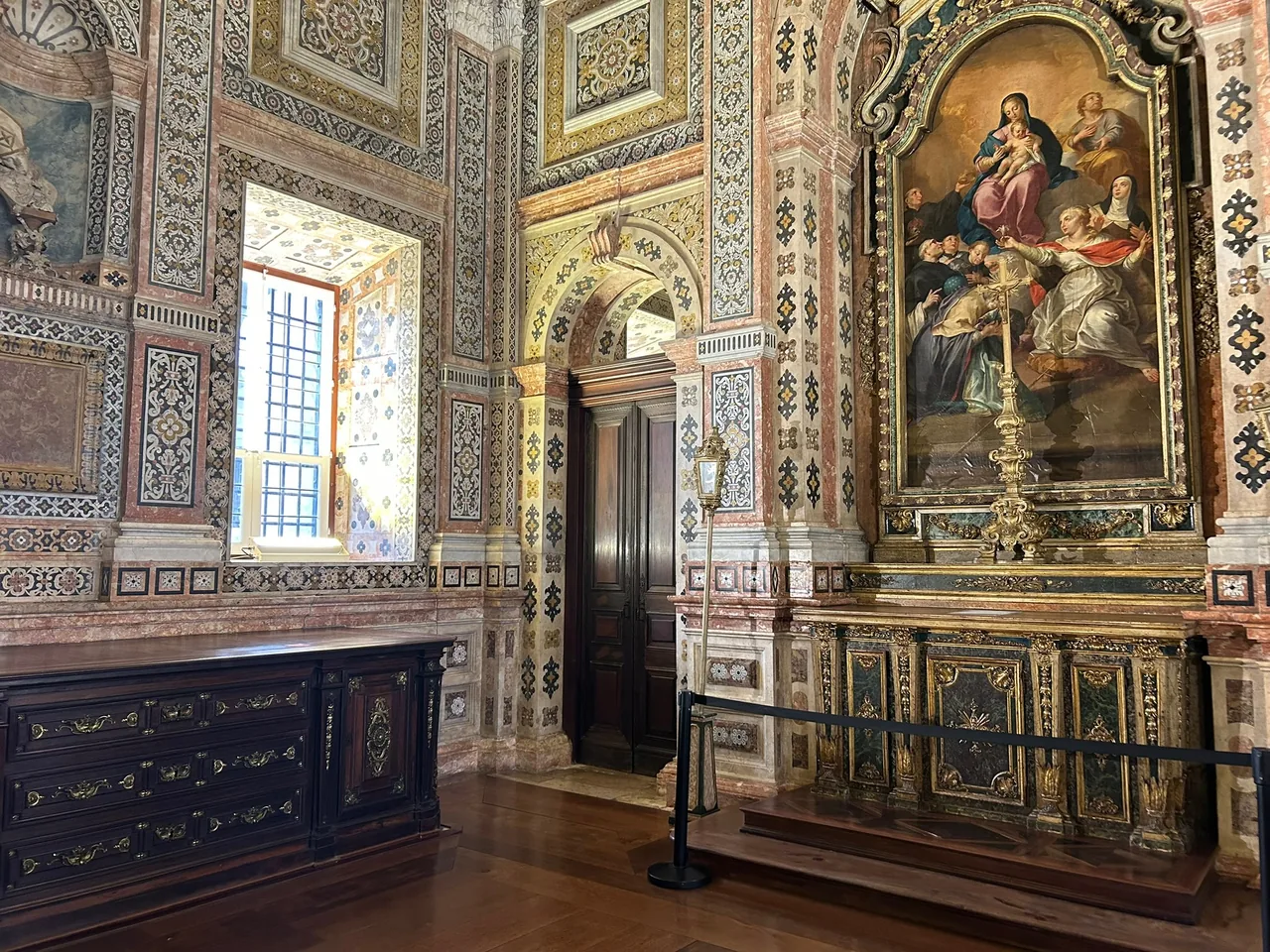
The sacristy offers a sharp change from the blue and white passages. Patterned marble, large paintings and carefully fitted furniture create a room with its own richness and order. Look at the joins between materials and the way the decoration frames the pictures. It is worth pausing here before returning to the tiled route.
The royal burial space remembers members of the Bragança dynasty and adds a different purpose to the monastery complex. It should not be confused with the separate National Pantheon nearby. The contrast is useful: one concerns a royal family, while the other commemorates figures from several areas of Portuguese national life.
The roof gives you an open view after the succession of enclosed rooms and cloisters. Take a moment to find the dome of the National Pantheon and trace the roofs towards the river. You have been moving through a building visible from across Alfama; now the neighbourhood becomes the view from that building.
The visitor perspective
The extent of the visit is a recurring surprise in the accounts we read. Visitors praise the tiled passages, cloisters and roof view, with several describing a longer and more varied experience than they expected. The fable panels stand out for people who take the time to follow their stories.
Some travellers arrive knowing little beyond the church façade and discover that there are many more spaces to explore. Accounts often mention a quieter visit than at busier landmarks, but the stronger reason to come is the material itself: tiles in their architectural setting, richly decorated rooms and a broad rooftop outlook.
Give the route enough time to reveal that variety. The fables are worth more than a passing photograph, and the passages contain much of the monastery’s character. Finishing with the view feels more satisfying when you have allowed yourself to enjoy the building on the way up.
Visitor feedback reviewed:
The story
Afonso Henriques founded a monastery here after the Christian conquest of Lisbon in 1147. The words de Fora mean outside, referring to its position beyond the city walls of that time. The present complex is largely the result of a much later royal rebuilding rather than an intact twelfth-century monastery.
Work on the new building began in 1582 under Filipe I of Portugal, also Philip II of Spain. Later royal patronage added further richness, particularly through marble and tile decoration. In the entrance hall, Manuel dos Santos’s early-eighteenth-century panels present episodes from royal history, turning decoration into an account of dynastic legitimacy.
The Augustinian community remained until the suppression of religious orders in 1834. The complex subsequently took on other ecclesiastical functions and houses the Lisbon Patriarchate as well as the visitor spaces. Its accumulated uses help explain why the visit includes such different places: cloisters, ceremonial rooms, a royal burial ground and the roof above them all.
Planning your visit
For current opening hours and ticket details, visit the official website.
Official visitor information ↗The area
The monastery faces Largo de São Vicente, above the eastern streets of Alfama. The National Pantheon is nearby towards Campo de Santa Clara, while the lanes below lead back into the older residential neighbourhood. The two monuments work well together if you enjoy historic interiors, though each deserves its own time rather than a hurried stop.
Alfama area guideWhat to see, how to get around and where to stay. Open map
Questions about this place
It means outside. The name refers to the monastery’s original position outside Lisbon’s medieval walls.
Their quantity, their place within the building and their range of subjects. The La Fontaine fable panels are particularly engaging, while other scenes depict landscapes, ceremonies and episodes from royal history.
No. The Bragança pantheon within São Vicente is a royal burial space. The National Pantheon occupies Santa Engrácia, a separate domed building nearby.
Plan roughly 90 minutes to two hours for the monastery route. You may want longer if you enjoy reading the tiles or spending time with the historical material. A quick look into the church is a different, much shorter visit.
Yes. The view over Alfama and the Tagus makes a rewarding finish to the interior route. The tilework, cloisters and sacristy provide substantial interest before you reach it.
More of Lisbon
Visitar editorial team
Based on official visitor information, historical and collection records, and a sample of individual traveller reviews.
Visit times are estimates. The guide is based on published sources; it does not include an on-site inspection. Photograph dates appear in the gallery captions.
Content reviewed: · Visitar.com
Image resized for display; full source and licence linked.