Upper viewpoint & park walk
45–75 min
Time for the panorama, a walk along the shaded avenues and a look at the Carlos Lopes Pavilion exterior. Estufa Fria is a separate visit.
Park & city viewpoint · Avenidas Novas
Parque Eduardo VII
Start at the top for the long view towards the river, then follow the tree-lined paths down towards the city centre.
At a glance
45–75 min
Time for the panorama, a walk along the shaded avenues and a look at the Carlos Lopes Pavilion exterior. Estufa Fria is a separate visit.
Photographs


What to see
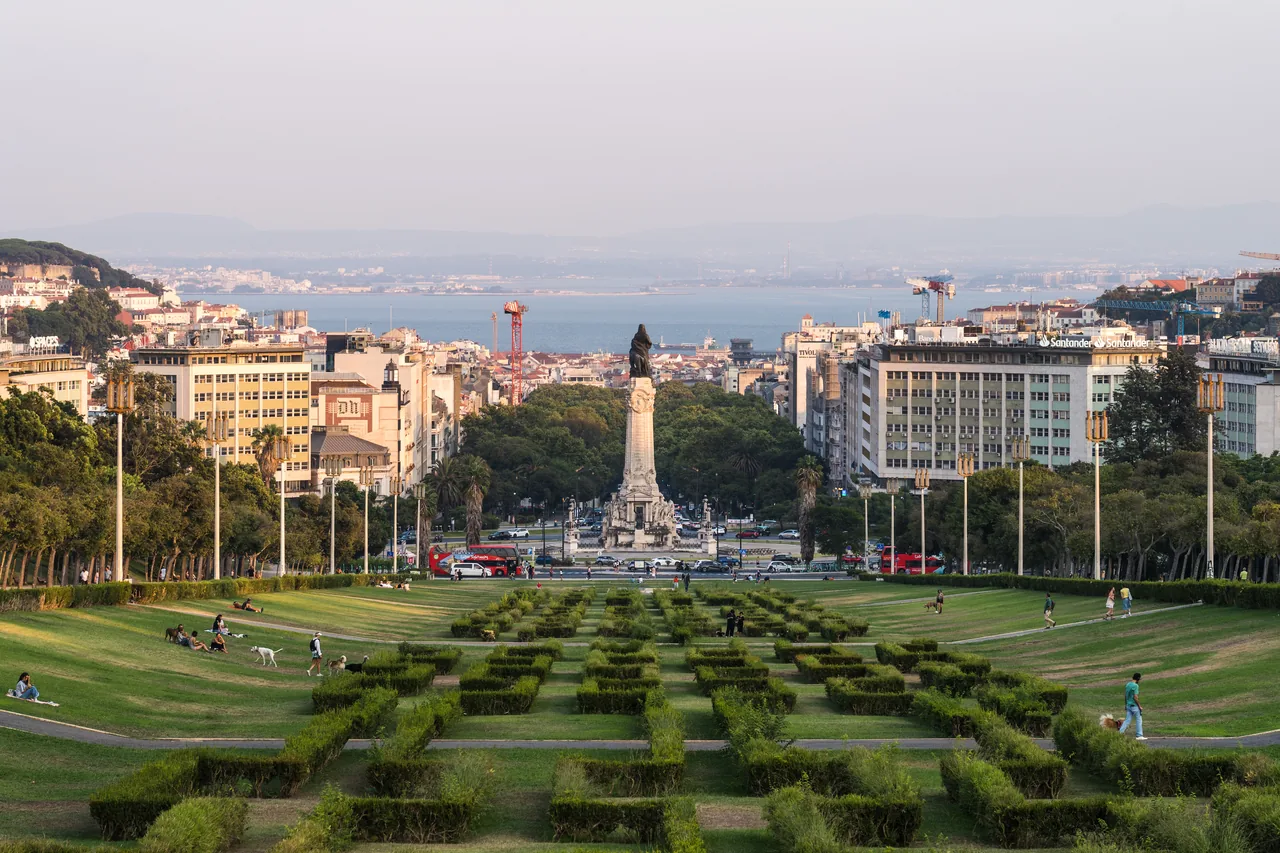
Parque Eduardo VII rises above Marquês de Pombal in a long sweep of lawns, clipped hedges and broad paths. From the northern end, the garden lines draw your eye downhill towards Avenida da Liberdade and the distant Tagus. It is one of the clearest places to see how this part of the city is laid out.
There are two quite different ways to enjoy the park. The formal centre is about distance and symmetry, best appreciated from above. Along the sides, the trees, benches and paved walks offer a more ordinary pleasure: somewhere to stroll or sit away from the busiest pavements. Give yourself time for both, rather than climbing to the viewpoint and immediately retracing your steps.
The park suits walkers, photographers and anyone staying nearby who wants some open space between museum visits. It is less compelling as a lengthy detour if your time is short and you have already seen several hilltop panoramas. Think of it as an attractive walk with a fine view, rather than a garden packed with separate attractions.
Look closer
Stand near the upper terrace and follow the central pattern downhill. The hedges, Marquês de Pombal monument and avenue beyond make a strong line through the city. The Tagus is visible in the distance when the air is clear. This is a broad urban view, with the geometry of the park as much a part of the photograph as the skyline.
Move away from the exposed centre to the paved avenues along the sides. The shade and repeated tree trunks change the character of the walk, and there are benches where you can stop without standing in the main stream of people at the viewpoint. These paths are worth including even if you came mainly for a photograph.
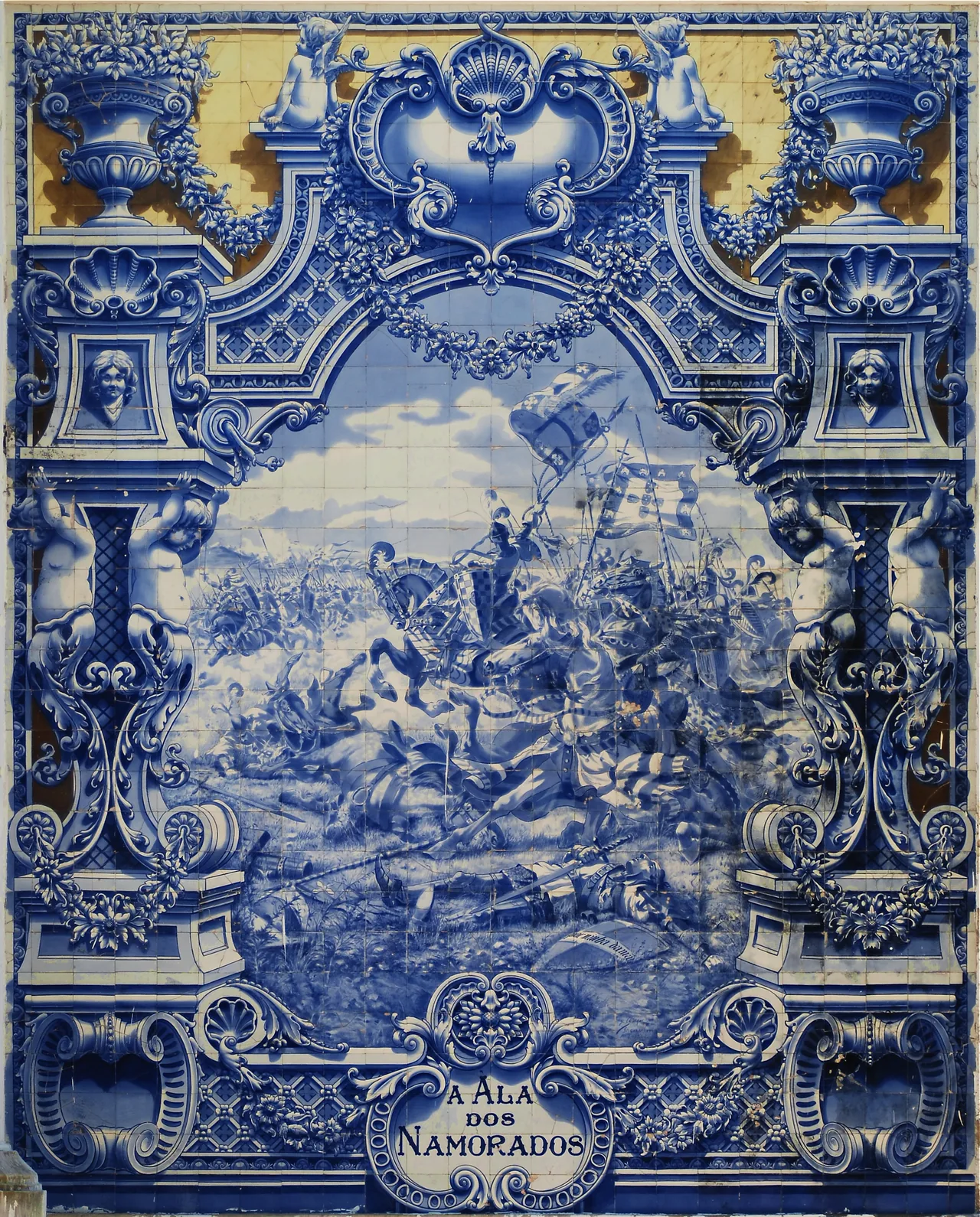
On the eastern side, the pavilion’s façade introduces blue and white tiles, sculpture and a much more decorative architectural style. Walk close enough to inspect the panels and then step back to take in the building. It is an events venue, so appreciate the exterior without assuming an interior visit forms part of a walk through the park.
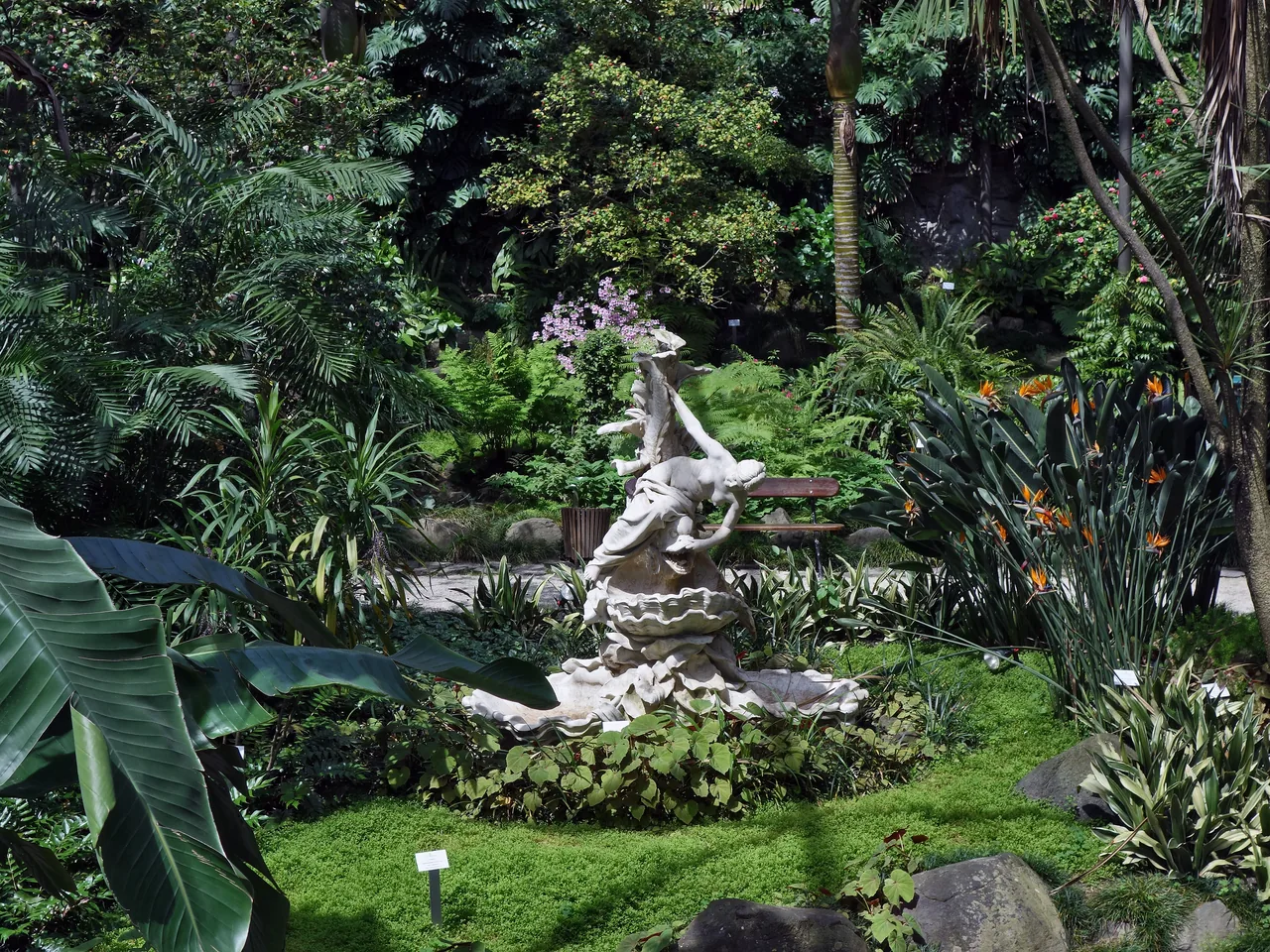
The plant collections on the western side offer a very different experience from the park’s open lawns. Within Estufa Fria, paths wind through dense planting and around water, with warm and dry growing environments alongside the large shade house. Make it a deliberate addition if gardens interest you, with its own time allowance.
The visitor perspective
The view from the top is the strongest theme in the accounts we read. Visitors enjoy the pattern of the hedges, the long perspective towards the river and the chance to walk back towards the centre. Several favour beginning uphill and letting the park become the first part of a longer downhill stroll.
Reactions are less enthusiastic when people arrive expecting a park full of attractions. Some find the climb unrewarding for the time involved, or notice the traffic around the edges. Others, particularly those staying nearby, appreciate the simple pleasure of a regular walk beneath the trees.
Include it when it fits your route, and leave room to enjoy the paths as well as the viewpoint. If plants are your main interest, adding Estufa Fria gives the outing more substance. For a very short first visit to the city, the park is easier to justify as part of a walk than as an isolated destination.
Visitor feedback reviewed:
The story
Originally known as Parque da Liberdade, the park was renamed in honour of Britain’s Edward VII following his visit in 1903. Its position continued the grand avenue running north from the older centre, providing a substantial area of public open space as the city expanded.
The layout owes much to the work of architect Keil do Amaral in the 1940s. The central geometry, broad side walks and upper terrace give the slope a clear structure. Seen from above, the result feels almost diagrammatic; at ground level, the scale becomes apparent as you walk between its different parts.
The Carlos Lopes Pavilion has a history of its own. Built for an exhibition in Rio de Janeiro in 1922, it was later reconstructed here and opened in 1932. It received its present name after Carlos Lopes won the Olympic marathon in 1984. The building adds an unexpected international journey to an otherwise straightforward park walk.
Planning your visit
For current opening hours and ticket details, visit the official website.
Official visitor information ↗The area
The park extends uphill from the Marquês de Pombal roundabout. Starting near the upper end lets you walk downhill through the gardens and continue along Avenida da Liberdade towards Restauradores. Estufa Fria occupies a separate garden complex on the western side. Allow extra time for that visit; it is much more than a small greenhouse beside the path.
This is a route through the city. The map marks a reference point to help you find your bearings.
 Open map
Questions about this place
At the upper, northern end of the park. Looking downhill brings the formal hedges, Marquês de Pombal and the avenue towards the centre into one view, with the river beyond.
It is chiefly an open park with formal lawns, paths and a viewpoint. Plant enthusiasts will usually find more to examine inside the separate Estufa Fria complex on its western side.
No. The clipped pattern is a formal garden design rather than a visitor maze. It is most easily appreciated by looking down from the upper terrace.
Around 45–75 minutes is a useful allowance for the view and an unhurried walk. You can make a shorter stop at the terrace or spend longer sitting in the shade.
More of Lisbon
Visitar editorial team
Based on official visitor information, historical and collection records, and a sample of individual traveller reviews.
Visit times are estimates. The guide is based on published sources; it does not include an on-site inspection. Photographs come from credited sources and may show earlier displays or arrangements.
Content reviewed: · Visitar.com
Image resized for display; full source and licence linked.