Tower & surrounding streets
20–30 min
Time to see the tower from Baixa, examine the ironwork and take photographs. This estimate covers the exterior, not a lift journey or terrace visit.
Historic lift & landmark · Baixa & Carmo
Elevador de Santa Justa
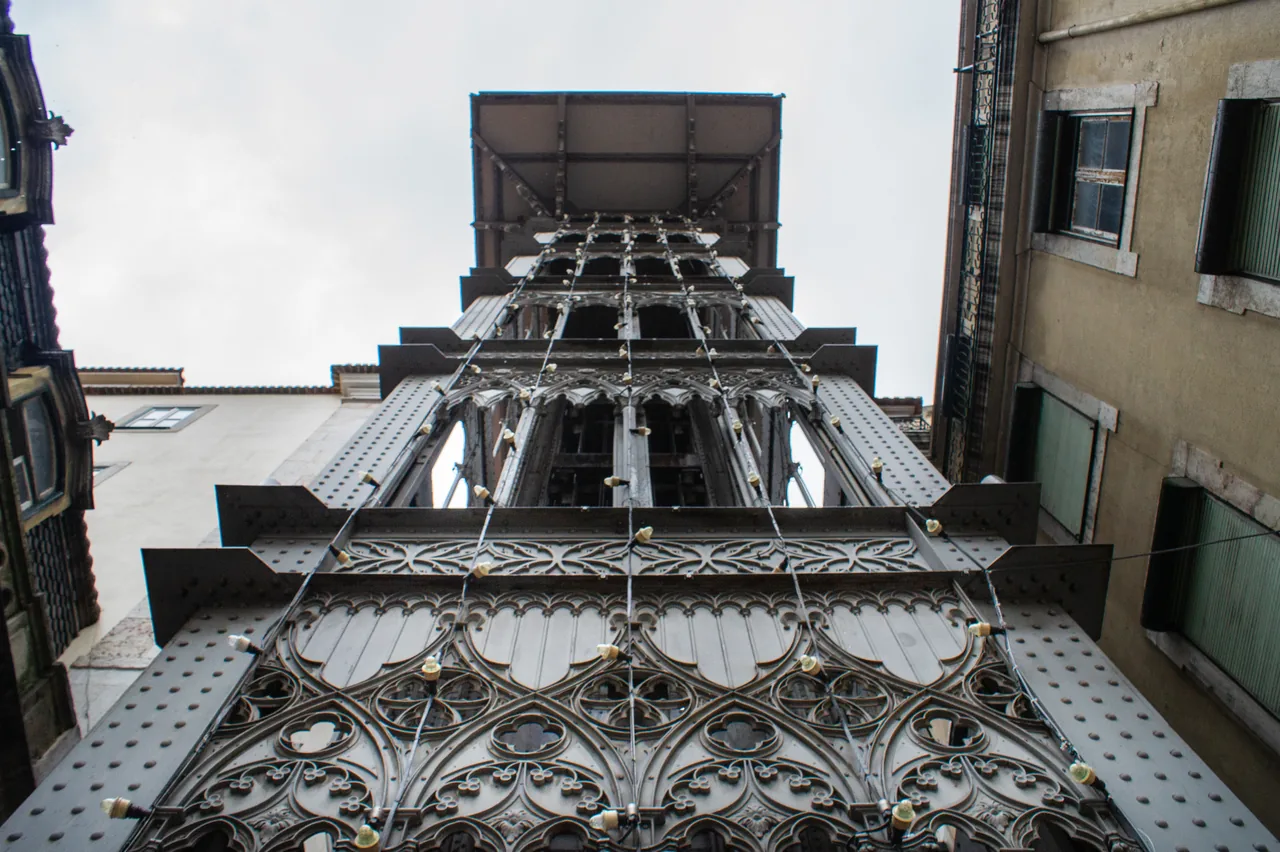
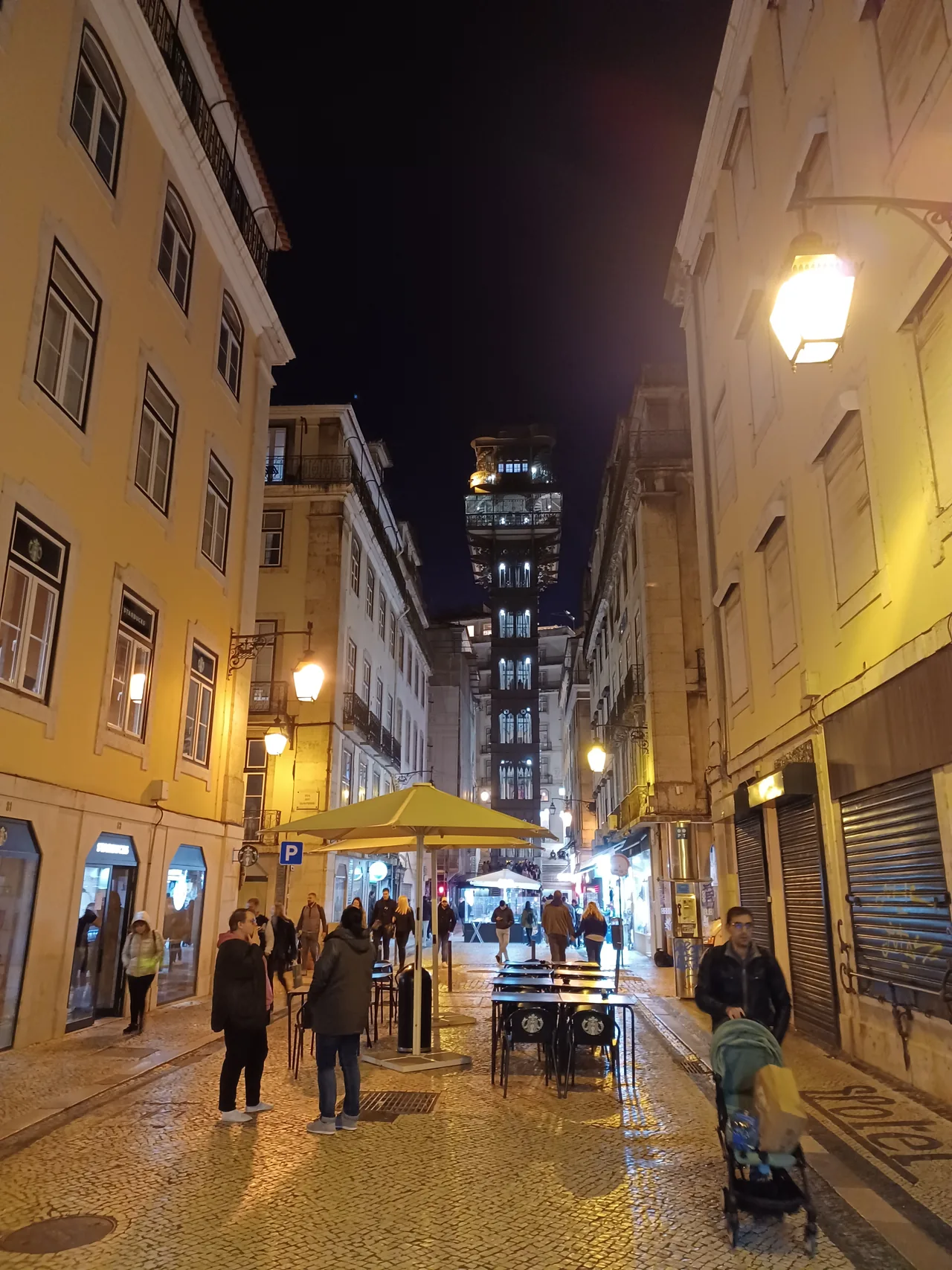
An iron tower rises between Baixa's buildings, with Gothic arches, intricate metalwork and a bridge high above the street. Santa Justa is worth a closer look from the pavement.
At a glance
20–30 min
Time to see the tower from Baixa, examine the ironwork and take photographs. This estimate covers the exterior, not a lift journey or terrace visit.
Photographs


What to see
Santa Justa Lift was built to connect the lower streets of Baixa with Carmo on the hillside above. Its tall metal frame is one of the most distinctive structures in central Lisbon. This guide concentrates on seeing the landmark from outside and understanding how it fits into the city.
From Rua de Santa Justa, the lift appears at the end of the street, squeezed between buildings that make its height more striking. Move closer and the decoration becomes the attraction: pointed arches, patterned iron panels and slender columns turn a practical piece of transport engineering into something unusually elaborate. The bridge at the top explains the whole design, carrying the connection from the freestanding tower to the higher ground at Carmo.
This is a short, satisfying stop for anyone interested in architecture, engineering or street photography. It fits naturally into a walk around Baixa, with the option of continuing uphill through the surrounding streets to Carmo and Chiado.
Look closer
Approach along the street from the Baixa side to see the tower framed by the façades. From further back, you can take in its full height and the way it occupies such a confined space. It is a useful first view before getting close to the decorative panels, where the scale of the structure becomes harder to judge.
Look for pointed arches, repeating patterns and the finely worked panels around the tower. These details borrow the language of Gothic architecture, but use metal instead of carved stone. The contrast is particularly clear beside Baixa's regular rows of windows and pale rendered walls. You do not need to enter the lift to appreciate much of this workmanship.
Look up beneath the bridge and follow it towards the Carmo hillside. The tower raises the cabins vertically; the bridge spans the gap to the upper level. Seen together, they make the lift's original purpose much easier to understand. It was an ingenious answer to a very ordinary Lisbon problem: getting from a low street to a neighbourhood on higher ground.
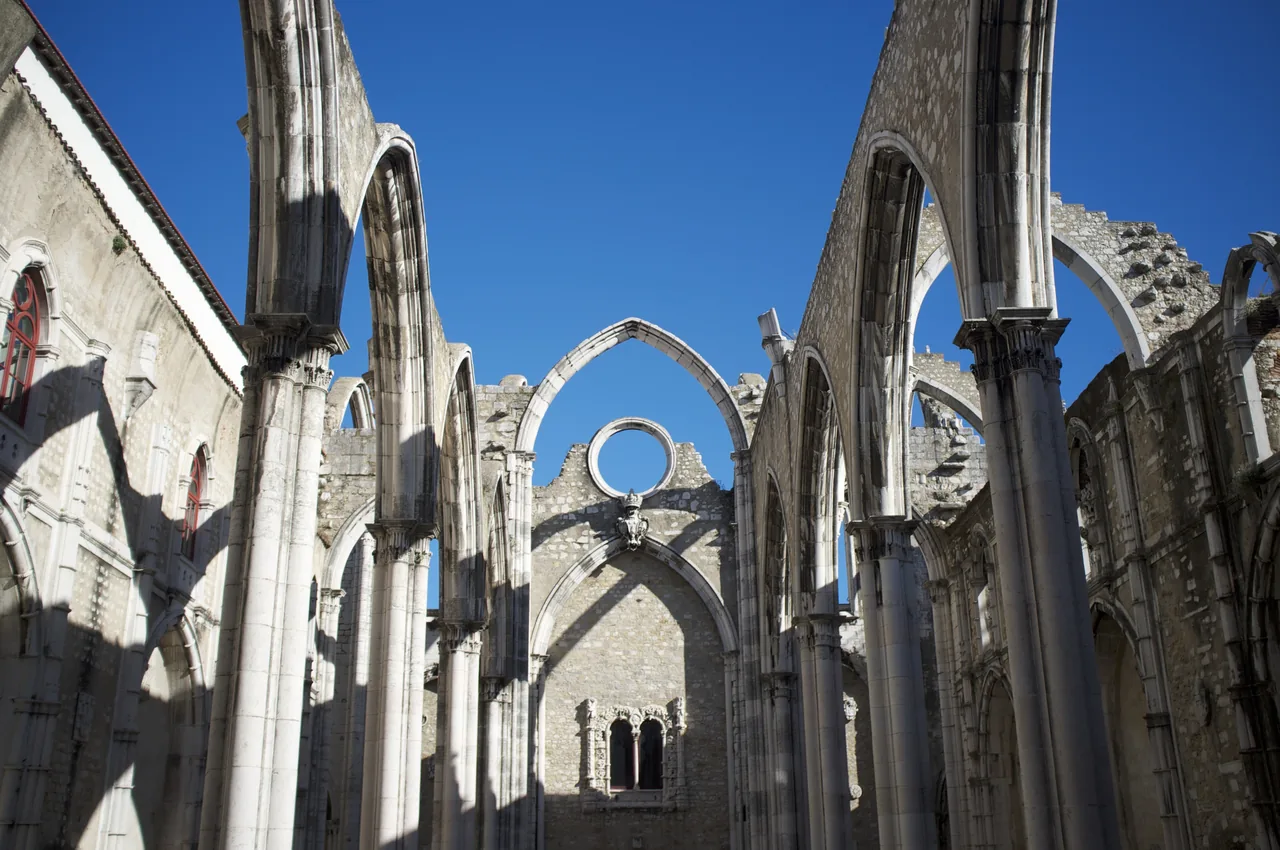
Continue uphill on the public streets if you want to see the neighbourhood at the other end of the connection. Largo do Carmo, beside the ruined convent, offers a pleasant place to pause after Baixa. Reaching the square on foot is separate from entering the lift, bridge or viewing terrace, so it also makes sense as a walk in its own right.
The visitor perspective
The ironwork earns praise even from visitors who do not take the lift. Reviewers describe an attractive, unusual structure and enjoy seeing it among Baixa's streets. Photographs and a close look at the tower are enough for some, particularly when they are already walking through the neighbourhood.
Accounts of riding the lift are more divided. Some travellers enjoy the historic journey and the views from the upper levels; others feel that a short ride does not justify a long wait or the cost. These are descriptions of past visits, rather than a guide to the operating arrangements you will find on the day.
For a first visit, see the exterior as part of your walk through Baixa. You can appreciate its design without setting aside a large part of the day. If you are especially interested in historic transport, treat a ride as a separate decision after checking access, rather than the only reason to come.
Visitor feedback reviewed:
The story
Santa Justa Lift opened on 10 July 1902. Its engineer was Raoul Mesnier du Ponsard, whose name is also associated with Lisbon's hill-climbing transport systems. Here the solution was a vertical lift, linking the commercial streets below with the Carmo level above.
The original machinery ran on steam. Electric motors replaced it in 1907, only a few years after the opening. The ornate ironwork belonged to a period when new engineering could be both conspicuously modern and richly decorative. Pointed arches and patterned panels gave the tower a distinctive presence among the more uniform buildings of Baixa.
Also known as the Carmo Lift, the structure became part of the CARRIS network when the company acquired the city's lift and funicular assets in 1926. It was later classified as a National Monument. Its appeal now reaches well beyond its transport function: the tower is one of the clearest illustrations of how Lisbon's steep changes in level shaped the city's engineering.
Planning your visit
For current opening hours and ticket details, visit the official website.
Official visitor information ↗The area
The lower tower stands at Rua de Santa Justa and Rua do Ouro, also known as Rua Áurea. Rossio is to the north and Praça do Comércio lies towards the river. To explore the upper neighbourhood on foot, continue via Rua do Carmo and Rua Garrett towards Largo do Carmo; the street route lets you reach the square independently of the lift.
Baixa area guideWhat to see, how to get around and where to stay. Open map
Questions about this place
Yes, particularly if you enjoy architecture. The tower, decorative metalwork and high-level bridge can be appreciated from the surrounding streets. It is an easy stop while exploring Baixa.
Yes. Public streets connect Baixa with Carmo and Chiado. One route leads via Rua do Carmo and Rua Garrett towards Largo do Carmo. It involves walking uphill and does not provide automatic access to the lift's bridge or terrace.
The engineer was Raoul Mesnier du Ponsard. The lift opened in 1902, initially using steam power, and was converted to electric operation in 1907.
No. Its cabins travel vertically inside a tower. Lisbon's funiculars, such as Bica and Glória, use vehicles that climb sloping tracks. The word elevador is often used for both types in Portuguese.
The suggested visit and time allowance cover the exterior landmark. A ride and access to the upper areas depend on the operator's arrangements, which should be checked separately before you plan around them.
More of Lisbon
Visitar editorial team
Based on official visitor information, historical and collection records, and a sample of individual traveller reviews.
Visit times are estimates. The guide is based on published sources; it does not include an on-site inspection. Photograph dates appear in the gallery captions.
Content reviewed: · Visitar.com
Image resized for display; full source and licence linked.