The arch & rooftop terrace
30–45 min
An interior visit with time for the clock room and views over the square, Rua Augusta and the river.
Triumphal arch & viewpoint · Baixa
Arco da Rua Augusta
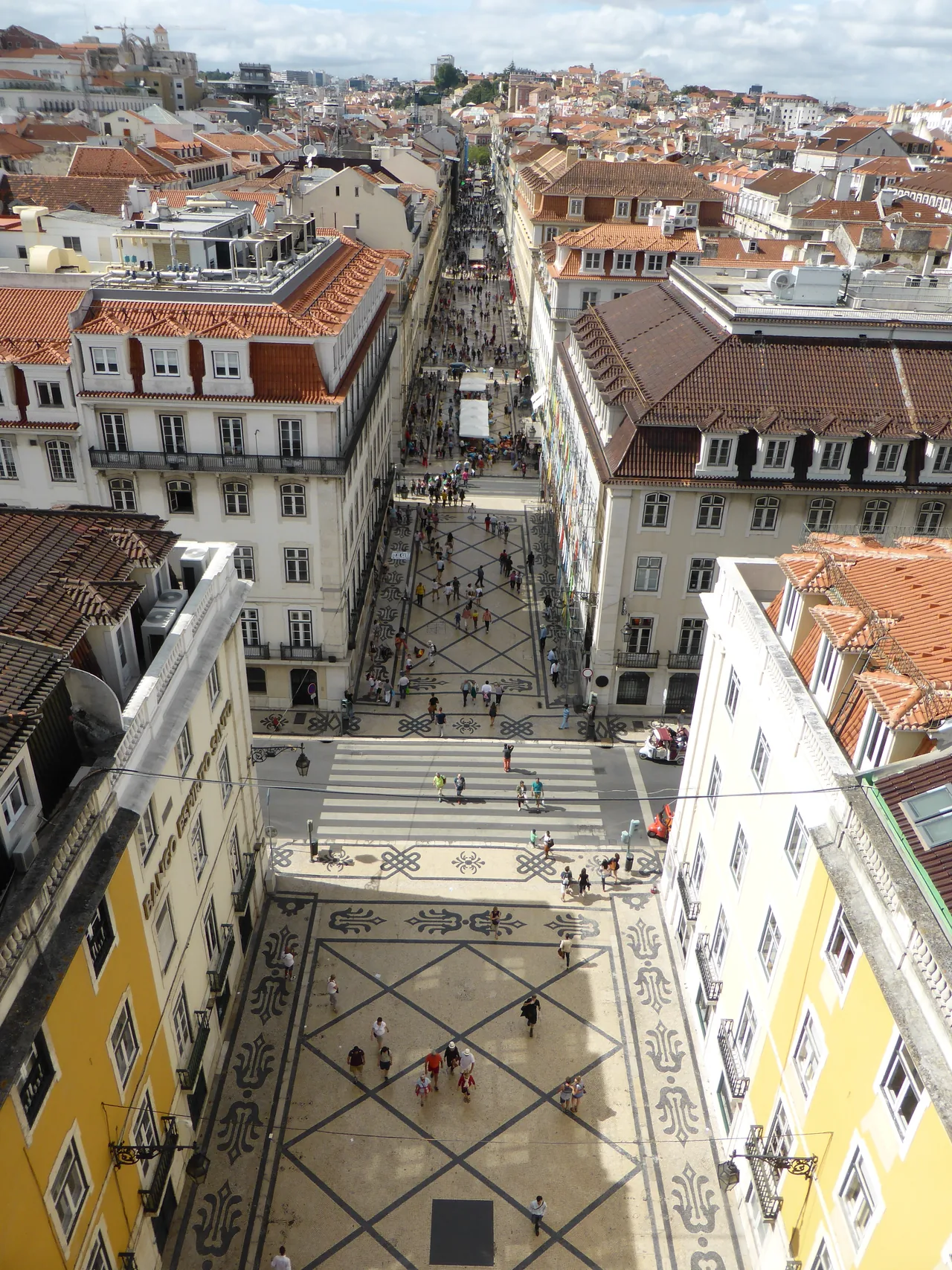
Climb above the arch for a view along Rua Augusta in one direction and across Praça do Comércio to the Tagus in the other. Below, carved figures tell the story the rebuilt city wanted to present.
At a glance
30–45 min
An interior visit with time for the clock room and views over the square, Rua Augusta and the river.
Photographs


What to see
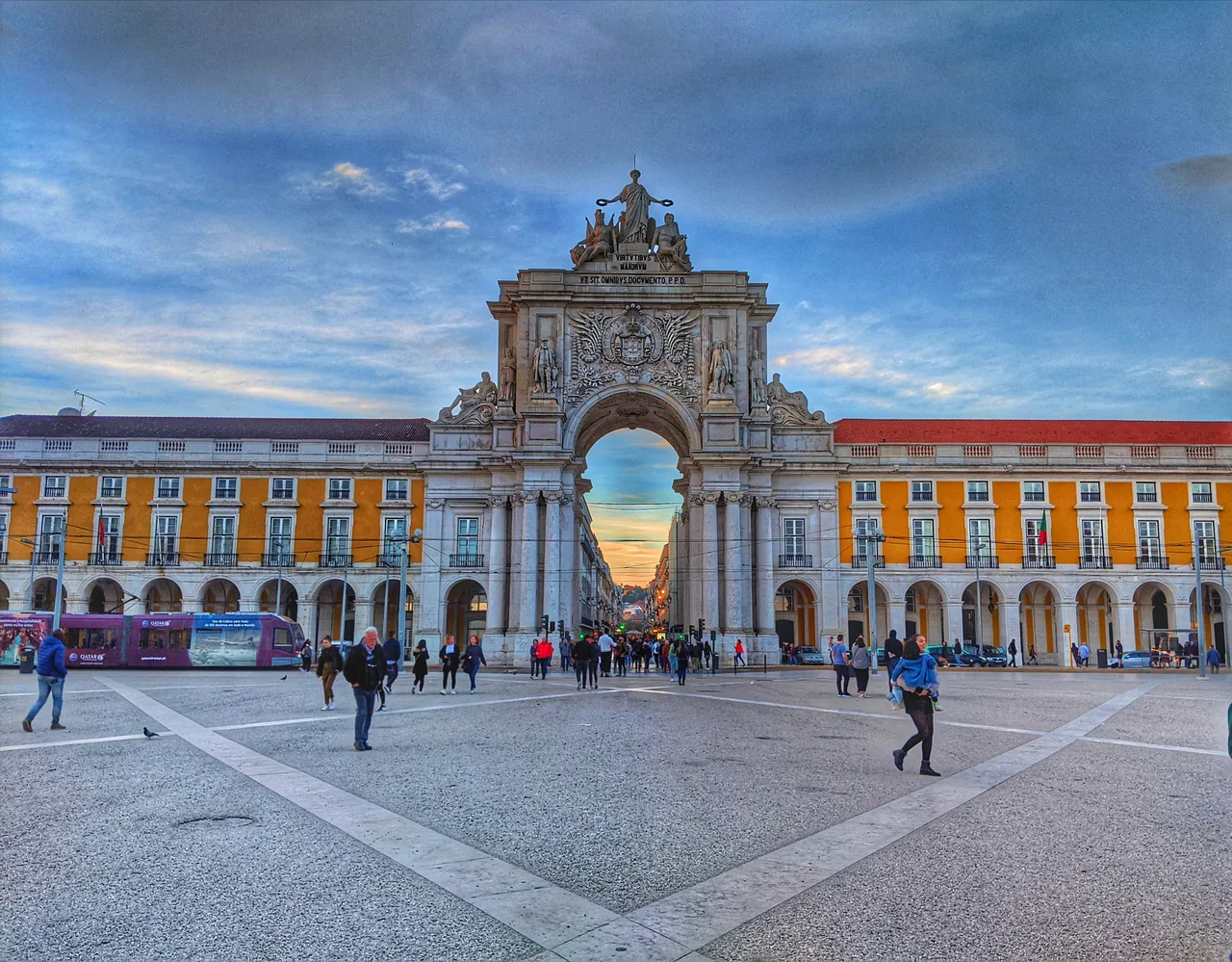
Rua Augusta Arch marks the entrance to Baixa from Praça do Comércio. Most people pass beneath it or photograph its sculpted façade from the square. A visit inside takes you to a terrace above the arch, where the straight streets, broad square and river can be seen together.
This is a view of the city’s plan as much as its skyline. Looking inland, Rua Augusta draws a straight line through the lower city; towards the river, the open square has a scale that is difficult to judge from the pavement. The sculpture also deserves attention from below. The arch celebrates national achievement in a setting shaped by the reconstruction that followed the earthquake.
The terrace suits anyone interested in city views, photography or the design of Baixa. It is a relatively short visit, easy to fit around a walk through the centre. It is especially useful for understanding the relationship between the square and the streets behind it.
Look closer
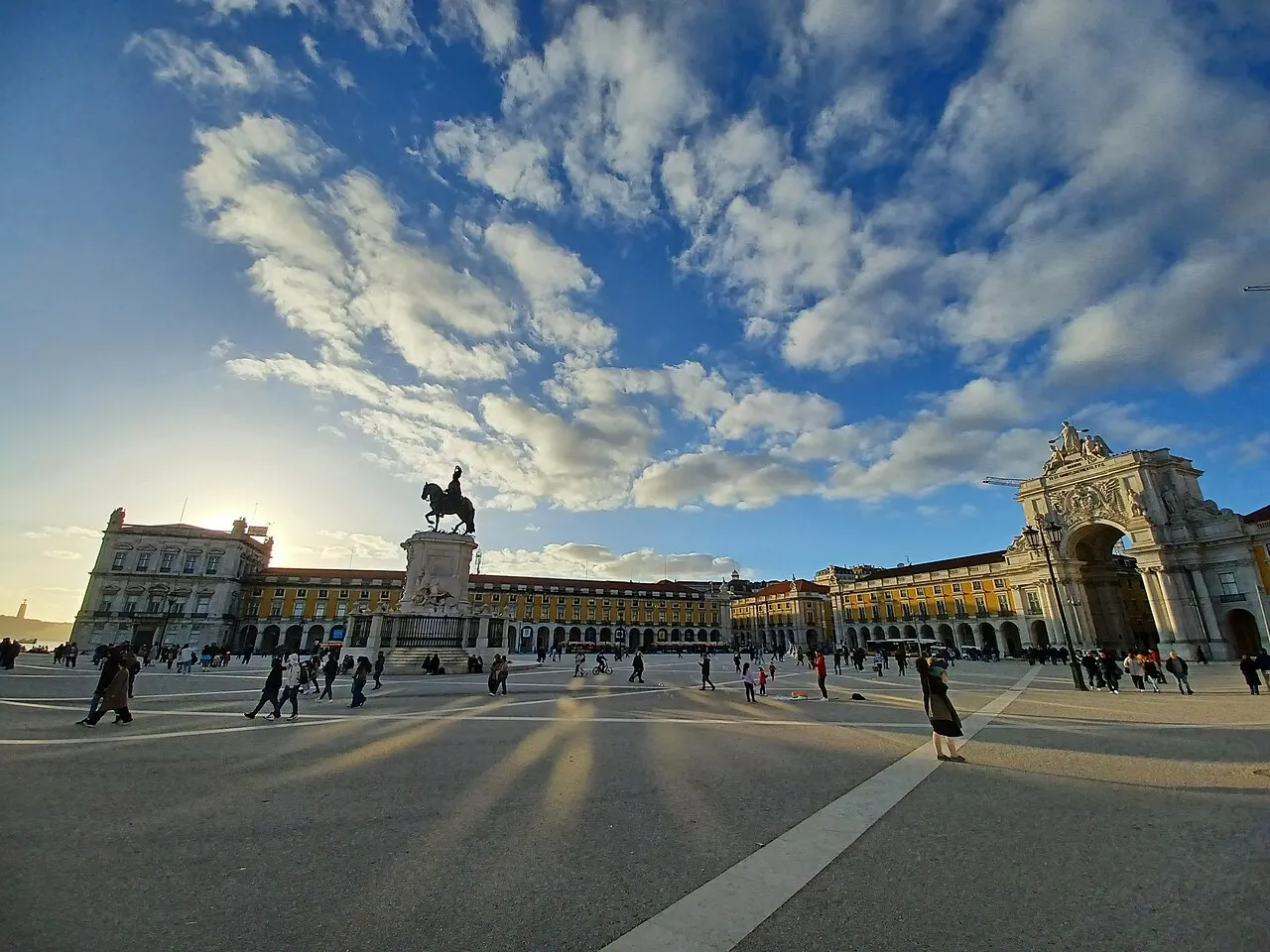
From the terrace, look towards the river across the square. The arcaded buildings and central equestrian statue become parts of a much clearer composition. It is a different experience from standing in the square itself, where its edges can feel quite distant. Leave time to look sideways along the waterfront as well as straight ahead towards the Tagus.
Turn inland to follow Rua Augusta through Baixa. The regular street pattern makes the rebuilding after 1755 easier to understand, particularly when compared with the irregular hills on either side. This is the terrace’s most distinctive view: an ordinary shopping street becomes the central line of a carefully organised district.
Before or after going up, stand back in Praça do Comércio and study the figures. Historical personalities include Vasco da Gama, Nuno Álvares Pereira, Viriato and the Marquês de Pombal. Above them, an allegorical group represents Glory crowning Genius and Valour. The sculptures were chosen to tell a celebratory story about Portugal, rather than simply to decorate an entrance.
The room inside provides a pause between the street and terrace, with an account of the arch’s history. Use it to put the building in context before concentrating on the view. Although the square belongs to the reconstruction after the earthquake, the monumental arch took much longer to reach its finished form. It is a nineteenth-century conclusion to an earlier ambition.
The visitor perspective
Visitors who go up often single out the view over Praça do Comércio and along Rua Augusta. Several of the accounts we read describe the terrace as a pleasant surprise after first noticing only the arch’s exterior. The ability to look in two very different directions gives the relatively short visit much of its appeal.
Not everyone feels the need to climb. Some visitors are happy with the façade and the square, particularly after seeing the city from another viewpoint. Others mention the narrow upper stairs. The interior is compact, so expectations of a substantial museum would be misplaced.
Choose the terrace if you want to understand the shape of Baixa or photograph the square from above. If your day already includes several high viewpoints, decide whether this closer view adds something you particularly want to see. The exterior sculpture remains worth examining either way.
Visitor feedback reviewed:
The story
The arch was conceived as part of the remaking of the lower city after the 1755 earthquake. The rebuilt square replaced the riverside royal palace with a formal space facing the Tagus. A monumental entrance at the end of Rua Augusta would link that square to the new street plan behind it.
The structure was completed in the nineteenth century, long after the first rebuilding work in Baixa. Its sculpture makes the intended message explicit. Historical figures share the façade with personifications of the Tagus and Douro, while the upper group by Célestin Anatole Calmels celebrates national virtue and achievement.
The viewpoint opened to the public in 2013. That gave a new purpose to a building many people knew only from below. Going up is now a way to appreciate the relationship between the arch, the square and the regular streets, rather than viewing them as separate sights.
Planning your visit
For current opening hours and ticket details, visit the official website.
Official visitor information ↗The area
The arch stands at the southern end of Rua Augusta, facing Praça do Comércio. The interior entrance is on Rua Augusta, rather than in the middle of the passage through the arch. After your visit, the pedestrian street leads north through Baixa, while the square opens towards the river and the waterfront walk along Ribeira das Naus.
Baixa area guideWhat to see, how to get around and where to stay. Open map
Questions about this place
Yes. The interior visit leads to a rooftop terrace above the arch. The main reasons to go up are the views over Praça do Comércio, the Tagus and the straight streets of Baixa.
No. The square is a public space that you can explore on its own. The arch’s interior and terrace are a separate ticketed attraction. This guide covers that visit, as well as the sculpture on the arch itself.
The lift covers part of the route, but the upper section includes stairs. Do not assume the terrace is step-free. Contact the operator if you need to establish whether the route is suitable for you.
About 30–45 minutes is a useful allowance for the interior and terrace. You may spend longer taking photographs, but this is usually a short addition to a walk through Baixa.
The historical figures include Vasco da Gama, Nuno Álvares Pereira, Viriato and the Marquês de Pombal. The group at the top represents Glory crowning Genius and Valour; other figures personify the Tagus and Douro rivers.
More of Lisbon
Visitar editorial team
Based on official visitor information, historical and collection records, and a sample of individual traveller reviews.
Visit times are estimates. The guide is based on published sources; it does not include an on-site inspection. Photograph dates appear in the gallery captions.
Content reviewed: · Visitar.com
Image resized for display; full source and licence linked.