Square & riverfront walk
25–45 min
Enough time for a walk around the square, a closer look at the statue and a stop by the river. Allow longer for a café, museum or the arch viewpoint.
Public square & waterfront · Baixa & riverfront
Praça do Comércio
Yellow arcades, a monumental arch and the Tagus just ahead: Praça do Comércio is a fine place to begin a walk through Baixa and along the river.
At a glance
25–45 min
Enough time for a walk around the square, a closer look at the statue and a stop by the river. Allow longer for a café, museum or the arch viewpoint.
Photographs


What to see
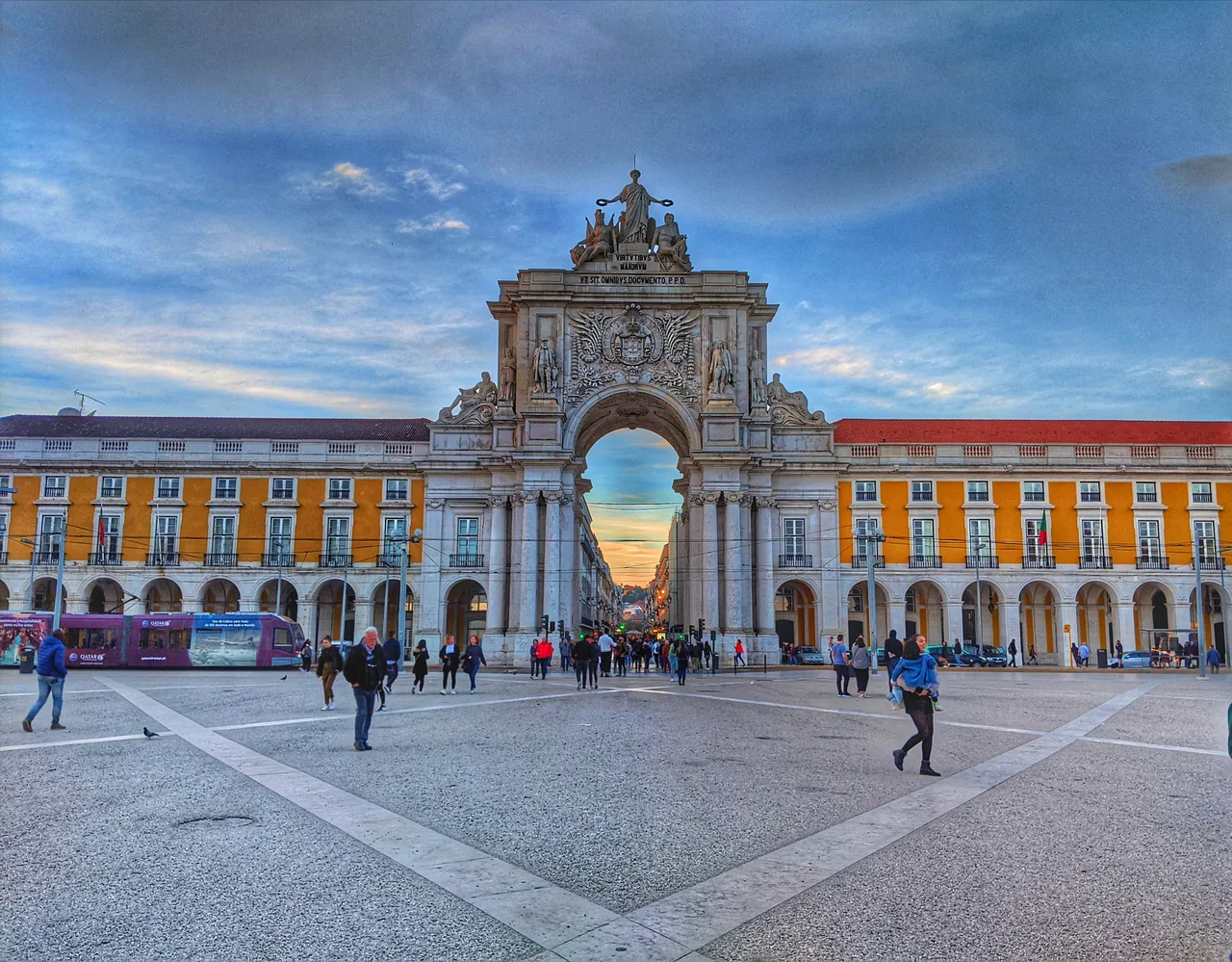
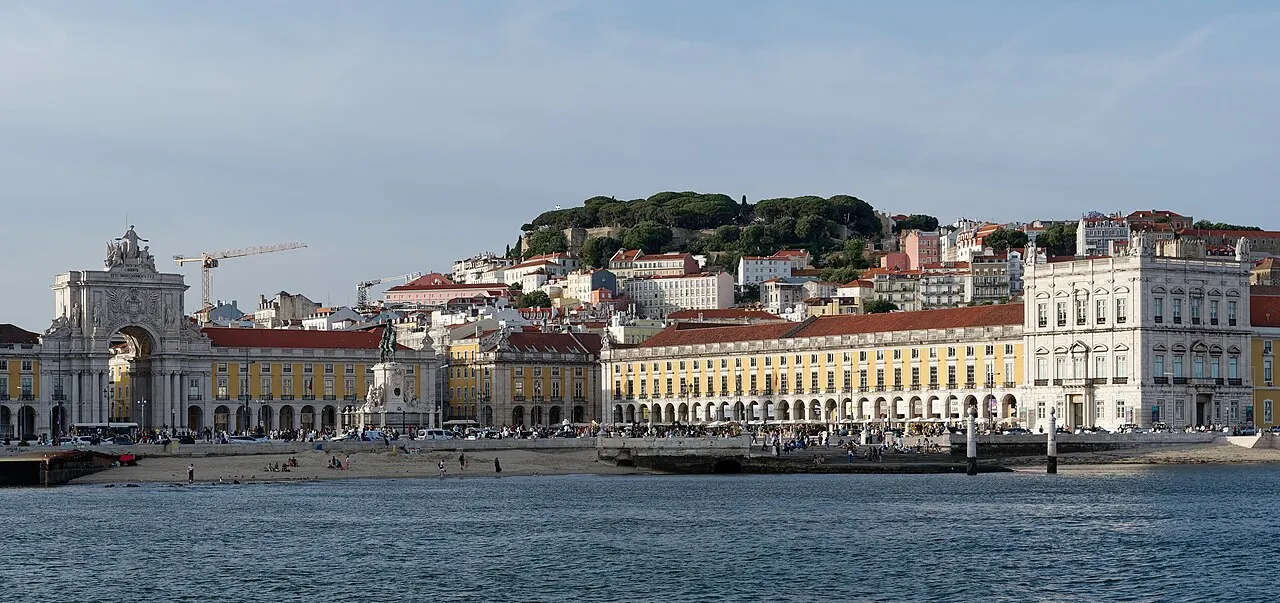
Walk down Rua Augusta and beneath the arch into Praça do Comércio. The street opens onto a broad square, with yellow façades on three sides and the Tagus on the fourth. Stop by the statue, follow the arcades and spend a few minutes at the water's edge. This is one of the loveliest places in central Lisbon to take a break from sightseeing.
The square occupies the site of a royal palace destroyed in the earthquake of 1755. Its orderly layout belongs to the rebuilding that followed, when much of Baixa was laid out on a grid. Knowing that history adds something to a walk here, but it is also a place to enjoy without much of a plan. The river, open sky and long arcades are reason enough to stay for a while.
Almost any walk through Baixa can include the square. It is particularly good for photographs, architecture and a riverside pause, and families can stop for as long or as little as they like without buying a ticket.
Look closer
Walk beneath the arch into the square, then turn to look back at its sculpted façade. Seen from here, it forms a grand entrance to the much narrower shopping street beyond. Walking beneath it is free; the viewpoint at the top is a separate visit with its own admission arrangements.
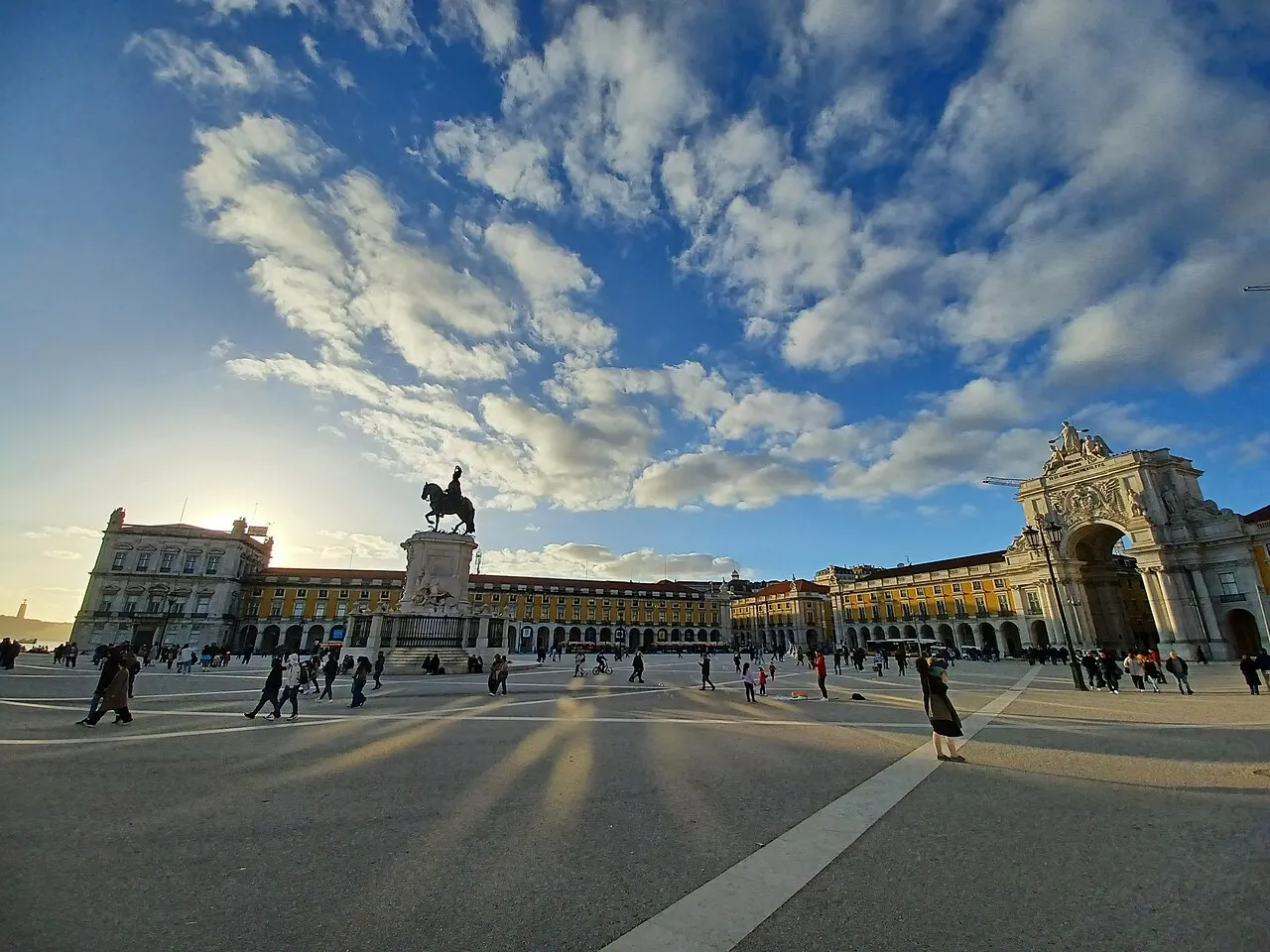
Joaquim Machado de Castro's equestrian statue stands at the centre of the square. Walk around the pedestal to see it against the arch, the arcades and the river. Erected in 1775, it belongs to the rebuilding after the earthquake and is a useful starting point for understanding the square's history.
Follow the covered walkway along one side of the square. The repeated arches look quite different from close up than they do from the centre, and their shade offers a welcome pause on a hot day. From beneath them, you can look back towards the statue and across the open space.
The paired columns and steps of Cais das Colunas mark the square's river entrance. From the upper waterfront promenade, look back towards the arch for a view of the whole square. Then turn towards the Tagus: the open river is as much a part of this place as the buildings around it.
The visitor perspective
The setting is what visitors praise most in the reviews we read: yellow façades, the arch above Rua Augusta and an open view of the Tagus. Some describe returning several times during the same trip, especially towards evening. Sitting by the river or watching people cross the square can be as enjoyable as taking photographs of its better-known landmarks.
Opinions differ mainly over how long to stay. Some visitors are happy to linger, while others feel a short walk and a few photographs are enough. The square itself is an open public space; anyone looking for a longer visit will find separate attractions around its edges.
Include it in a walk through Baixa and along the waterfront. Arriving beneath the Rua Augusta arch gives you a particularly good first view, with the river straight ahead. Leave the rest of the stop flexible: you might move on after half an hour, stay for a drink or come back when the evening light reaches the square.
Visitor feedback reviewed:
The story
The royal Ribeira Palace stood here before the earthquake of 1755. Its memory survives in the older name Terreiro do Paço, meaning the palace square, which is still used for both the square and the nearby Metro station. The palace was destroyed in the disaster, leaving the riverfront to be rebuilt on a different plan.
Under the reconstruction associated with the Marquês de Pombal, Baixa acquired its grid of streets and a grand square facing the Tagus. The new name, Praça do Comércio, placed commerce at the centre of the rebuilt waterfront, where the palace had once stood. The buildings around the square housed the administration of a city whose fortunes depended on trade.
The statue of José I on horseback, by Joaquim Machado de Castro, was erected in 1775. The Rua Augusta arch came much later, in the nineteenth century. The square therefore took shape over several generations. From the riverfront, you can see how the statue, arch and long façades were arranged to form an imposing entrance to the rebuilt city.
Planning your visit
For current opening hours and ticket details, visit the official website.
Official visitor information ↗The area
Rua Augusta leads through the arch from Baixa into the square, with the Tagus straight ahead. From the waterfront, turn west along Ribeira das Naus towards Cais do Sodré, or head east towards Alfama. It is an easy place to meet before a walk through the centre or along the river.
Baixa area guideWhat to see, how to get around and where to stay. Open map
Questions about this place
Yes. Terreiro do Paço is the older name, referring to the royal palace that stood here before the 1755 earthquake. Praça do Comércio is the name of the rebuilt square. Both are still used, and the Metro station is called Terreiro do Paço.
No ticket is needed to enter the square, walk beneath the Rua Augusta arch or use the public waterfront. The viewpoint at the top of the arch and the attractions around the square have their own admission arrangements.
Enter beneath the Rua Augusta arch, stop at the statue of José I, walk along one of the arcades and finish by the river near Cais das Colunas. That gives you time to see the main sights without rushing.
Yes. There is no admission queue, and you can stay for as long as suits your family. Watch for changes in paving, road crossings and the steps beside the river. Events can also affect the route across the square.
Yes. The castle, Baixa and the square fit well into the same day, though the castle needs a separate ticket and much more time. Visiting the castle first lets you walk downhill afterwards towards Baixa and the river.
More of Lisbon
Visitar editorial team
Based on official information, historical sources and a sample of traveller reviews.
Visitor information was checked on 16 September 2026. Visit times are estimates. The guide is based on published sources; it does not include an on-site inspection. Photograph dates appear in the gallery captions.
Content reviewed: · Visitar.com
Image resized for display; full source and licence linked.