A look around
20–30 min
Time to walk through the food hall, see the building and browse any traditional market stalls that are trading.
Food market · Cais do Sodré
Mercado da Ribeira / Time Out Market Lisboa
Choose lunch from the stalls, find a place at a shared table and stay for a custard tart. Behind the bustle of Time Out Market is one of Lisbon's great nineteenth-century market buildings.
At a glance
20–30 min
Time to walk through the food hall, see the building and browse any traditional market stalls that are trading.
60–90 min
Time to compare the counters, order and eat. A larger group or a busy service may need longer to find seats and collect food.
Photographs



What to see
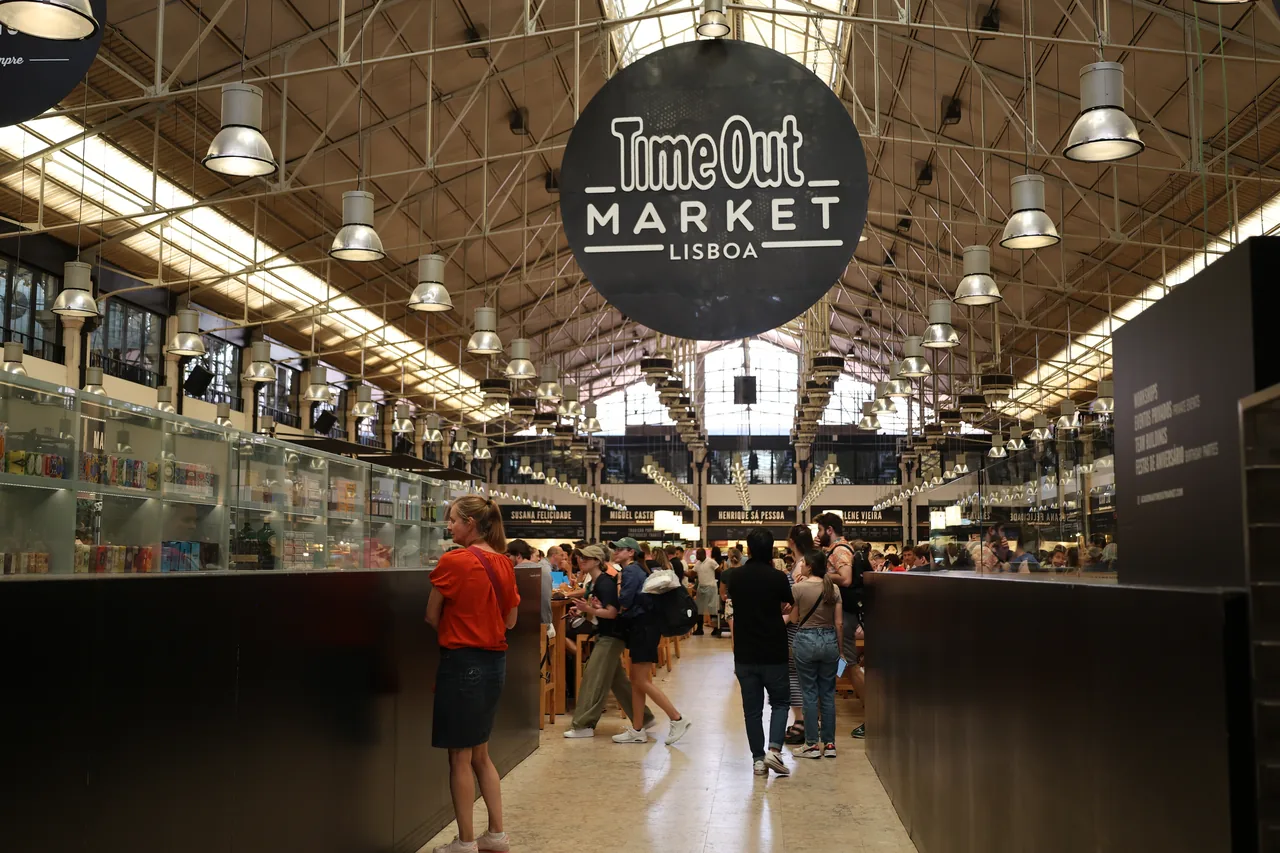
Time Out Market occupies part of Mercado da Ribeira, the large covered market opposite Cais do Sodré station. Food counters surround long communal tables beneath a lofty iron roof. It is a useful place to eat when everyone wants something different, with a traditional produce market elsewhere in the same building.
The pleasure here is in choosing. You can look at several menus before deciding, order from different counters and bring everything back to the same table. A full meal works well, but so does a smaller stop for a snack and something sweet. Before settling in, look up at the roof and step outside to see the market's clock and dome. The building gives the food hall a sense of occasion that a row of restaurants would struggle to match.
Come for an informal meal with plenty of choice, especially if you are travelling with friends or children whose tastes differ. The busy shared hall suits sociable lunches better than a quiet conversation over dinner.
Look closer
Walk around the counters before ordering. Fish and seafood, Portuguese meat dishes, sandwiches and pastries sit alongside international cooking, so there is little need for a group to agree on one menu. Choose a main dish first, then see whether anything else would be good to share. Ordering several dishes at once can leave you juggling trays and waiting for food from different kitchens.
Look above the signs and counters to see the hall's tall columns, metal roof structure and central glazing. Outside, the white entrance, clock and dome give the building a quite different character. Together they explain some of its appeal: the food hall occupies a substantial civic market, with the height and generous proportions of a building made to accommodate busy trading days.
Mercado da Ribeira also has a traditional market selling fresh food. Its fish counters, fruit and vegetables belong to the building's longer life as a place to shop for ingredients. The produce market and food hall keep different trading patterns, so a lively food hall does not mean all the fresh-food stalls will be trading. If you find them open, leave time to browse both.
A pastel de nata, the Portuguese custard tart, makes a simple finish after a main course, while smaller savoury dishes can turn a brief stop into lunch. Have a look at the display counters before committing to another large plate. The advantage of eating here is that dessert need not come from the same kitchen as the rest of your meal.
The visitor perspective
Choice is the attraction that comes through most clearly in the reviews we read. Visitors enjoy putting together a meal from different counters, and some return during the same trip. Several describe good food and an enjoyable atmosphere even when the hall is crowded. For groups, being able to choose independently is a particular advantage.
Noise, seating and value divide opinion. Some diners find a table without much trouble; others describe a frustrating search, especially with more people. Prices can also feel high compared with a meal elsewhere in the city. The shared hall is part of the appeal for those who enjoy the bustle, but less comfortable for anyone hoping for a quiet restaurant.
Allow time to look around before buying anything. Choose the dishes that actually appeal to you, rather than trying to sample a little of everything. If the hall feels too busy for a full meal, a smaller stop followed by a walk along the river may be more enjoyable.
Visitor feedback reviewed:
The story
Mercado da Ribeira opened in 1882, giving the food trade near the river a purpose-built covered home. It became a major supply market for Lisbon, handling fish, fruit, vegetables and flowers. The market's scale makes more sense when you remember that it served the needs of a whole city, rather than simply the surrounding neighbourhood.
Its wholesale role ended with the opening of the regional wholesale market outside Lisbon at the beginning of the twenty-first century. Retail trading continued at Ribeira. This helps explain the two experiences within the building: shopping for ingredients in the traditional market and eating prepared food in the much newer dining hall.
Time Out Portugal opened its food hall here in 2014. The magazine's editorial team selected the businesses for a project intended to bring its recommendations together in a physical space. The format has since travelled to other cities, but this was the first Time Out Market. The nineteenth-century building remains an important part of what distinguishes the Lisbon original.
Planning your visit
For current opening hours and ticket details, visit the official website.
Official visitor information ↗The area
The market sits between Avenida 24 de Julho and Praça Dom Luís I, opposite the transport hub at Cais do Sodré. After eating, head towards the Tagus and follow Ribeira das Naus east to Praça do Comércio. For a different afternoon, turn inland towards the steep streets of Bica and the shops and cafés of Chiado.
Cais do Sodré area guideWhat to see, how to get around and where to stay. Open map
Questions about this place
Mercado da Ribeira is the historic market building. Time Out Market is the food hall within it. The building also contains a traditional market, so the two names are closely connected but do not describe quite the same thing.
The main food hall uses shared tables rather than restaurant-style table bookings. You choose a place to sit and order from the individual counters. Make separate enquiries for organised events or group arrangements.
The choice of separate counters is helpful when everyone wants different food. Bear in mind that the hall can be noisy and several seats together may be hard to find. For a more relaxed meal, avoid planning a rushed stop.
About 20–30 minutes is enough for a look around. Allow 60–90 minutes if you want to compare menus and sit down to eat, with more time for a leisurely meal or a larger group.
Portuguese dishes are an important part of the choice, alongside international cooking. Look at the menus before deciding: the point of the hall is that you can mix dishes from different counters rather than commit to one restaurant.
More of Lisbon
Visitar editorial team
Based on official visitor information, historical and collection records, and a sample of individual traveller reviews.
Visit times are estimates. The guide is based on published sources; it does not include an on-site inspection. Photograph dates appear in the gallery captions.
Content reviewed: · Visitar.com
Image resized for display; full source and licence linked.