The cloister
45–75 min
Time to explore the cloister and its carved galleries. The church is a separate visit, so allow longer if you want to see both.
Monastery & World Heritage site · Belém
Mosteiro dos Jerónimos
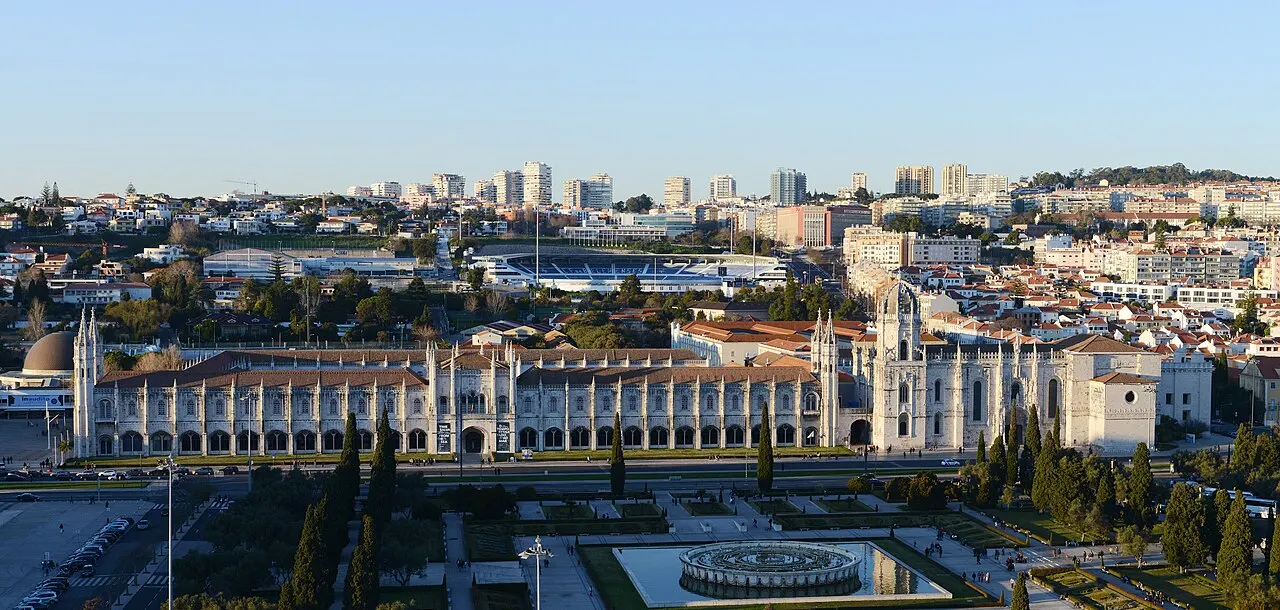
Intricately carved cloisters and a vast vaulted church make Jerónimos one of Belém's finest sights. Leave time for both parts of the monastery.
At a glance
45–75 min
Time to explore the cloister and its carved galleries. The church is a separate visit, so allow longer if you want to see both.
20–35 min
A shorter visit to the church, with time for its vaulted interior and the monuments near the entrance. Allow longer if you want to explore the cloister as well.
Photographs


What to see
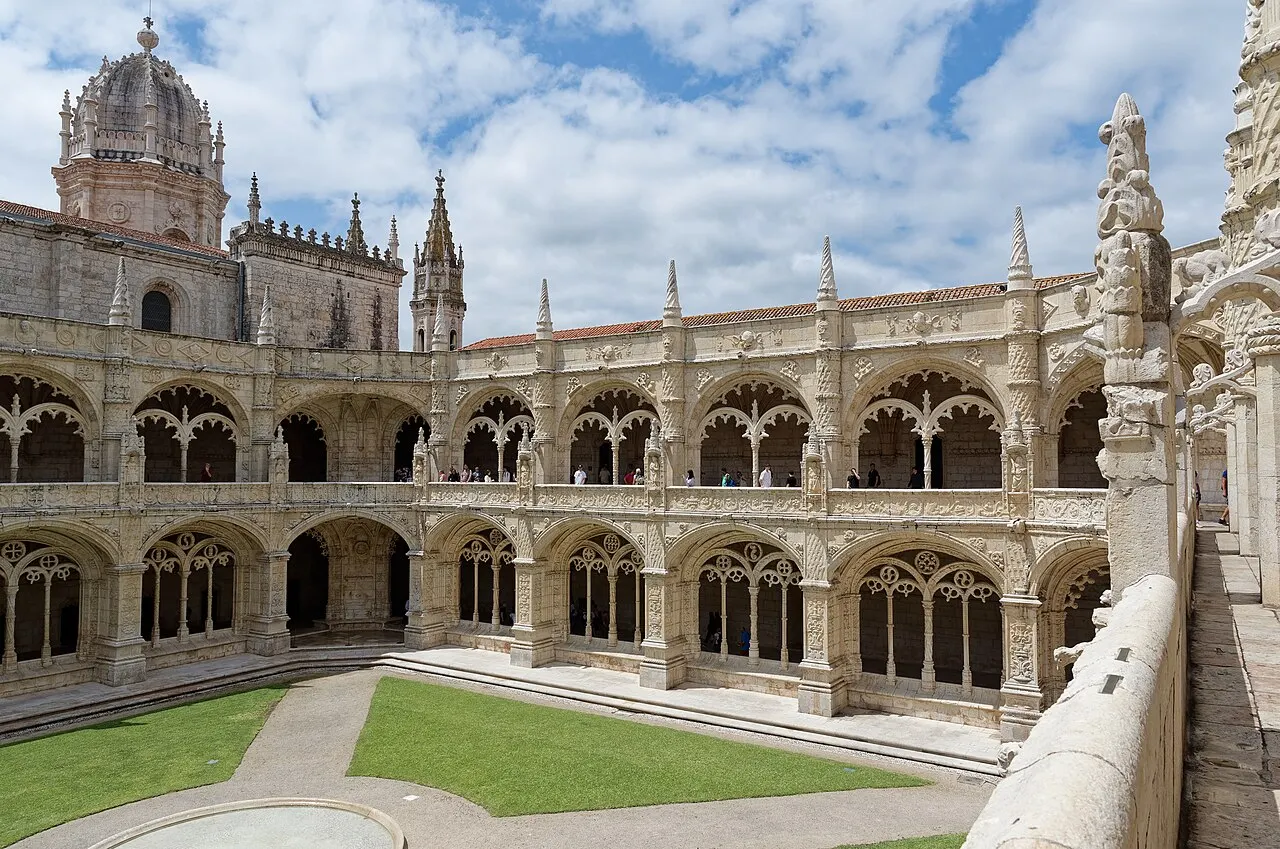
The carved cloisters are the highlight of Jerónimos Monastery, but the church is just as impressive. Ropes, leaves and elaborate patterns cover the stonework around the courtyard; next door, slender columns rise into a vast vaulted roof. You could spend a long time looking at either. The church and cloister have separate entrances, so plan for both if you want to see the monastery properly.
Jerónimos is one of the best places to see Manueline architecture up close. This richly decorated style takes its name from Manuel I, who commissioned the monastery, and combines Gothic construction with royal and maritime symbols. In the cloister, the carving is close enough to study as you walk around the galleries. The church is grander in scale and contains monuments to Vasco da Gama and Luís de Camões near its entrance.
The monastery is especially worthwhile for anyone interested in architecture, art or Portuguese history. Children may enjoy looking for carved ropes, animals and other shapes around the cloister.
Look closer
On the lower level, you can see the carved columns and vaulting at close quarters. The upper gallery gives you a wider view across the courtyard and a different angle on the arches below. Allow time to stop along the way: the decoration varies from one section to the next, so a quick circuit can miss much of the detail.
Inside the Church of Santa Maria de Belém, look up from the slender columns to the web of stone ribs overhead. João de Castilho's design creates an unusually open interior, with the transept vault spanning the space without supporting columns. The church feels very different from the enclosed cloister next door.
The monuments to the navigator and poet stand near the church entrance. Da Gama's voyage to India and Camões's epic poem are closely connected with Portugal's maritime history. Look for them during your church visit, since they are in a separate part of the monastery from the cloister.
Before going inside, stop at the richly sculpted south portal. Then compare it with the western entrance by Nicolau Chanterenne, where Manuel I and Queen Maria appear with their patron saints. These figures make the royal connection especially clear, even before you reach the decoration inside.
The visitor perspective
The stonework makes the strongest impression in the reviews we read. Visitors often single out the carved ropes, knots and arches of the cloister, while the church earns praise for its scale and atmosphere. Most of the enthusiasm centres on the building itself. People who enjoy looking closely at architecture tend to find plenty to hold their attention, even without a large collection of exhibits.
Getting inside is the main frustration. Visitors describe confusion over the separate church and cloister queues, and some feel that the wait or ticket price reduces their enjoyment. In the accounts we read, booking a time did not always mean walking straight in. It is sensible to leave a gap before your next planned visit.
Once inside, allow enough time to look at the columns and vaulting and to see the courtyard from different points along the galleries. The church also deserves a visit of its own. Knowing which parts you want to see before you arrive makes it easier to choose the right queue and spend your time on the things that interest you.
Visitor feedback reviewed:
The story
Manuel I commissioned the monastery for the Order of Saint Jerome at the beginning of the sixteenth century. It stood near the shore from which ships left Lisbon. The monks were charged with praying for the king and offering spiritual support to seafarers, while the scale of the building reflected the wealth and ambitions of the monarchy.
Trade with Africa and Asia helped pay for the work. Several master builders contributed to the monastery over successive generations, beginning with Boytac and continuing with João de Castilho and others. Late Gothic vaults and arches were covered in the elaborate carving associated with the Manueline style. Much of the pleasure of a visit lies in seeing how varied that decoration is from one part of the building to another.
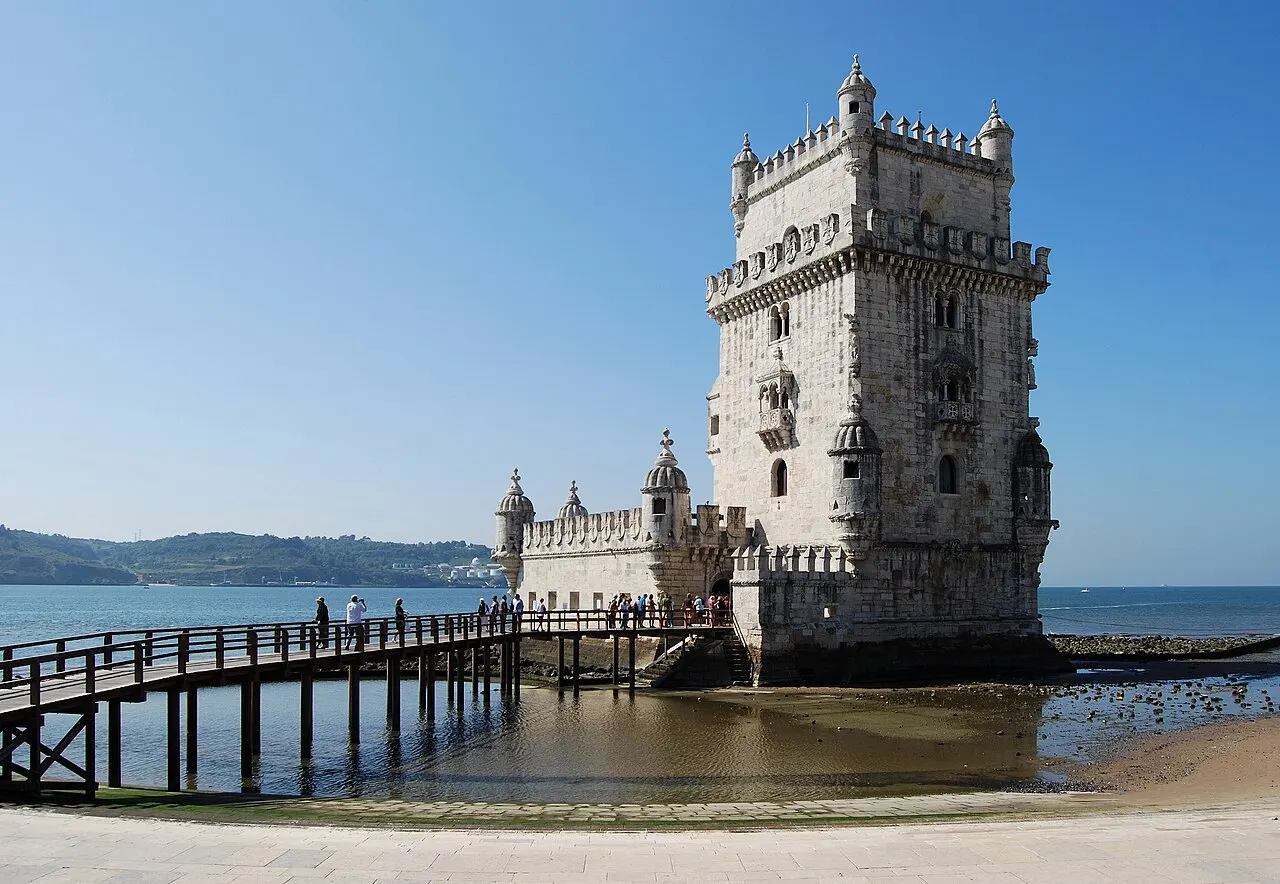
UNESCO added Jerónimos Monastery and Belém Tower to its World Heritage List in 1983. Both date from the period when Portugal was extending its maritime trade routes: the monastery provided a religious foundation beside the shore, while the tower defended the harbour. The Church of Santa Maria de Belém remains a place of worship.
Planning your visit
For current opening hours and ticket details, visit the official website.
Official visitor information ↗The area
The monastery faces the gardens of Praça do Império, with the cafés and pastry shops of Rua de Belém just to the east. Afterwards, walk towards the river for the Monument to the Discoveries, then west along the waterfront to Belém Tower. You can see the neighbourhood's main sights in this order without doubling back.
 Open map
Questions about this place
If architecture is your main interest, try to see both. The cloister brings you close to the intricate carving, while the church is memorable for its height, vaulting and monuments to Vasco da Gama and Luís de Camões. They have separate entrances and need their own time.
They are near the entrance to the Church of Santa Maria de Belém. You will need to visit the church to see them; they are not on the cloister circuit.
Allow around 90–120 minutes for both, plus any queue. Leave longer if you want to study the carving or take photographs, and avoid scheduling your next visit immediately afterwards.
The operator lists wheelchair access to the church and ground-floor cloister, but the upper cloister is not accessible to wheelchairs or pushchairs. An adapted toilet and baby-changing facilities are listed on the ground floor. Contact the monastery if you need assistance.
More of Lisbon
Visitar editorial team
Based on official information, historical sources and a sample of traveller reviews.
Visitor information was checked on 16 September 2026. Visit times are estimates. The guide is based on published sources; it does not include an on-site inspection. Photograph dates appear in the gallery captions.
Content reviewed: · Visitar.com
Image resized for display; full source and licence linked.