Galleries, royal barges & aircraft
90–150 min
Time for the main collections and the pavilion, allowing you to concentrate on the subjects that interest you. Enthusiasts may comfortably stay longer.
Maritime history museum · Belém
Museu de Marinha
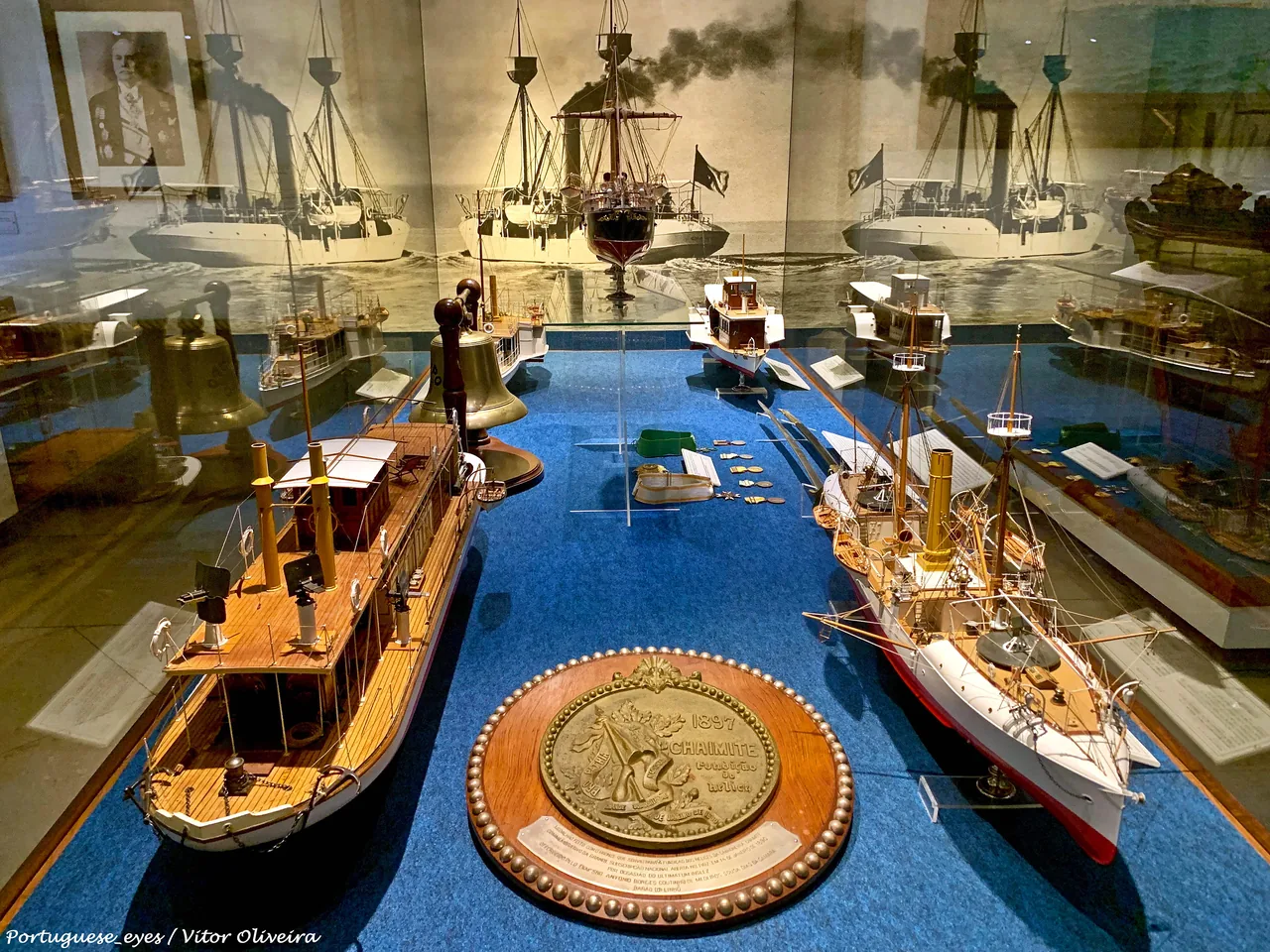
Begin with ships in miniature and finish beside the long hulls of royal barges. Belém’s Maritime Museum rewards curiosity about boats, navigation and the people who worked at sea.
At a glance
90–150 min
Time for the main collections and the pavilion, allowing you to concentrate on the subjects that interest you. Enthusiasts may comfortably stay longer.
Photographs


What to see
Museu de Marinha occupies part of the Jerónimos complex and a separate large pavilion in Belém. Its collections move from models and navigational objects to full-size ceremonial boats and aircraft. The change of scale is one of the pleasures of the visit: after studying tiny rigging, you find yourself beside vessels large enough to transform the room.
The museum is at its best when you look at how things were made and used. A ship model can reveal an arrangement of decks or sails that would be difficult to understand on a full-size vessel. Royal barges show how a practical boat became an instrument of ceremony, while aircraft extend the story of Portuguese maritime activity beyond the sea surface. This is a broad collection, not simply a room devoted to famous voyages.
Anyone interested in ships, model making, navigation or naval history has good reason to come. Families with an enthusiastic young boat or aircraft spotter may also find plenty to discuss. Much of the experience involves looking at objects and reading their context, so it suits patient curiosity more than an expectation of constant hands-on activity.
Look closer
Look beyond the first impression of delicate rigging. Models make it possible to compare hulls, sails and deck arrangements across different kinds of vessel. Choose a few that interest you and study their purpose: carrying goods, fighting, fishing or moving along a river. The collection becomes much easier to follow when you ask what each boat was designed to do.
Charts and instruments introduce the problem of finding a position and keeping a course. They also make a useful break from looking at models. An object that seems obscure in a case becomes more interesting once you imagine having to rely on it far from a familiar shore. Read the explanation beside a few examples rather than trying to absorb every technical label.
The Bergantim Real, built for Maria I in 1780, is a ceremonial boat on an extraordinary scale. Its long hull and gilded carving were intended to make an impression during royal movements on the Tagus. Walk far enough along it to appreciate its length, then return to the sculptural detail. It was a vessel for display as well as transport.
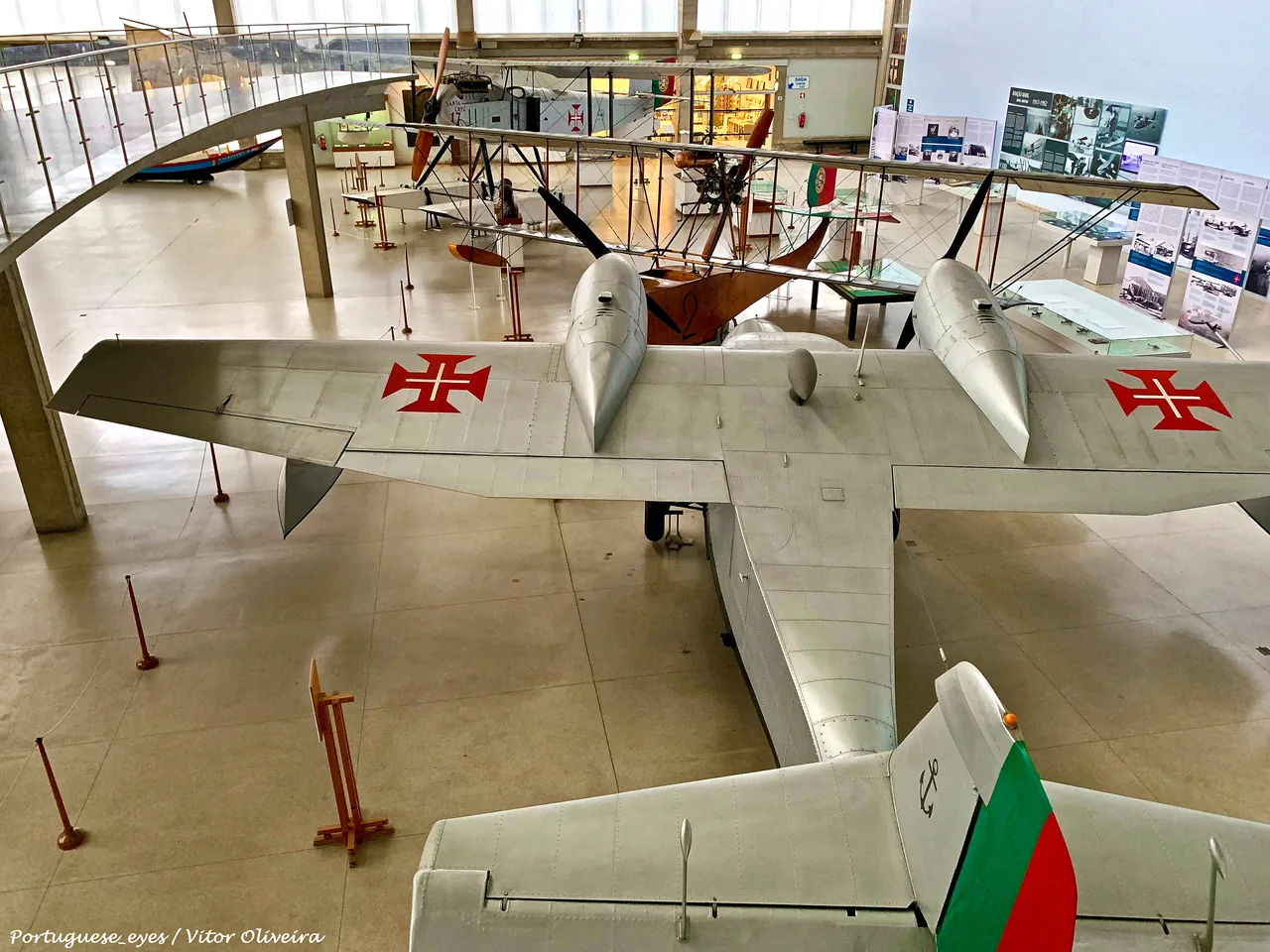
The pavilion also contains naval aircraft, including Santa Cruz, associated with the first aerial crossing of the South Atlantic in 1922. It was the third aircraft used in that expedition, not a machine that made the whole journey alone. Seeing it beside the boats broadens the museum’s subject from seafaring to a wider history of navigation.
The visitor perspective
The change from detailed models to full-size vessels stands out in the accounts we read. Visitors with an interest in maritime history often find more to see than they expected, and the royal barges receive particular praise. Several describe wanting longer, especially after reaching the pavilion towards the end of the visit.
The traditional presentation does not suit everyone equally. Some families find the displays absorbing; others would prefer more interaction, particularly for children with little interest in ships. The collection rewards looking and comparing, so enthusiasm for the subject makes a considerable difference.
Keep time and attention in reserve for the larger vessels. If the early cases begin to blur together, move on rather than feeling obliged to study every model. The pavilion offers a fresh sense of scale and is too important to reduce to a hurried look on the way out.
Visitor feedback reviewed:
The story
Luís I founded the Maritime Museum in 1863. The king had served as a naval officer, and the new institution was intended to preserve material connected with Portugal’s maritime past. Its history was not without loss: a fire in 1916 destroyed part of the collection.
A major donation from Henrique Maufroy de Seixas in 1948 expanded the museum’s holdings. The collections eventually moved to the Jerónimos setting in 1962. Their scope includes commerce, fishing, naval service and leisure, giving the sea a place in everyday working life as well as in national commemoration.
The ceremonial boats in the pavilion once carried royalty and other distinguished passengers on the Tagus. Maria I’s royal barge remained useful long after her reign, making its last official outing for Queen Elizabeth II’s visit in 1957. That long working life is a reminder that historic objects did not always become museum pieces as soon as their original patrons died.
Planning your visit
For current opening hours and ticket details, visit the official website.
Official visitor information ↗The area
The museum is on Praça do Império, in the western part of the Jerónimos complex. The church, cloister, Archaeology Museum and Maritime Museum have distinct entrances and visitor arrangements. Follow signs specifically for Museu de Marinha. The gardens of Praça do Império provide an easy outdoor pause afterwards.
 Open map
Questions about this place
No. It occupies part of the same historic complex but is a separate museum with its own visitor arrangements. Follow the entrance for Museu de Marinha.
There are both. The galleries contain extensive model collections, while the pavilion displays full-size ceremonial barges and other vessels, alongside historic aircraft.
Leave enough time for the pavilion and its royal barges. Their scale provides a striking contrast to the model galleries, and they are a substantial part of the museum rather than a small extra at the end.
Around 90 minutes to two and a half hours works for a general visit. Anyone who enjoys ship models or naval history may want longer. The estimate includes the pavilion as well as the main galleries.
It can be, particularly for children interested in boats or aircraft. The full-size vessels offer an immediate sense of scale. Much of the collection is presented in conventional displays, so choose a few objects to explore together rather than expecting every room to be interactive.
More of Lisbon
Visitar editorial team
Based on official visitor information, historical and collection records, and a sample of individual traveller reviews.
Visit times are estimates. The guide is based on published sources; it does not include an on-site inspection. Photograph dates appear in the gallery captions.
Content reviewed: · Visitar.com
Image resized for display; full source and licence linked.