Sculptures & compass rose
20–30 min
Time to walk around both sides, look at the pavement map and take photographs beside the river.
Monument & viewpoint · Belém
Padrão dos Descobrimentos
A stone ship points towards the Tagus, its decks crowded with figures from Portugal's past. Walk around both sides, study the map at its feet and look across Belém from the top.
At a glance
20–30 min
Time to walk around both sides, look at the pavement map and take photographs beside the river.
45–75 min
Allow time for the exterior and an interior visit, including the terrace. Add longer if you want to spend time in the exhibition spaces.
Photographs



What to see
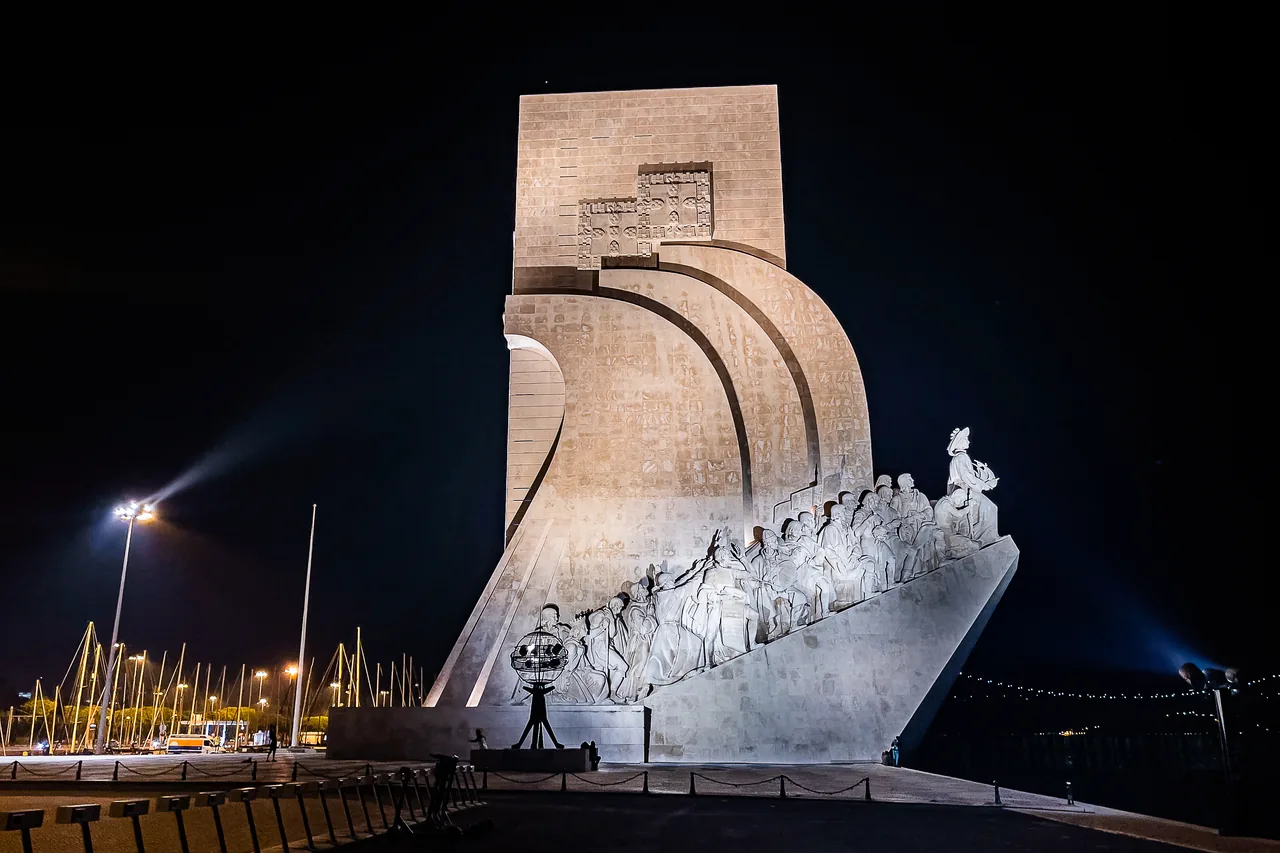
The Monument to the Discoveries stands beside the Tagus, opposite Jerónimos Monastery. Its huge sculpted figures and sail-shaped tower are visible from far along the waterfront. A closer look reveals the people chosen for this twentieth-century tribute to Portuguese maritime expansion, as well as the politics behind it.
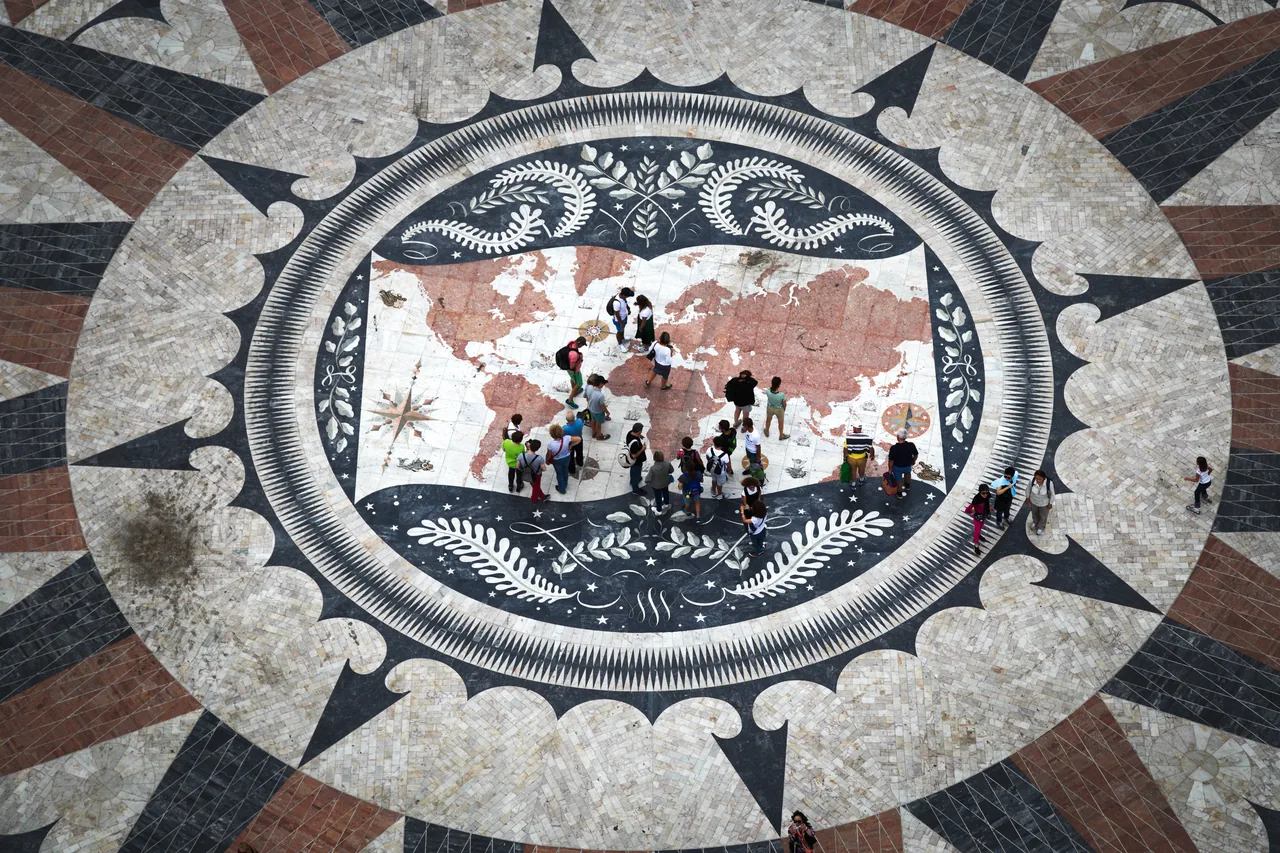
There is more to see here than the familiar photograph of the monument's prow. The figures differ on each side, and include a poet, a painter and a mathematician alongside sailors and rulers. On the square, a vast compass rose surrounds a world map marked with ships and dates. The viewpoint adds another perspective, with the map below and the monastery, gardens and river spread around the monument.
The sculpture and pavement map make this an engaging stop on a walk through Belém, even without an interior visit. History enthusiasts will find the monument's twentieth-century origins as interesting as the people it commemorates.
Look closer
Henry the Navigator stands at the front, holding a small ship. Behind him, the figures climb towards the towering stone sail. Start a little way back to appreciate the shape of the whole monument, then move closer to pick out faces, clothing and objects. From this distance, you can see how differently each person has been represented.
Walk around both sides rather than photographing only the first one you reach. Vasco da Gama and Pedro Álvares Cabral appear on the eastern side; on the west are the poet Luís de Camões, painter Nuno Gonçalves and mathematician Pedro Nunes. Philippa of Lancaster, Henry's mother, is the only woman among the figures. These choices tell you something about the version of national history the monument was designed to celebrate.
The pavement north of the monument is a work in its own right. Within the broad compass rose, a coloured map traces maritime routes with ships and dates, while sea creatures and blowing faces decorate the oceans. Look for the details near your feet before going up to the viewpoint: from above, the entire design becomes visible, but the small motifs are easier to study on the ground.
The terrace gives a particularly useful view of how Belém fits together. The long façade of Jerónimos Monastery lies inland beyond the formal gardens, while the Tagus fills the southern view. Look down at the compass rose, then along the waterfront towards the tower. The attraction here is the broad setting, so clear weather makes a difference to the visit.
The visitor perspective
The size and detail of the sculpture make a strong impression in the accounts we read. Visitors often describe enjoying the monument from outside, with the river, bridge and waterfront adding to the experience. Several recommend walking around both sides, where different figures appear, and looking at the map in the square.
Those who go up frequently praise the view, especially over the monastery and river. Whether the interior feels worthwhile depends partly on how much you want that elevated perspective. Some reviewers are happy with the sculpture at ground level and would save their time or money for another stop.
This is easy to enjoy as part of a longer Belém outing. See the figures and pavement map, then decide whether the terrace appeals. There is no need to treat every nearby monument as a full interior visit: choosing one or two leaves more time for the waterfront itself.
Visitor feedback reviewed:
The story
The first version of the monument was built for the Portuguese World Exhibition in 1940. Architect Cottinelli Telmo and sculptor Leopoldo de Almeida created a temporary structure for a display that transformed the Belém waterfront. Although it depicts figures from much earlier centuries, the monument belongs to the twentieth century.
The exhibition was staged under the authoritarian Estado Novo regime. It used architecture, spectacle and carefully selected episodes from the past to encourage national pride and support for the government. That context matters when looking at the procession of heroic figures. The monument presents a celebratory account of expansion, while leaving little room for the experience of the people subjected to Portuguese colonial rule.
A permanent version followed in 1960, marking five hundred years since Henry the Navigator's death. Built in concrete and stone, it retained the great caravel form and sculpted procession. The interior was remodelled in 1985 to provide a viewpoint, auditorium and exhibition space. Its public role now includes interpreting the history that the original monument set out to glorify.
Planning your visit
For current opening hours and ticket details, visit the official website.
Official visitor information ↗The area
The monument stands on the river side of Belém, across the road and railway from Praça do Império and Jerónimos Monastery. Use the pedestrian underpass to reach the waterfront from the gardens. From here, continue west beside the Tagus towards Belém Tower, or walk east past the marina.
 Open map
Questions about this place
Henry the Navigator leads the procession, with 32 other figures associated with Portuguese expansion. They include navigators, rulers, missionaries, writers and artists. The figures on the two sides are different, so walk around the whole monument.
No. The first, temporary version was created for the Portuguese World Exhibition in 1940. The permanent monument dates from 1960, five hundred years after Henry the Navigator's death.
You can see the exterior sculpture and the compass rose from the surrounding public space. Entry to the interior and viewpoint is separate. The outside makes a worthwhile stop in its own right.
No. The operator describes a lift to the sixth floor followed by 42 steps on a narrow staircase. The viewpoint is not wheelchair accessible. Contact the monument about the parts of the interior that meet your access needs.
Yes. The monastery is inland across the road and railway, reached via the pedestrian underpass. Belém Tower lies further west along the waterfront. Allow for the walk between them as well as the time you want to spend at each attraction.
More of Lisbon
Visitar editorial team
Based on official visitor information, historical and collection records, and a sample of individual traveller reviews.
Visit times are estimates. The guide is based on published sources; it does not include an on-site inspection. Photograph dates appear in the gallery captions.
Content reviewed: · Visitar.com
Image resized for display; full source and licence linked.