Experiments & hands-on activities
120–240 min
A generous visit for trying exhibits, returning to favourites and allowing children of different ages to find activities they enjoy.
Hands-on science centre · Parque das Nações
Pavilhão do Conhecimento
Build, balance and test your senses at a science centre where finding out usually starts with having a go.
At a glance
120–240 min
A generous visit for trying exhibits, returning to favourites and allowing children of different ages to find activities they enjoy.
Photographs


What to see
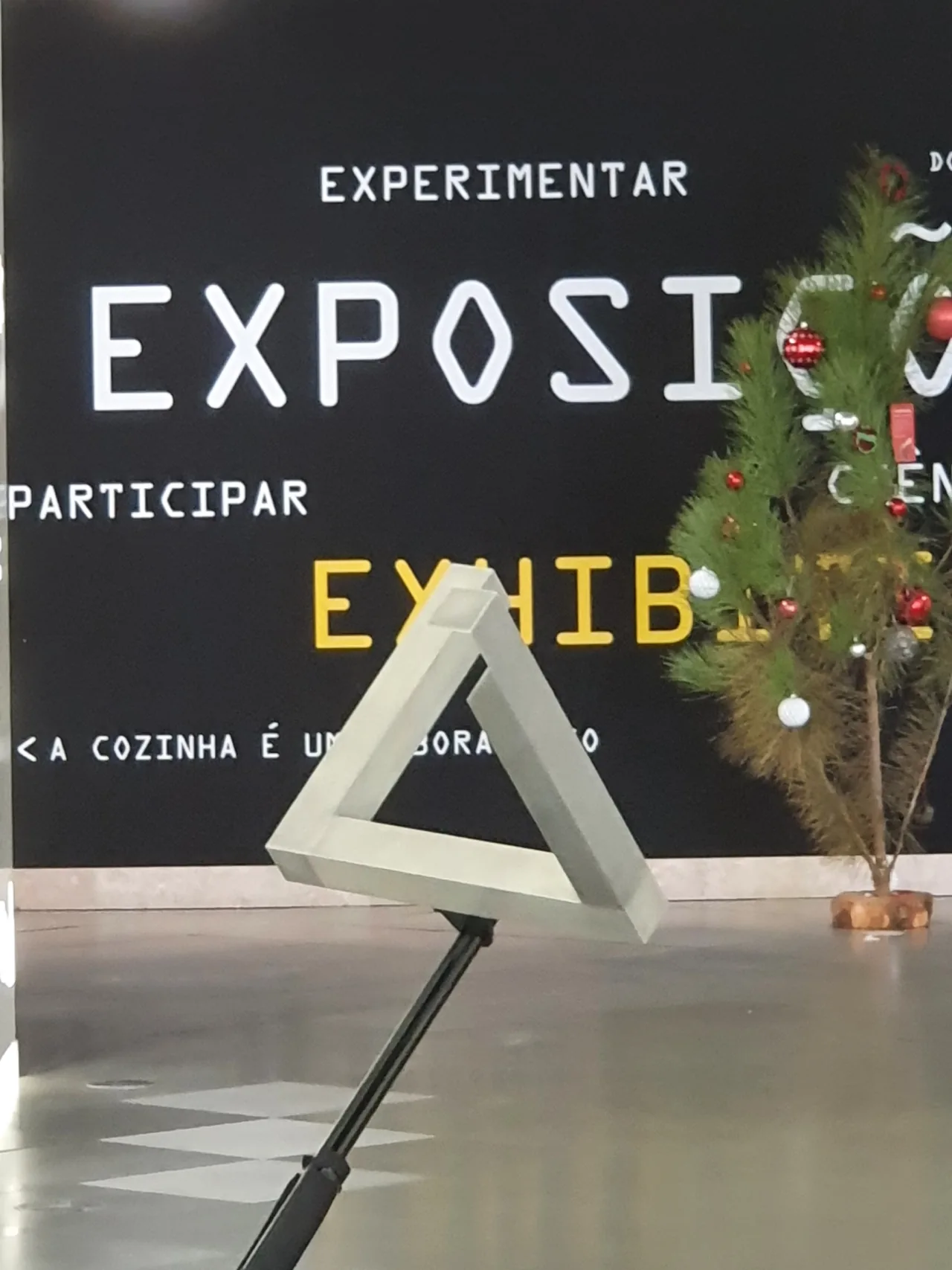
At Pavilhão do Conhecimento, children are encouraged to do the things that most museums ask them not to: touch, turn, pull and try again. This science centre beside the waterfront in Parque das Nações makes physical phenomena tangible. An experiment that looks simple at first can occupy the whole family once everyone starts arguing about why it works.
The best exhibits give you a question to investigate. What changes when you move a light, alter your position or adjust a mechanism? It is a much more engaging approach than following a long sequence of explanations. Adults can join in without needing to remember their school physics, and younger visitors get the satisfaction of discovering an answer themselves.
Families with children who enjoy building and experimenting are the obvious audience, but the centre is not confined to one age group. Younger children have play-led activities; older children can spend longer investigating the science. It works particularly well when you have enough time to let different interests lead the visit.
Look closer
In Explora, interactive exhibits turn light, movement and other physical phenomena into things you can investigate. Pick one that catches your attention and change one variable at a time. The second attempt is often more revealing than the first. If the result still seems baffling, ask a member of the floor team to help you work it out.
Tcharan uses the setting of a circus to bring science into play. Its activities are aimed at children aged three to twelve, though different parts suit different stages of development. Mirrors, balance and movement all lend themselves to experimentation. Allow siblings to find their own pace instead of expecting everyone to enjoy precisely the same activity.
Casa Inacabada, within Tcharan, turns construction into a shared task. Children can move materials and use the play machinery to see how a building comes together. Watching them negotiate who does what can be as interesting as the structure itself. Ask staff which activities are appropriate for your child before joining a session.
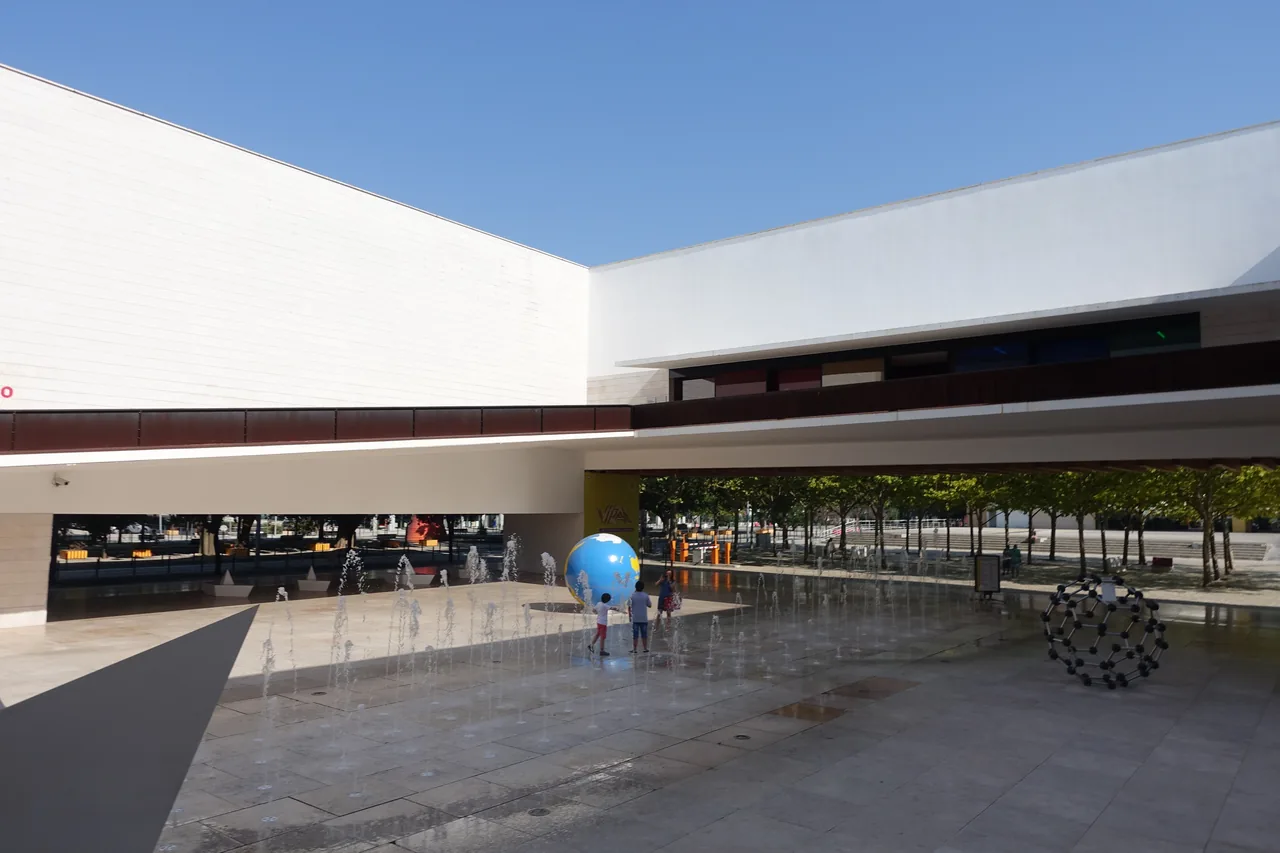
Look back at the building before you leave. Its pale, sharply defined volumes and broad covered spaces belong to the architecture of Expo 98, when this part of the waterfront was transformed. The approach to the entrance gives you a useful view of how the large forms fit together, quite apart from what happens inside.
The visitor perspective
Families repeatedly describe children becoming absorbed in the hands-on activities. Several of the accounts we read mention stays of three hours or more, with adults joining in rather than simply supervising. Helpful staff and the chance to learn by doing feature strongly. For many visitors, it is a welcome change from a day spent looking at monuments.
The activities do not all suit the same ages. Some reviewers describe older children happily spending time in areas aimed at younger visitors; others note restrictions on particular activities. It helps to treat the centre as a choice of experiences, rather than a promise that every member of the family can do everything.
Keep the rest of the day reasonably loose. The most enthusiastic accounts come from families who found time to explore and return to favourites. A short, tightly scheduled stop is less likely to give children the same chance to become involved.
Visitor feedback reviewed:
The story
The building began life at Expo 98 as the Pavilion of the Knowledge of the Seas. Designed by João Luís Carrilho da Graça, it formed part of a new waterfront district built around the exhibition. Its substantial, carefully composed exterior is a reminder that the original pavilion had an architectural role as well as an educational one.
It reopened as a science centre in July 1999. The change gave the former exhibition building an enduring use, with visitors learning through experiments rather than simply looking at displays. It is part of Ciência Viva, Portugal’s network for bringing scientific knowledge to a wider public.
Explora follows an approach developed at San Francisco’s Exploratorium: make a natural phenomenon accessible, then give people the means to investigate it. That principle is more useful to understand before a visit than a list of every exhibit. The centre rewards curiosity, patience and the willingness to get something wrong before trying again.
Planning your visit
For current opening hours and ticket details, visit the official website.
Official visitor information ↗The area
The centre stands on Largo José Mariano Gago, a short walk from the Oceanarium and the broad riverside paths of Parque das Nações. Oriente station is farther inland. You can comfortably make the science centre the main activity of a half-day here, then take a walk by the water. Adding the Oceanarium makes a considerably fuller day.
 Open map
Questions about this place
It offers activities for several ages. Tcharan is aimed at children aged three to twelve, while the wider science exhibits can interest older children and adults. Individual activities may have their own age or height requirements.
It can be, if you enjoy interactive science and are happy to take part. The experience is active and often lively, rather than a quiet tour of historic scientific instruments.
Allow roughly two to four hours, depending on the children’s interests. A family that enjoys repeating experiments can easily use the longer allowance. A shorter visit works better if you choose a few areas.
Yes. They are close together, but each can occupy several hours. Leave time for a meal and a break outside rather than scheduling them back to back with no breathing space.
More of Lisbon
Visitar editorial team
Based on official visitor information, historical and collection records, and a sample of individual traveller reviews.
Visit times are estimates. The guide is based on published sources; it does not include an on-site inspection. Photographs come from credited sources and may show earlier displays or arrangements.
Content reviewed: · Visitar.com
Image resized for display; full source and licence linked.